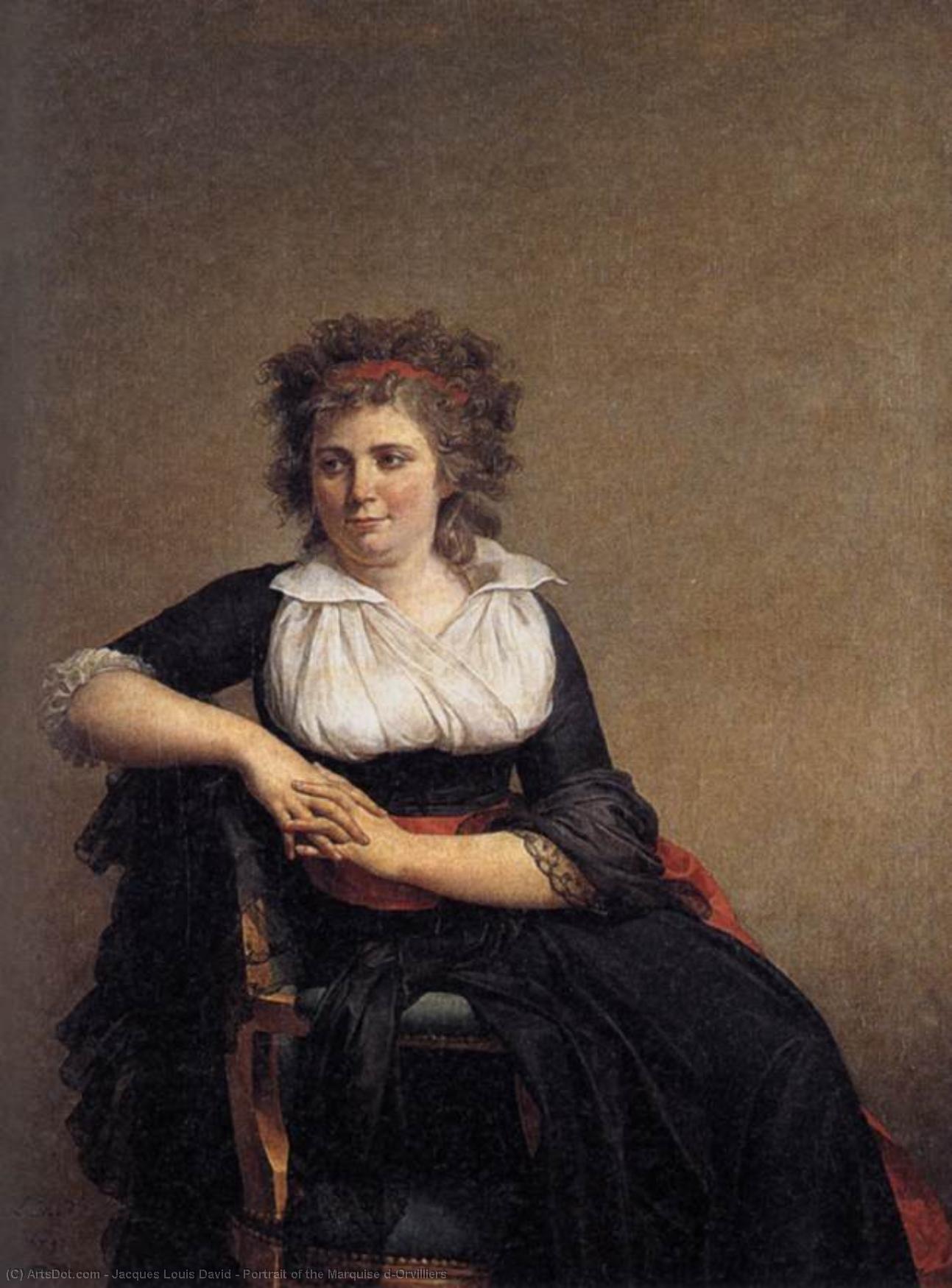
Admire Jacques-Louis David’s ‘Portrait of the Marquise d’Orvilliers,’ a stunning Neoclassical masterpiece from 1790. Explore its balanced composition, muted tones & subtle melancholy.
Jacques-Louis David (1748-1825): Leading French Neoclassical painter of the Revolution & Napoleonic eras. Known for 'Oath of the Horatii,' his art embodies heroism, drama & classical ideals.
Explore the Louvre Museum in Paris! Home to iconic masterpieces like the Mona Lisa & Venus de Milo, journey through art history from ancient Egypt to Renaissance icons. Plan your visit today!
A Vision of Neoclassical Grace: Jacques-Louis David’s Marquise d'Orvilliers
Jacques-Louis David’s *Portrait of the Marquise d'Orvilliers*, painted in 1790, is a quintessential example of Neoclassical portraiture – a masterful blend of refined elegance and subtle psychological insight. Measuring 131 x 98 cm, this oil on canvas work captures not merely a likeness, but an *essence* of aristocratic composure on the cusp of revolutionary change in France.
The Subject & Historical Context
The Marquise d'Orvilliers (Marie-Gabrielle de Gramont) was a prominent figure in Parisian society known for her intelligence and salon gatherings. David, already establishing himself as *the* leading painter of the era, received numerous commissions from the aristocracy despite his growing sympathy towards revolutionary ideals. This portrait predates the most radical phase of the French Revolution, yet hints at the shifting social landscape. It’s a fascinating moment captured in time – a depiction of privilege painted just before that world would be irrevocably altered.
Style & Composition: A Return to Classical Ideals
David deliberately rejected the frivolous Rococo style prevalent earlier in the 18th century, embracing instead the clarity, order, and moral seriousness of Neoclassicism. The composition is strikingly balanced and centered, employing a pyramidal arrangement that lends stability and dignity to the figure. This deliberate structure echoes classical sculpture and architecture – hallmarks of the movement. The shallow perspective focuses our attention entirely on the Marquise, minimizing distractions and emphasizing her presence.
Technique & Palette: Mastering Light and Form
David’s technical skill is evident in his masterful use of oil paints. He employed layered glazes – thin, translucent applications of color – to build up luminosity and create a remarkably smooth surface. The palette is predominantly muted, featuring soft grays, browns, and creams, punctuated by highlights of white in the Marquise's blouse and subtle touches of red. This restrained use of color contributes to the painting’s overall sense of refinement and seriousness. The delicate modeling of her face and hands demonstrates David’s commitment to realistic depiction, yet infused with an idealizing touch.
Symbolism & Emotional Resonance
While seemingly straightforward, the portrait is rich in subtle symbolism. The Marquise's attire – a simple white blouse paired with a dark, elegant dress – suggests modesty and refinement, virtues highly valued during this period. Her pose, seated with relaxed confidence yet maintaining an upright posture, conveys both social status *and* inner strength. However, there’s also a hint of melancholy in her expression, perhaps reflecting the anxieties of a society on the brink of upheaval. The painting doesn't shout emotion; it whispers it, inviting contemplation.
A Timeless Appeal for Modern Interiors
*Portrait of the Marquise d'Orvilliers* remains a compelling work for contemporary audiences. Its sophisticated color palette and balanced composition make it an ideal addition to classic or modern interiors seeking a touch of historical elegance. Whether admired as an original masterpiece or enjoyed through a high-quality reproduction, this portrait embodies enduring beauty and artistic skill – a testament to Jacques-Louis David’s genius and the lasting power of Neoclassical art.