A Testament to Revolutionary Trauma: Jacques-Louis David’s *The Death of Marat*
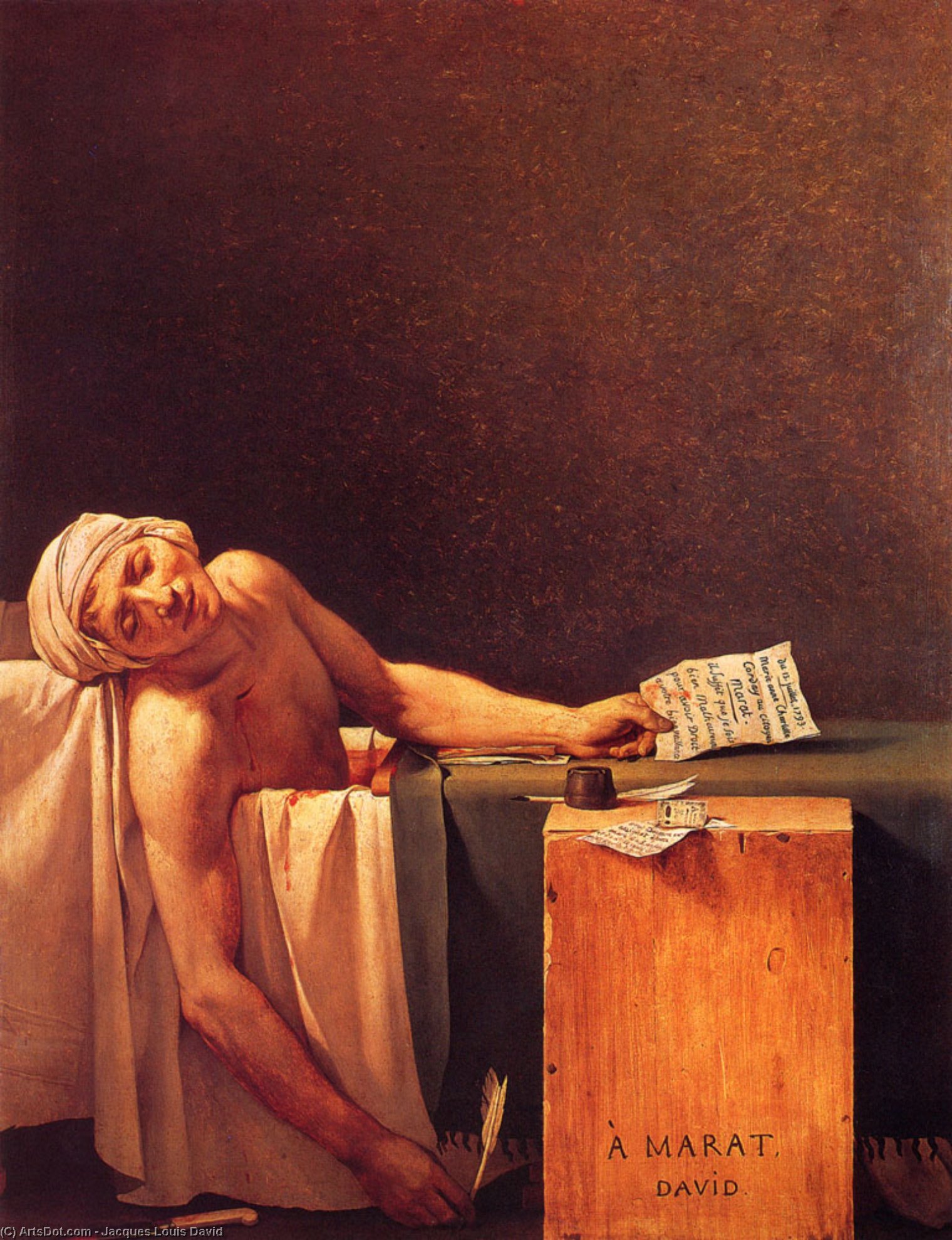
Jacques-Louis David's The Death of Marat is not merely a painting; it’s a visceral embodiment of the French Revolution’s brutal realities. Completed in 1793, just months after Jean-Paul Marat’s assassination – a pivotal moment that plunged Paris into further chaos – this iconic work transcends simple historical record to become a profound meditation on loss, betrayal, and the corrosive effects of political extremism. David, then at the height of his Neoclassical powers, deliberately eschewed the opulent grandeur favored by earlier generations, opting instead for a stark, almost journalistic depiction that immediately confronts the viewer with the horror of Marat’s demise.
- Subject Matter: The painting portrays Marat, the radical journalist and politician who spearheaded the Montagnard faction during the revolution, lying dead in his bath. The composition is relentlessly focused on the body – a deliberate choice by David to elevate Marat from a mere political figure to a martyr of the revolution.
- Style & Technique: Executed in the Neoclassical style, the work showcases David’s mastery of light and shadow, employing a dramatic chiaroscuro effect that intensifies the emotional impact. The meticulous detail with which he renders Marat's skin, the blood pooling on the floor, and the scattered papers contributes to an unsettling realism, a hallmark of the Neoclassical movement’s commitment to accuracy and moral clarity.
Historical Context: A Nation in Crisis
The painting emerged during one of the most turbulent periods in French history. The Reign of Terror was well underway, marked by widespread executions and political purges. Marat's assassination ignited a frenzy of suspicion and violence, fueling the revolution’s descent into paranoia. David, a staunch supporter of Robespierre and the Committee of Public Safety, created this image as a powerful piece of propaganda – intended to solidify Marat’s legacy as a revolutionary hero and to incite further fervor amongst the populace. The inclusion of the letter that Marat is writing in the painting adds another layer of complexity, suggesting his final act was one of dedication to his cause.
- Neoclassicism's Moral Purpose: David’s work exemplifies Neoclassicism’s core tenets – a return to classical ideals of order, reason, and morality. The deliberate simplicity of the composition, the idealized portrayal of Marat’s body, and the emphasis on historical accuracy were all designed to evoke a sense of civic virtue and inspire patriotic fervor.
- Propaganda & Political Messaging: Beyond its artistic merit, *The Death of Marat* functioned as a crucial piece of political propaganda, shaping public perception of the revolution and solidifying Robespierre’s control.
Symbolism and Emotional Resonance
Beyond its immediate historical context, the painting is laden with symbolic meaning. The blood staining the bathwater represents not only Marat's violent death but also the bloodshed that was consuming France. The letter clutched in his hand symbolizes his unwavering commitment to revolutionary ideals even in his final moments. The carefully arranged objects – the quill, the inkwell, the sheet music – suggest a life dedicated to intellectual and political engagement. The overall effect is profoundly unsettling; David forces the viewer to confront the brutal reality of death and the tragic consequences of ideological conflict.
- Color Palette: The predominantly dark palette—deep browns, blues, and reds—contributes significantly to the painting’s somber mood. The strategic use of red emphasizes the violence and loss, while the cooler tones evoke a sense of grief and despair.
- Compositional Focus: David's tight cropping, focusing solely on Marat's body, intensifies the emotional impact and creates a feeling of claustrophobia, mirroring the suffocating atmosphere of revolutionary Paris.
A Masterpiece of Dramatic Intensity
*The Death of Marat* remains one of David’s most celebrated works and a cornerstone of Western art history. Its raw emotion, technical brilliance, and profound historical significance continue to captivate audiences today. A hand-painted reproduction offers an unparalleled opportunity to experience the power and intensity of this iconic image in exquisite detail, bringing a crucial moment in revolutionary history into your home or studio.