Explore Jacques-Louis David’s ‘Oath of the Horatii,’ a masterpiece of Neoclassicism. Witness dramatic emotion & Roman ideals in this iconic 1784 oil painting.
Jacques-Louis David (1748-1825): Leading French Neoclassical painter of the Revolution & Napoleonic eras. Known for 'Oath of the Horatii,' his art embodies heroism, drama & classical ideals.
Explore the Louvre Museum in Paris! Home to iconic masterpieces like the Mona Lisa & Venus de Milo, journey through art history from ancient Egypt to Renaissance icons. Plan your visit today!
A Moment of Civic Duty: Unveiling Jacques-Louis David’s *The Oath of the Horatii* (detail)
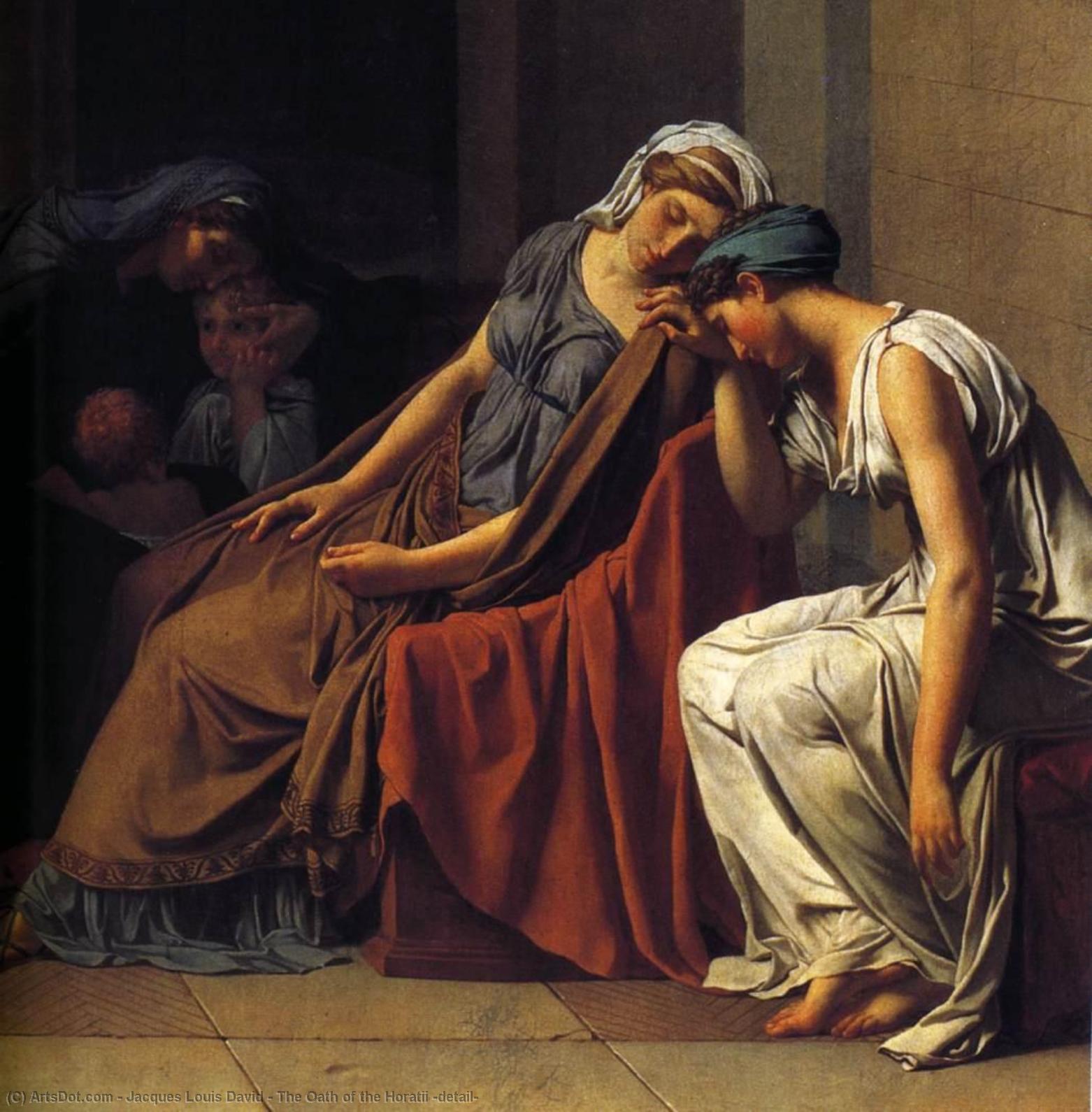
This detail from Jacques-Louis David's monumental masterpiece, *The Oath of the Horatii*, painted in 1784-1785, offers a poignant glimpse into a pivotal work of Neoclassical art. While this is only a portion of the full composition, it powerfully encapsulates the emotional core and dramatic tension that made the painting an instant sensation and continues to resonate today.
Subject & Historical Context
The artwork depicts a crucial moment from a legendary conflict between Rome and Alba Longa. Rather than engage in full-scale war, each city chose three champions – the Horatii brothers representing Rome – to fight to the death, determining the victor. David doesn’t portray the battle itself, but the solemn oath-taking ceremony before their father, who presents them with their swords. This detail focuses on the aftermath of that pledge, showcasing the contrasting emotional responses to the impending sacrifice. The story, drawn from Livy's *History of Rome*, was particularly relevant in pre-Revolutionary France, serving as an allegory for civic duty, patriotism, and self-sacrifice – themes increasingly vital during a period of social and political upheaval.
Style & Technique
David’s style is the epitome of Neoclassicism: characterized by clarity, order, and a deliberate rejection of the frivolous Rococo aesthetic. The composition is rigorously structured, employing a pyramidal arrangement that draws the eye to the central figures. Notice the precise rendering of anatomy – muscles are defined, forms are solid – reflecting David’s meticulous study of classical sculpture. He masterfully utilizes chiaroscuro, dramatic contrasts between light and shadow, to heighten emotional impact and sculpt the figures within the space. The brushwork is remarkably controlled, though subtle impasto adds texture and depth.
Emotional Impact & Symbolism
This detail powerfully conveys the human cost of patriotic fervor. While the brothers are resolute in their commitment, the women represent grief, despair, and the personal tragedies inherent in such a conflict. The reclining woman embodies utter devastation, while her companion offers solace – yet both are consumed by sorrow. This juxtaposition isn’t accidental; David deliberately explores the complex emotional landscape surrounding duty and sacrifice. The contrast between masculine strength and feminine vulnerability is central to the painting's message. Camilla, sister of the Horatii and betrothed to a Curiatii brother, represents the inescapable personal loss woven into the fabric of national conflict.
A Lasting Legacy
*The Oath of the Horatii* wasn’t merely a painting; it was a cultural event. It became an immediate symbol of revolutionary ideals and continues to inspire awe for its artistic mastery and powerful message. Its influence can be seen in countless subsequent works, solidifying David's position as a leading figure in art history. A reproduction of this detail would serve as a striking focal point in any interior, adding a touch of historical gravitas and intellectual depth. It’s a piece that invites contemplation on themes of duty, sacrifice, and the enduring power of human emotion.