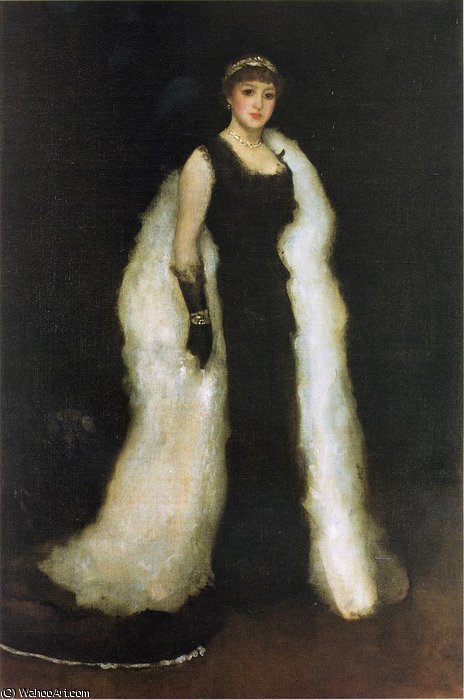
Arrangement in Black No 5 Lady Meux: A Study in Quiet Elegance
James Abbott McNeill Whistler’s “Arrangement in Black No 5: Lady Meux” stands as a cornerstone of Aestheticism, embodying the movement's core belief that art should exist for its own intrinsic beauty—a radical departure from Victorian moralizing narratives. Painted in 1881, this deceptively simple portrait captures not just a likeness but an atmosphere, prioritizing tonal harmony and subtle nuances over narrative detail. The artwork’s enduring appeal lies in its ability to evoke contemplation and appreciation of form itself.
- Subject Matter: The painting depicts Lady Meux, the wife of Sir Henry Meux, a prominent London brewer. Whistler meticulously rendered her figure against a muted grey background, emphasizing her posture and attire—a deliberate choice designed to minimize distraction from the overall visual experience.
- Style & Technique: Whistler championed Tonalism, a technique that eschews dramatic contrasts of light and shadow in favor of gradual gradations of color. He achieved this effect through painstaking layering of thin washes of pigment, creating an illusionistic surface that prioritizes tonal resonance over realistic representation. The subtle variations in grey hues contribute to the painting’s serene mood.
- Historical Context: Whistler's work emerged during a period of significant artistic experimentation and intellectual debate. Aestheticism challenged prevailing Victorian values, advocating for aesthetic contemplation as a form of spiritual fulfillment. “Arrangement in Black No 5” exemplifies this ethos, reflecting Whistler’s desire to liberate art from didactic purpose.
Symbolism: The monochrome palette—primarily shades of grey and black—is laden with symbolic significance. Whistler deliberately avoided vibrant colors, aligning his artistic vision with the tenets of Aestheticism, which sought to elevate beauty above sentimentality. The muted tones convey a sense of stillness and introspection, mirroring Lady Meux’s dignified composure and inviting viewers to engage in quiet contemplation. Furthermore, the absence of extraneous details reinforces the painting's focus on pure visual sensation.
Emotional Impact: Despite its understated appearance, “Arrangement in Black No 5” possesses a profound emotional resonance. Whistler skillfully captures Lady Meux’s serene gaze and graceful posture, conveying an aura of quiet dignity and inner peace. The painting transcends mere portraiture, becoming a meditation on beauty itself—a testament to Whistler's unwavering commitment to artistic principles and his enduring legacy as one of the most influential painters of the Victorian era. Its timeless elegance continues to inspire admiration and contemplation today.
- Further Exploration: Interested in experiencing Whistler’s aesthetic vision firsthand? Explore reproductions of “Whistler’s Mother” and other iconic works at ArtsDot.com for exceptional quality prints and canvases.