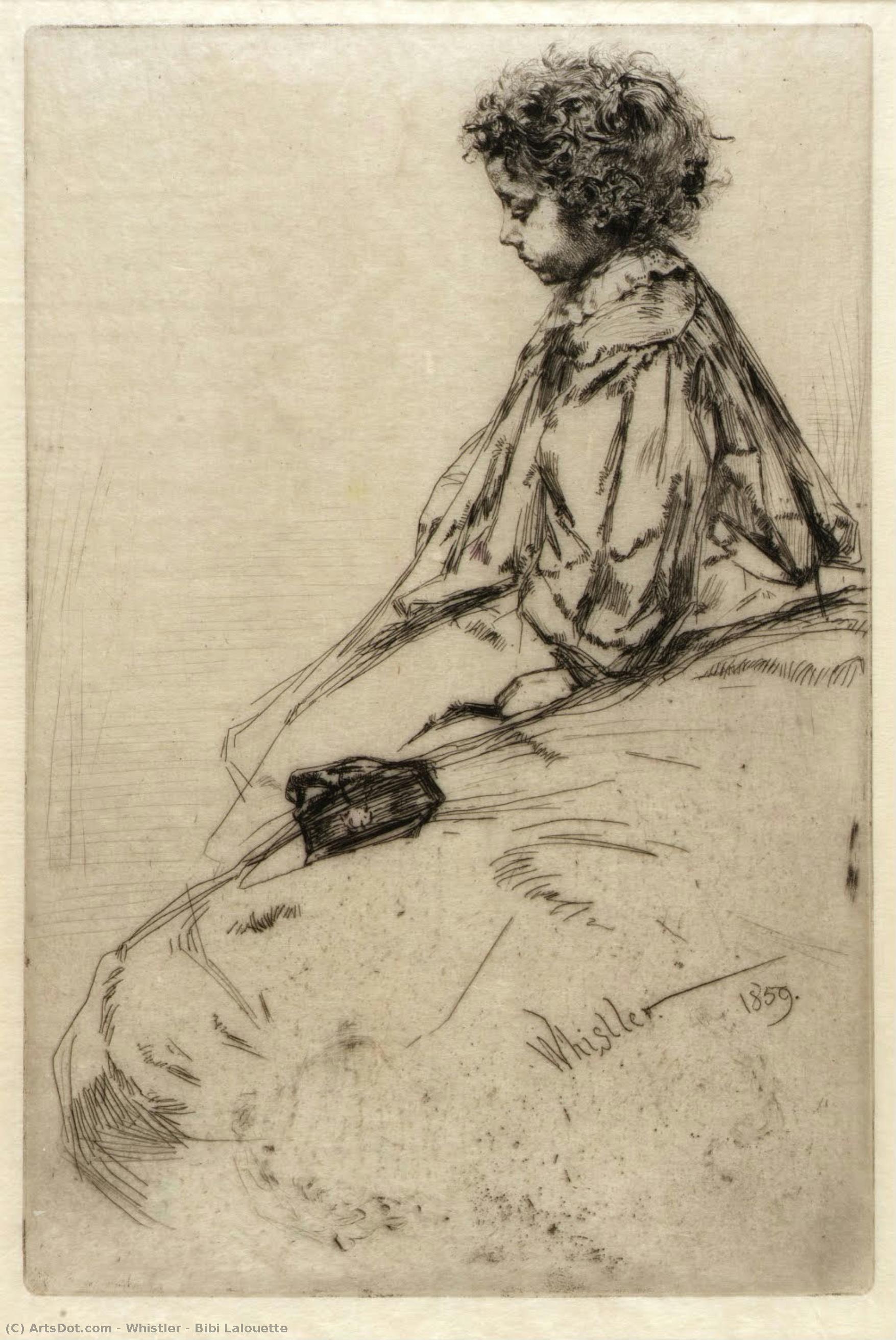
A Moment Frozen in Time: James Abbott McNeill Whistler’s “Bibi Lalouette”
James Abbott McNeill Whistler's "Bibi Lalouette," created in 1859, is more than just a portrait; it’s a carefully constructed distillation of aesthetic ideals and a poignant glimpse into the burgeoning artistic sensibilities of mid-19th century Europe. This delicate etching, rendered in shades of brown and grey, captures a young girl lost in quiet contemplation – a subject that speaks volumes through its restraint and subtle power. The piece immediately draws the viewer in with its intimate scale (22 x 15 cm), inviting a close examination of Whistler’s masterful control over line and tone.
The Language of Line: Technique and Composition
Whistler's technique is utterly central to the work’s impact. The etching process, utilizing a metal plate meticulously scratched with lines, allows for an extraordinary level of detail achieved through varying line density – from the fine, almost hesitant strokes defining her hair and clothing to the bolder outlines shaping her figure. This deliberate manipulation of line isn't merely descriptive; it’s expressive. Notice how heavier lines anchor the composition, grounding the subject while lighter, more delicate lines suggest softness and vulnerability. The vertical orientation emphasizes the girl’s presence, drawing our gaze directly to her downcast eyes – a detail that subtly hints at introspection and perhaps a touch of melancholy. The simplified background serves as a deliberate counterpoint, ensuring the focus remains entirely on the captivating subject.
Aestheticism and Japonisme: Echoes of a Changing World
"Bibi Lalouette" is deeply rooted in Whistler’s aesthetic philosophy – “art for art’s sake.” Rejecting the prevailing Victorian emphasis on narrative and moral instruction, Whistler sought to create works that prioritized beauty, harmony, and formal elements above all else. This commitment aligns perfectly with the broader currents of Aestheticism, a movement that valued sensory experience and artistic expression as ends in themselves. Furthermore, subtle influences from Japonisme – the Japanese art style popular at the time – are evident in the composition’s flattened perspective and emphasis on line, mirroring the elegant simplicity often found in Japanese prints. The deliberate lack of strong diagonals or dramatic contrasts reflects a desire for visual equilibrium and understated elegance.
Symbolism and Emotional Resonance
Beyond its formal qualities, “Bibi Lalouette” resonates with a quiet emotional depth. The girl’s averted gaze invites speculation – is she lost in thought? Reflecting on something unseen? The muted color palette contributes to this sense of mystery and introspection. Whistler masterfully avoids overt sentimentality, instead relying on suggestion and implication. The overall effect is one of tenderness and innocence, yet there's also a subtle undercurrent of melancholy, as if the girl carries a hidden sadness within her. This ambiguity is precisely what makes the portrait so compelling – it’s not simply a depiction of a young girl; it’s an exploration of mood, feeling, and the complexities of human experience.
ArtsDot offers exquisite, hand-painted reproductions of “Bibi Lalouette,” allowing you to bring this captivating work into your home or office. Each reproduction is meticulously crafted by our skilled artists, ensuring that every detail – from the delicate lines to the subtle tonal variations – is faithfully reproduced with exceptional quality and artistry. Explore our collection today and experience the timeless beauty of Whistler’s masterpiece.