Explore James Abbott McNeill Whistler (1834-1903): American artist of Tonalism & Aestheticism. Discover 'Whistler's Mother,' nocturnes, portraits & his 'art for art's sake' philosophy.
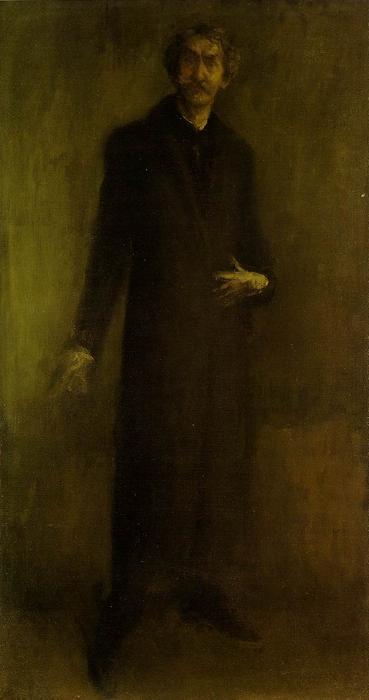
James Abbott McNeill Whistler’s Brown and Gold: A Study in Atmospheric Harmony
James Abbott McNeill Whistler (1834–1903) stands as an emblem of Aestheticism, a movement that championed art for its own sake—a radical departure from Victorian moralizing narratives. His artistic journey began amidst the industrial sprawl of Lowell, Massachusetts, where he absorbed influences from his father’s railroad engineering career and witnessed firsthand the transformative power of diverse environments. Despite a brief stint at West Point deemed unsuitable for his creative temperament, Whistler persevered in pursuing his passion for art, embarking on expeditions across Europe that cemented his reputation as a visionary artist.
The painting ‘Brown and Gold’ exemplifies Whistler's signature style—Tonalism—characterized by its deliberate eschewal of vibrant color palettes and detailed depictions. Instead, Whistler prioritized capturing the elusive mood and atmosphere of a scene through subtle gradations of tone, mirroring the principles of musical harmony. This approach is strikingly evident in the artwork’s muted browns and golds, which coalesce into an overarching sense of tranquility and contemplation. The composition features a solitary figure positioned before a wall, his gaze downward—a gesture that invites viewers to ponder introspection and inner experience.
Influenced by Japanese Aesthetics
Whistler's artistic sensibilities were profoundly shaped by encounters with Japanese art during his travels. Like many European artists of the era, Whistler admired the simplicity and expressive power of Japanese prints and paintings, particularly their use of bold horizontal lines reminiscent of Japanese characters. This influence is subtly incorporated into ‘Brown and Gold,’ where Whistler employs thick brushstrokes that echo the aesthetic conventions of Japanese art—a testament to his openness to diverse artistic traditions.
A Reflection of Whistler’s Artistic Philosophy
‘Brown and Gold’ embodies Whistler's core belief in “art for art’s sake,” a stance that positioned him at odds with prevailing societal expectations regarding artistic purpose. He rejected the didactic impulse to convey moral lessons or sentimental emotions, prioritizing instead the exploration of pure visual sensation—the beauty inherent in form and color alone. This uncompromising dedication to aesthetic principles distinguishes Whistler from his contemporaries and secures his legacy as one of the most influential artists of the Gilded Age.
Discover More About Whistler’s Legacy
To delve deeper into James Abbott McNeill Whistler's artistic vision and explore stunning reproductions of his masterpieces, including ‘Brown and Gold,’ visit ArtsDot.com. You can also discover more about Whistler’s influence on Impressionism and Japanese art through the links provided above. Explore our collection of oil paintings by color and find your perfect match at ArtsDot.com!