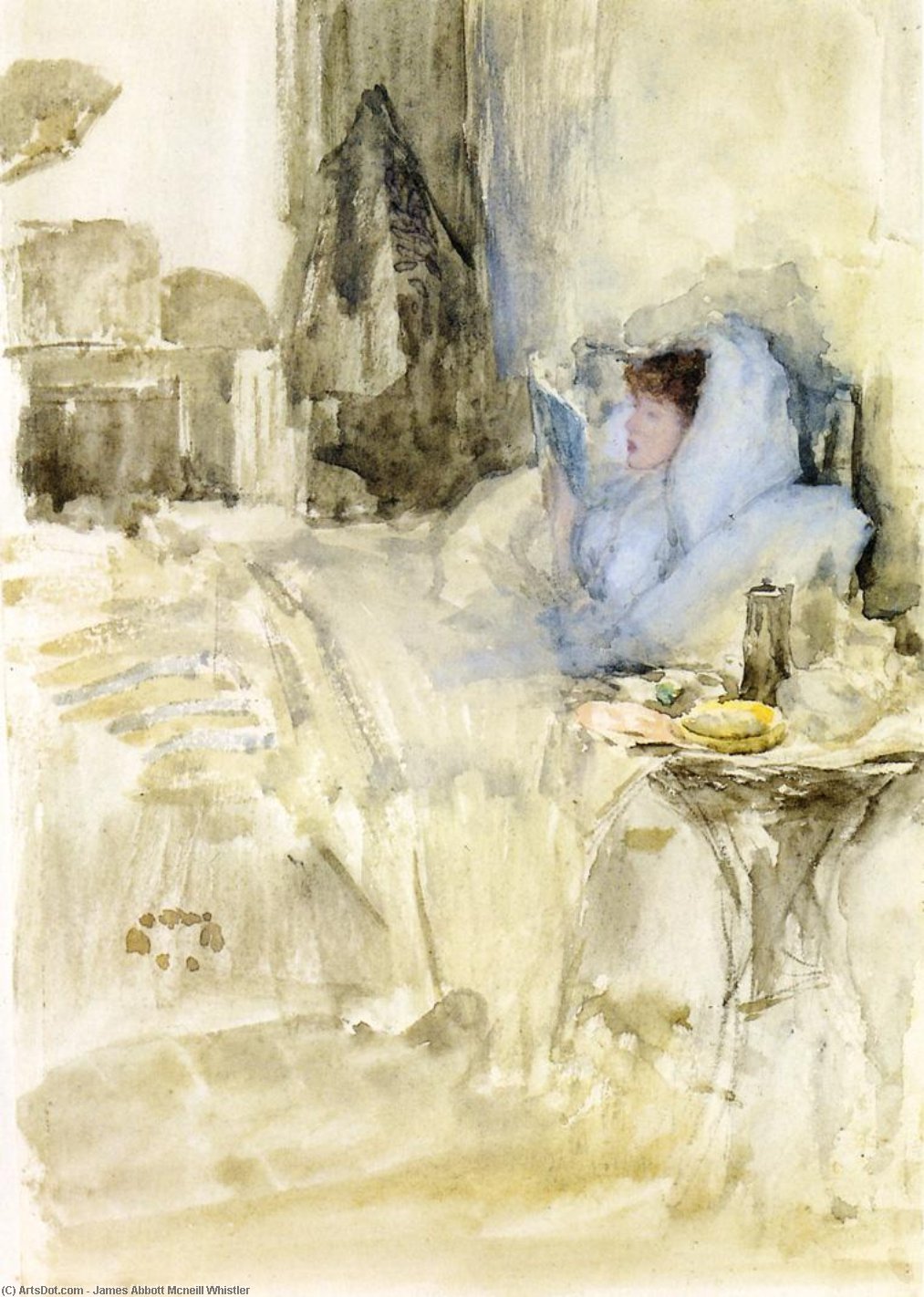
A Moment of Quietude: Whistler’s “Convalescent” – An Exploration of Light and Rest
James Abbott McNeill Whistler's "Convalescent," often referred to as "Petit Dejeuner, note in opal," is more than just a watercolor painting; it’s an invitation into a realm of subtle beauty and contemplative stillness. Completed in 1883, this intimate scene captures a figure recovering from illness, enveloped within the comforting embrace of her bedchamber. Whistler, a pivotal figure in the Aesthetic movement, deliberately eschewed grand narratives and moralizing themes, instead prioritizing “art for art’s sake,” a philosophy that profoundly shaped his artistic vision. The painting isn't about depicting a specific event but rather conveying an atmosphere – one of gentle repose, quiet observation, and the delicate interplay of light and color. It speaks to the restorative power of simple comforts and the beauty found in everyday moments.
Impressionistic Techniques and Whistler’s Vision
Whistler's mastery lies in his ability to capture the ephemeral qualities of light and atmosphere, hallmarks of the Impressionist movement. However, unlike many of his contemporaries who sought to directly represent visual sensations, Whistler employed a more nuanced approach. He utilized loose, broken brushstrokes – almost like dabs of color – to create an illusion of shimmering light reflecting off surfaces. Notice how he renders the bedding, not with sharp detail but with soft, diffused tones that suggest warmth and texture. The careful placement of the bowl and cup, along with the open book, subtly directs the viewer’s eye while maintaining a sense of spaciousness. The painting's shallow depth of field further enhances this effect, drawing attention to the figure within her private sanctuary.
- Color Palette: Dominated by soft blues, greens, and ochres, creating a calming and serene mood.
- Brushwork: Loose, broken strokes that mimic the effects of light and shadow.
- Composition: A carefully balanced arrangement emphasizing the figure’s tranquility within her space.
Symbolism and the Aesthetic Ideal
Beyond its technical brilliance, “Convalescent” is rich in symbolic meaning, reflecting Whistler's core aesthetic principles. The act of reading suggests intellectual engagement and a return to mental stimulation – a vital step in recovery. The bowls and cups represent nourishment and sustenance, both physical and emotional. The inclusion of the "note in opal" – a subtle, iridescent shimmer – hints at Whistler’s fascination with color theory and his belief that colors should be viewed as independent entities rather than simply representing objects. This echoes his broader artistic philosophy: to elevate the visual experience above mere representation.
A Legacy of Quiet Reflection
"Convalescent" resides within the Indianapolis Museum of Art, a testament to its enduring appeal and Whistler’s lasting contribution to art history. It exemplifies the artist's commitment to capturing the essence of a moment – not through dramatic action or grand spectacle, but through the quiet observation of light, color, and human experience. Today, reproductions of this exquisite painting offer an opportunity to bring this serene vision into your own home, allowing you to partake in Whistler’s pursuit of beauty and contemplation. Consider how its subtle palette and evocative atmosphere can contribute to a space that fosters relaxation, reflection, and a deep appreciation for the simple pleasures of life.