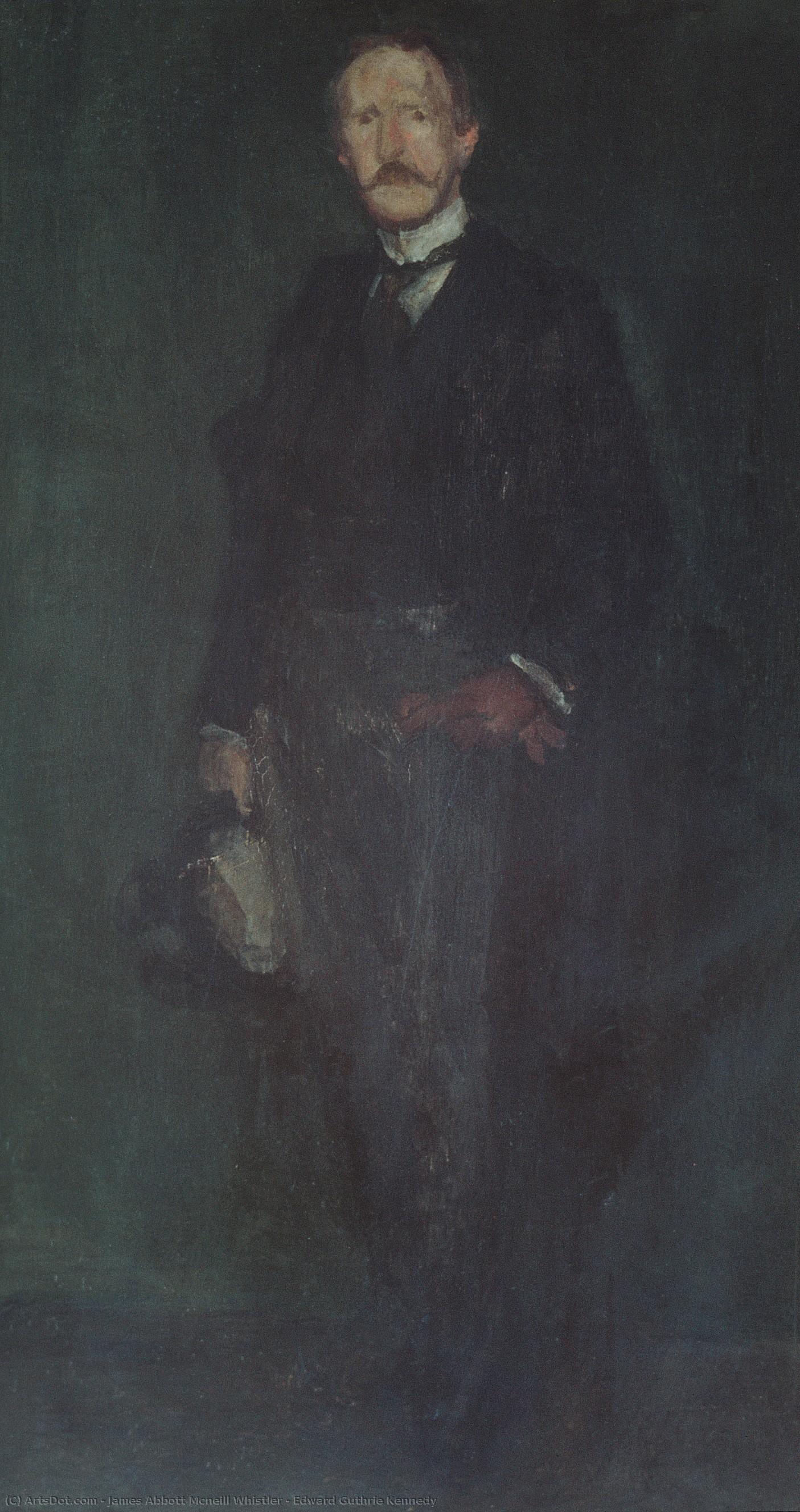
Whistler’s poignant portrait of Edward Guthrie Kennedy (1893) captures age & introspection in a masterful blend of realism & impressionism. Explore this evocative oil painting's depth & somber beauty.
Explore James Abbott McNeill Whistler (1834-1903): American artist of Tonalism & Aestheticism. Discover 'Whistler's Mother,' nocturnes, portraits & his 'art for art's sake' philosophy.
Explore The Metropolitan Museum of Art: 5,000 years of art from around the world! Discover masterpieces, ancient artifacts & immersive exhibitions – a global art destination awaits.
A Study in Somber Reflection
In the quiet intimacy of James Abbott McNeill Whistler’s 1893 masterpiece, Edward Guthrie Kennedy, we are invited into a world where silence speaks more eloquently than words. The portrait presents an elderly man, rendered with a profound and quiet dignity that commands the viewer's immediate attention. Through a strikingly vertical composition, Whistler strips away the distractions of the external world, eschewing elaborate settings to focus entirely on the human spirit. As darkness begins to envelop much of the background, Kennedy is effectively isolated, his presence intensified by the surrounding void. This deliberate use of shadow does more than just frame the subject; it creates a sanctuary for contemplation, drawing the observer into a shared moment of deep, perhaps even weary, introspection.
The Alchemy of Shadow and Stroke
Whistler’s technical mastery is on full display through his delicate balance between realism and impressionism. The painting is not merely a likeness but a tactile experience, achieved through the thick, expressive application of oil paint. Visible brushstrokes dance across the canvas, creating a painterly texture that breathes life into the subject's weathered features. The color palette is masterfully restrained, dominated by a somber symphony of dark browns, blacks, and grays. Yet, within this monochromatic depth, Whistler strategically places hints of lighter tones upon Kennedy’s face and clothing. These subtle gradations of light act as beacons, preventing the figure from dissolving into the shadows and instead highlighting the nuanced textures of age and the soft, diffused glow that defines the atmosphere of the piece.
The Soul of Aestheticism
Beyond its technical brilliance, this work stands as a testament to Whistler’s revolutionary philosophy of "art for art's sake." During an era when much of the art world was preoccupied with moralizing narratives and didactic storytelling, Whistler sought beauty in pure form, color harmony, and tonal relationship. In Edward Guthrie Kennedy, there is no overt message or social commentary; instead, there is only the evocative power of the paint itself. For the discerning collector or interior designer, this painting offers more than mere decoration; it provides an emotional anchor. Its melancholic mood and sophisticated aesthetic make it a profound addition to any space, offering a window into a period of history where the pursuit of pure, unadulterated beauty was the highest calling of the artist.