A Moment Suspended: Unveiling Whistler’s *Finette*
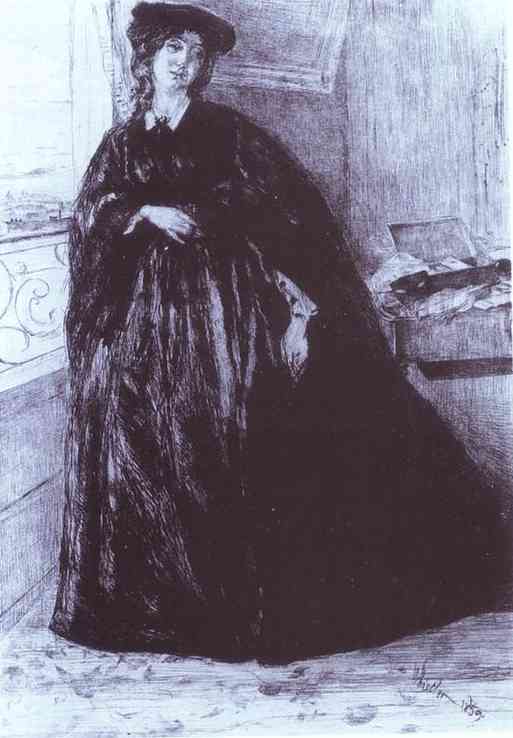
James Abbott McNeill Whistler's Finette (circa 1892-93) is a captivating study in quietude, a prime example of American Tonalism that transcends mere portraiture. It isn’t simply a depiction *of* someone; it’s an evocation of a mood, a feeling – a carefully orchestrated harmony of tones and textures designed to resonate with the viewer on a deeply personal level.
The Enigmatic Subject & Composition
The artwork portrays a young woman, known affectionately as “Finette,” seated near a window, lost in thought. Her face is partially veiled by a delicate fan, lending an air of mystery and inviting speculation about her inner world. Whistler deliberately avoids detailed characterization; Finette isn’t presented as a specific individual to be identified, but rather as a universal representation of feminine grace and contemplative solitude. The inclusion of books subtly suggests intellectual pursuits or artistic sensibility, enriching the narrative without explicitly defining it. Her relaxed yet dignified pose contributes to the overall sense of serene detachment.
Mastering Tonalism: Whistler’s Artistic Approach
Finette embodies the core principles of Tonalism – an artistic movement that prioritized atmospheric effects, muted color palettes, and emotional resonance over precise representation. Whistler achieves this through a masterful command of tonal values, employing a limited range of subtly blended creams, grays, and blacks to create a harmonious, almost monochromatic effect. His delicate brushwork and glazing techniques build up layers of tone, resulting in a soft, diffused light that envelops the figure and creates an ethereal atmosphere. This emphasis on *how* something is painted – rather than *what* is painted – exemplifies Whistler’s “art for art’s sake” philosophy.
Historical Context & Aesthetic Influences
Born in Lowell, Massachusetts, Whistler spent a significant portion of his career in Europe, particularly London. He was profoundly influenced by Japanese art and aesthetics – evident in the composition's asymmetry, simplified forms, and emphasis on negative space. He actively rejected academic traditions, championing a purely aesthetic approach to painting that challenged conventional notions of art’s purpose. Whistler believed art should be appreciated for its beauty alone, free from moral or narrative obligations. This stance positioned him as a key figure within the broader Aesthetic Movement.
Symbolism & Emotional Impact
While seemingly simple, Finette is rich in subtle symbolism. The window acts as a threshold between interior and exterior worlds, suggesting introspection and a connection to something beyond the immediate surroundings. The fan, a traditional symbol of femininity and allure, adds an element of grace and sophistication. However, it also serves to partially obscure Finette’s face, reinforcing her enigmatic quality. Ultimately, the painting evokes feelings of quietude, melancholy, and peaceful contemplation – inviting viewers to project their own emotions onto the scene.
Display & Interior Design Considerations
- Lighting: Soft, diffused lighting is essential. Avoid direct sunlight, which can diminish the delicate tonal variations.
- Wall Color: A neutral palette – warm grays, off-whites, or muted beiges – will complement the painting’s subtle hues without overpowering it.
- Framing: A simple, elegant frame in a muted tone (silver, gold leaf, or dark wood) will enhance the artwork's sophistication. Avoid overly ornate frames that distract from the composition.
- Setting: Finette would be particularly well-suited to spaces designed for relaxation and contemplation – libraries, studies, bedrooms, or intimate living areas.
Owning a reproduction of Whistler’s Finette is an invitation to embrace timeless elegance and artistic refinement. It's a piece that rewards quiet observation and offers a constant source of peaceful inspiration—a subtle yet powerful addition to any discerning collection or interior space.