A Study in Quiet Elegance: Whistler’s Exploration of Color Harmony
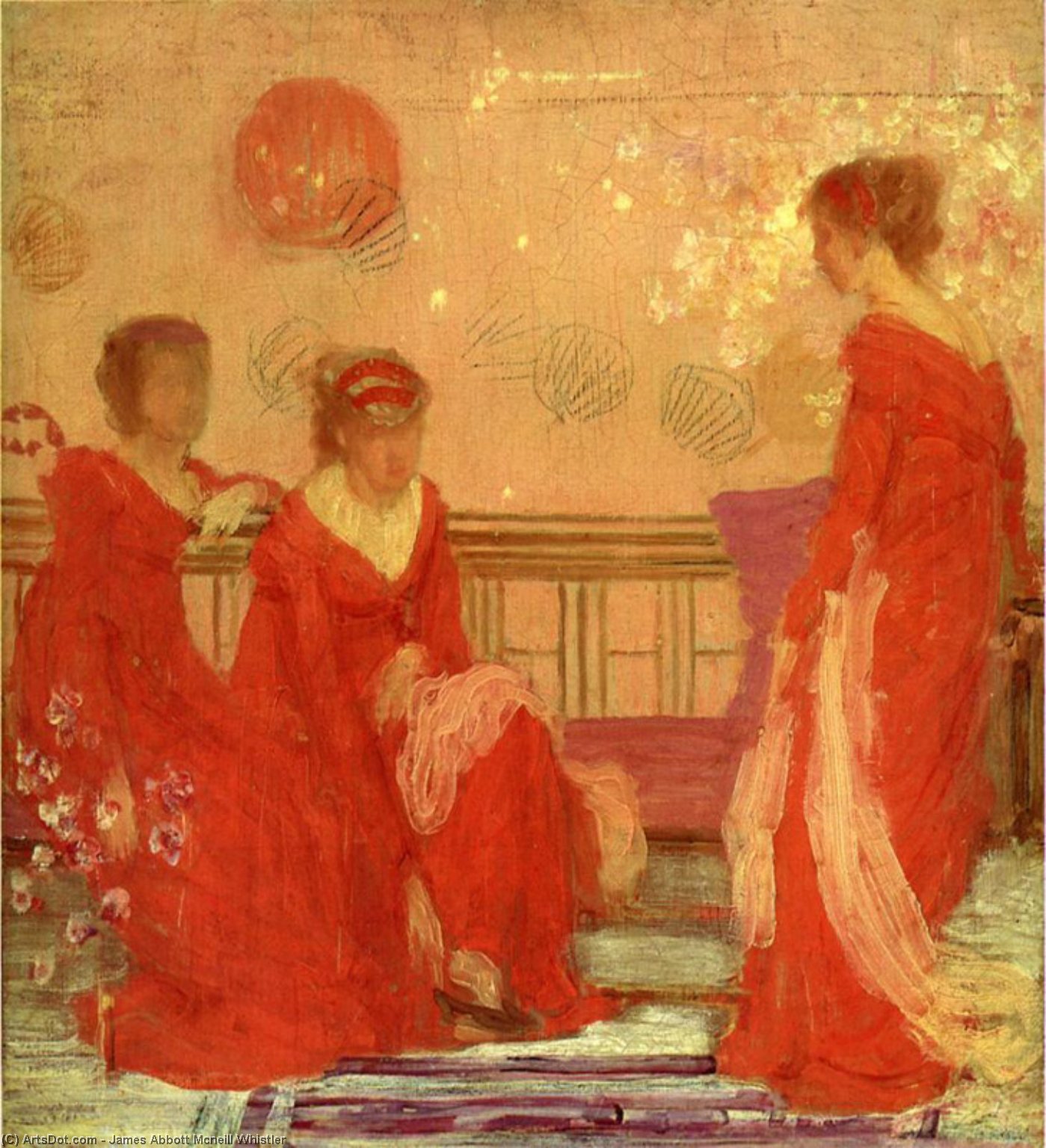
James Abbott McNeill Whistler's “Harmony in Flesh Colour and Red,” completed in 1869, stands as a cornerstone of Aestheticism—a movement dedicated to elevating art beyond mere narrative or moral instruction. More than just a portrait of three women seated before a wall, it’s an ambitious undertaking by Whistler himself: a deliberate investigation into the fundamental principles of visual perception and artistic expression.
- Subject Matter: The painting depicts three elegantly dressed women engaged in conversation, their postures conveying composure and grace. Their presence is framed against a subtly textured wall, creating an intimate yet sophisticated setting.
- Style & Technique: Whistler’s approach distinguishes him from his contemporaries; he eschewed dramatic lighting or emotive brushstrokes, favoring instead a tonal palette that prioritizes color harmony above all else. The meticulous layering of thin glazes—a hallmark of Whistler's technique—allows for remarkable subtlety and luminosity, capturing the nuances of light and shadow with breathtaking precision.
The Historical Context: Painted during a period marked by burgeoning artistic experimentation – specifically preceding the explosive arrival of Fauvism – “Harmony in Flesh Colour and Red” represents Whistler’s reaction against Victorian conventions. Artists like Henri Matisse were actively pushing boundaries, embracing bold colors to convey emotion; Whistler deliberately countered this trend, asserting that color should exist for its own sake, divorced from any didactic purpose.
Symbolism & Emotional Impact: Beyond its formal considerations, the painting resonates with deeper symbolic meanings. The muted reds and yellows of the dresses – carefully calibrated to create visual balance – speak to a desire for refined beauty and understated sophistication. Whistler’s masterful manipulation of color evokes a feeling of tranquility and contemplative stillness, inviting viewers to appreciate the quiet grandeur of artistic contemplation.
Connections to Other Artists: Whistler's influence extends beyond his immediate peers. Consider Stanisław Wyspiański’s “The Interior,” which similarly explores tonal harmony and compositional balance—a testament to Whistler’s enduring legacy as a pioneer of color theory and aesthetic sensibility. Furthermore, the painting echoes Matisse’s “Nature morte aux pot d’étain,” demonstrating Whistler's engagement with broader artistic dialogues concerning expressive color.
Conclusion: “Harmony in Flesh Colour and Red” remains an exceptional achievement—a beautifully executed demonstration of Whistler’s unwavering commitment to ‘art for art’s sake.’ Its enduring appeal lies not merely in its visual splendor but also in its profound reflection on the core values of artistic endeavor.