Whistler’s artistic vision was rooted in a rejection of academic conventions and a fervent belief that art should exist independently of moral or didactic purposes. He meticulously crafted his compositions to achieve maximum visual impact, prioritizing tonal harmony and subtle nuances of light.
A Portrait of Quiet Contemplation: Whistler’s “Head of an Old Man Smoking”
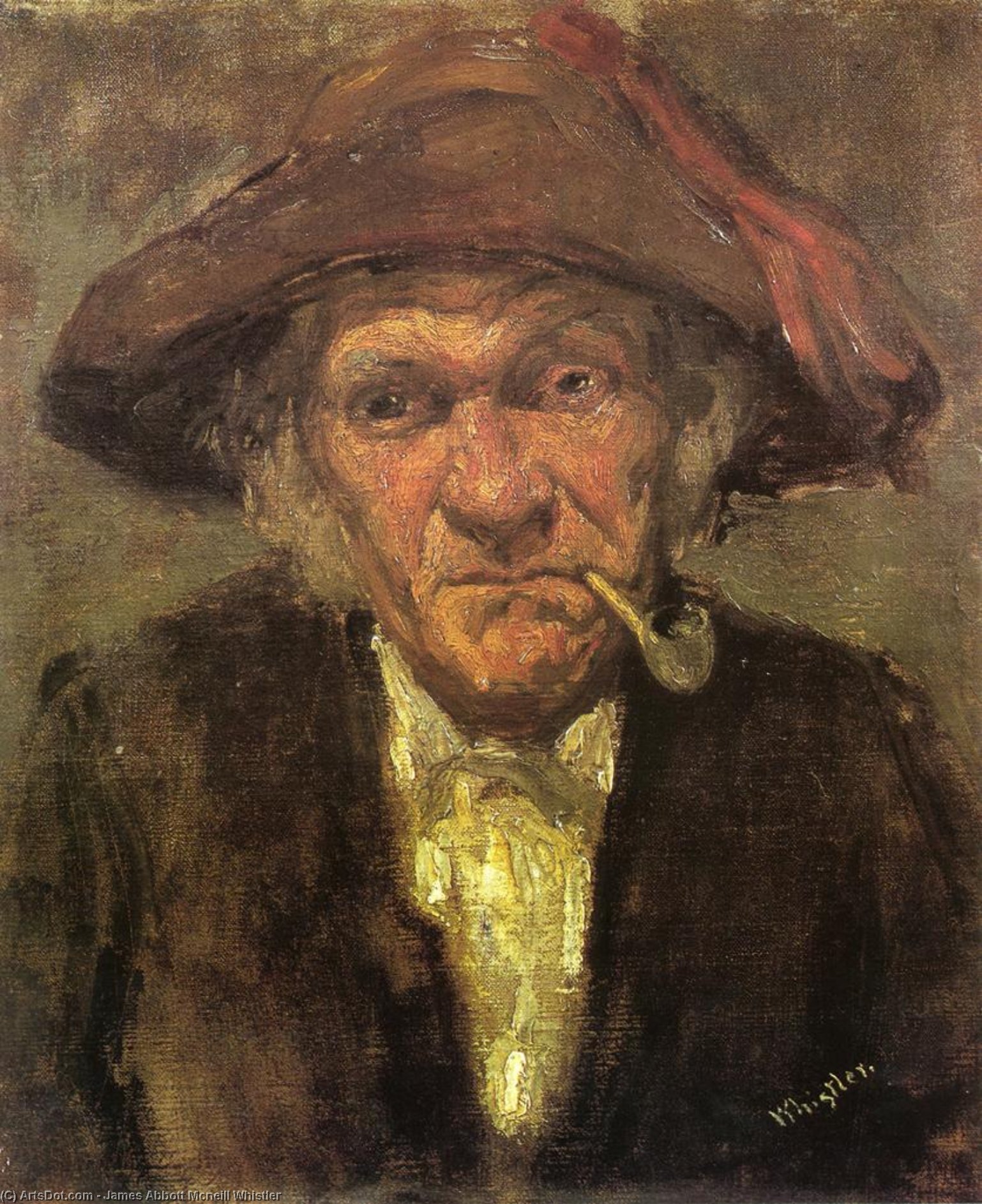
James Abbott McNeill Whistler, a name synonymous with Aestheticism and artistic independence, produced "Head of an Old Man Smoking" around 1859 – a deceptively simple canvas that speaks volumes about his philosophical convictions. Born in Lowell, Massachusetts, Whistler's upbringing instilled within him a profound appreciation for observation and experimentation, shaping his artistic trajectory as he navigated the burgeoning intellectual landscape of Victorian England. Unlike many artists of his time preoccupied with grand narratives and moral didacticism, Whistler championed “art for art’s sake,” prioritizing beauty and sensory experience above all else—a stance that positioned him firmly at odds with prevailing societal expectations.
- Subject Matter: The painting depicts a solitary elderly gentleman seated in profile, illuminated by soft light emanating from an unseen source. He holds a pipe delicately between his fingers, gazing directly at the viewer with an expression of serene contemplation.
- Style & Technique: Whistler’s masterful use of tonal modulation—the subtle blending of shades to create depth and atmosphere—defines his distinctive Impressionistic style. Rather than striving for photographic realism, he sought to capture the essence of a moment, conveying emotion through color and light rather than detailed representation.
The Historical Context: Whistler’s artistic endeavors unfolded against the backdrop of Aestheticism, a movement that vehemently rejected Victorian materialism and championed art as an antidote to societal ills. Influenced by philosophers like Friedrich Nietzsche and Henri Bergson, Whistler argued passionately for the primacy of feeling over intellect—a conviction reflected in his rejection of conventional compositional rules and his unwavering commitment to capturing subjective experience. This rebellious spirit resonated powerfully with a segment of British society eager to escape the constraints of Victorian morality.
Symbolism & Emotional Impact:
The muted palette – predominantly browns, creams, and blacks – contributes significantly to the painting’s contemplative mood. The pipe itself serves as a potent symbol of introspection and quiet reflection, representing not merely smoking but also a deliberate pause for contemplation amidst the bustle of daily life. Whistler's careful attention to light—particularly its diffused quality—creates an illusionistic space that invites viewers into the old man’s inner world. It is precisely this understated beauty and profound psychological depth that continues to captivate audiences today, cementing Whistler’s legacy as one of the most influential artists of his era.
- Recommended Reproduction: ArtsDot offers exceptionally detailed reproductions of “Head of an Old Man Smoking,” utilizing archival pigment printing techniques to faithfully recreate Whistler's original tonal palette and textural nuances. These prints are ideal for enhancing interior spaces with a touch of Victorian elegance or inspiring artistic endeavors.