James Abbott McNeill Whistler (1834-1903) championed 'art for art's sake,' rejecting moralizing narratives. His exploration spanned from West Point to the U.S. Coast Survey, fostering adaptability and exposure to diverse environments.
Explore James Abbott McNeill Whistler (1834-1903): American artist of Tonalism & Aestheticism. Discover 'Whistler's Mother,' nocturnes, portraits & his 'art for art's sake' philosophy.
A Symphony of Shadows and Light
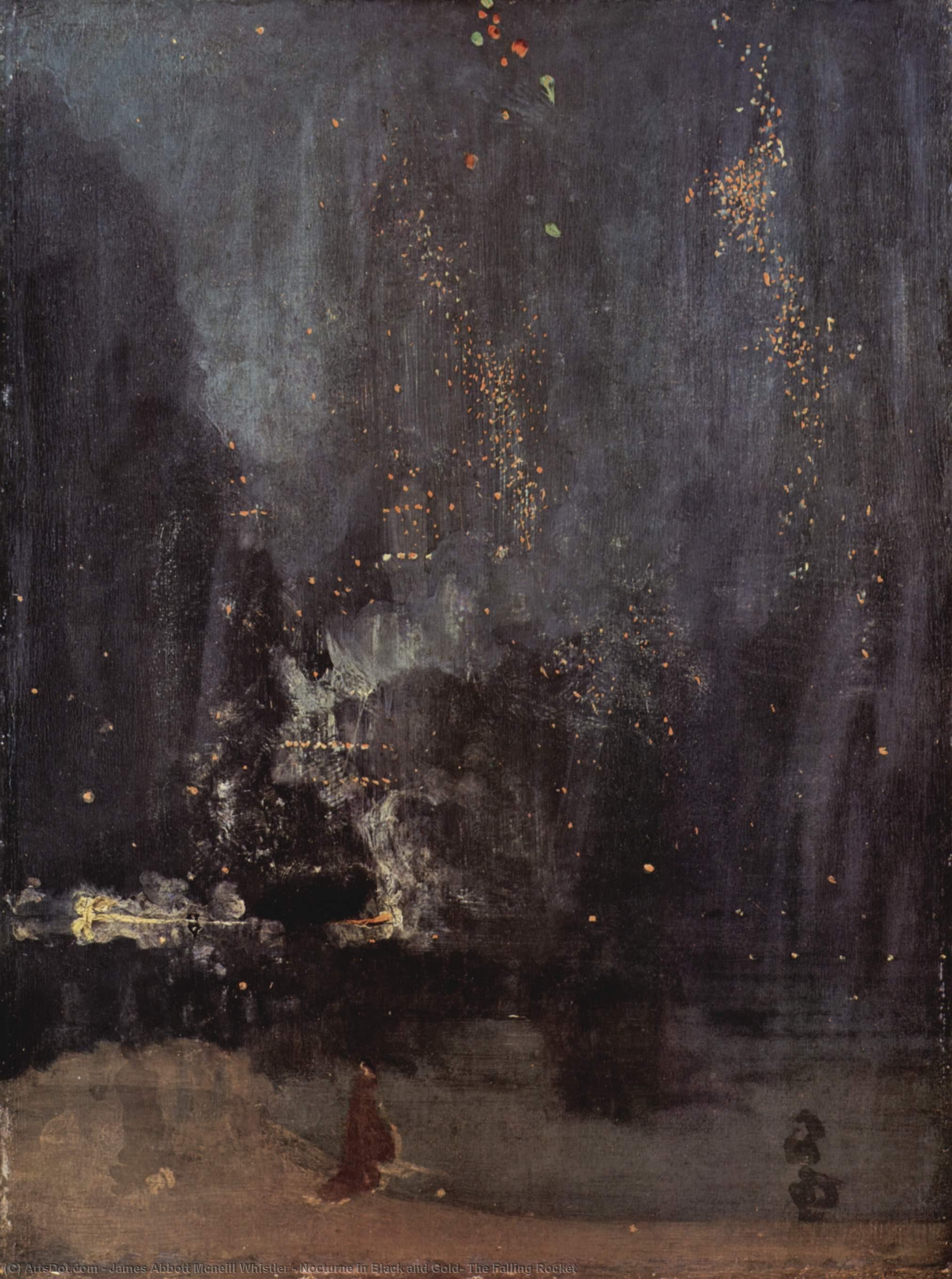
Imagine standing upon the banks of the Thames on a crisp, London evening, where the air is thick with anticipation and the velvet darkness of the night is suddenly pierced by brilliant, ephemeral bursts of gold. This is the world James Abbott McNeill Whistler invites us into through his masterpiece, Nocturne in Black and Gold, The Falling Rocket. The painting does not merely depict a fireworks display; it captures the very essence of a fleeting moment, frozen in time. A solitary figure, a woman seated with her back to the viewer, gazes toward the shimmering spectacle, her stillness acting as a profound counterpoint to the kinetic energy of the descending sparks. There is a haunting beauty in this composition, where the deep, immersive blacks of the night sky provide a dramatic stage for the delicate, glowing trails of light that seem to dance across the canvas.
The Revolution of Tonalism and Aesthetic Grace
Whistler’s approach was nothing short of revolutionary, marking a departure from the heavy-handed narratives of the Victorian era. Eschewing the need for moral storytelling or precise realism, he championed the philosophy of “art for art’s sake,” prioritizing pure sensation and atmospheric mood above all else. This technique, known as Tonalism, relies on subtle gradations of color and tone rather than harsh outlines or jarring contrasts. Influenced deeply by the understated elegance of Japanese woodblock prints, Whistler utilized a flattened perspective and a sophisticated palette to create a sense of depth through light alone. The way the gold pigments interact with the dark washes creates a texture that feels almost tactile, as if one could reach out and touch the smoky haze of the London night. For the discerning collector or interior designer, this mastery of sympathetic coloration offers a sophisticated way to introduce depth and mystery into a space, providing a focal point that is both calming and intellectually stimulating.
An Enduring Legacy for the Sophisticated Interior
The history of this work is as dramatic as the fireworks it depicts. When first unveiled, it sparked intense controversy, most notably leading to a famous legal battle with the critic John Ruskin, who accused Whistler of merely “flinging a pot of paint in the public's face.” Yet, time has vindicated the artist, revealing this Nocturne to be a foundational pillar of modern art. The painting’s ability to evoke emotion—ranging from the quiet melancholy of the dark Thames to the sudden joy of the falling rocket—makes it a timeless addition to any curated collection. For those seeking to adorn a contemporary home or a professional gallery, a high-quality reproduction of this piece brings with it an aura of prestige and a sense of historical weight. It is more than a decoration; it is an invitation to contemplate the beauty found in the transient, the dark, and the luminous, making it an incomparable centerpiece for any room designed with an eye for elegance and atmospheric depth.