A Masterpiece of Atmosphere and Mood
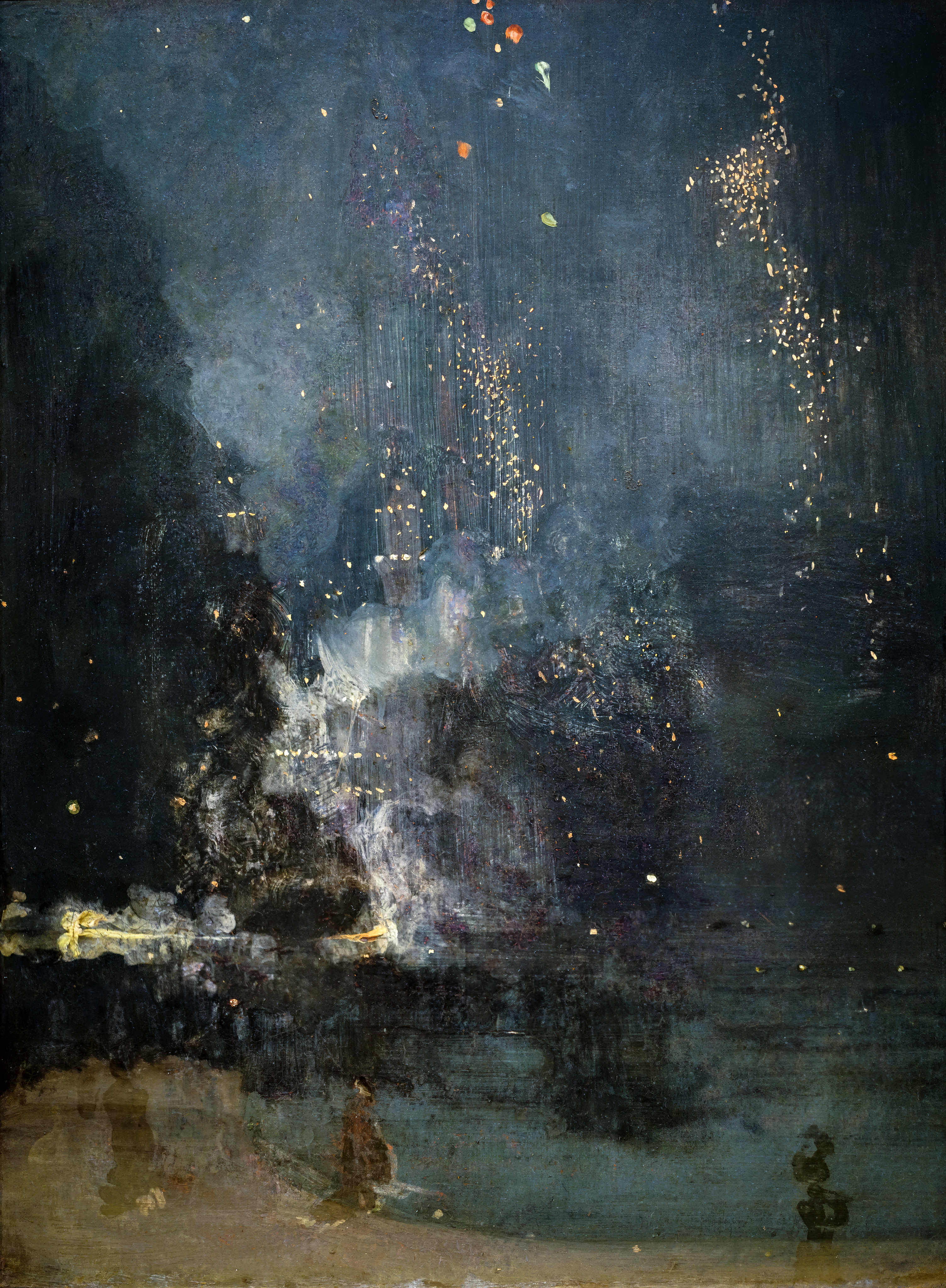
James Abbott McNeill Whistler's "Nocturne in Black and Gold: The Falling Rocket" is a captivating exploration of night, light, and atmosphere. Created in 1875, this iconic painting exemplifies Whistler's signature style and his contribution to the Tonalist movement. The artwork invites viewers into a world of mystery and introspection, where the interplay of dark tones and subtle light creates an evocative and dreamlike scene.
Composition and Color Palette
The composition is vertically oriented, with a strong emphasis on the upper two-thirds of the canvas. The lower portion features more defined elements, creating a contrast between the chaotic upper section and the grounded lower region. The color palette is predominantly dark, featuring deep blues, blacks, and greens, punctuated by small bursts of yellow and gold. These fleeting moments of light add a sense of dynamism and intrigue to the otherwise somber palette.
Technique and Style
Whistler's technique is painterly, with visible brushstrokes and a loose, gestural application of paint. The lines in the artwork are mostly organic and indistinct, blending into the overall texture. There are no sharp or defined lines; instead, the piece relies on soft, blurred edges to create a sense of movement and fluidity. The shapes are abstract and amorphous, with no clear geometric forms. Textures vary from smooth gradients to rough, almost chaotic brushstrokes, particularly in the upper section.
Historical Context and Symbolism
"Nocturne in Black and Gold: The Falling Rocket" is part of Whistler's series of Nocturnes, which were inspired by the Cremorne Gardens, a celebrated pleasure resort in London. This painting is widely acknowledged as the high point of Whistler's middle period and exemplifies the "art for art's sake" movement. The artwork seeks to provide complex emotions that go beyond the technicalities of the imagery, capturing the essence of an intangible, personal moment. The dark, chaotic upper section could symbolize the unknown or the subconscious, while the quieter lower section might represent stability or grounding. The small points of light could symbolize hope, guidance, or fleeting moments of clarity amidst darkness.
Emotional Impact and Legacy
This masterpiece evokes a sense of mystery and introspection, inviting viewers to contemplate the deeper meanings behind the abstract forms. Whistler's focus on coloristic effects and the depiction of space creates a particular sense of void that seems to arise only in the nighttime. "Nocturne in Black and Gold: The Falling Rocket" is not just a painting; it is an experience. It transports viewers into a world where light and darkness dance together, creating a symphony of emotions. This artwork is a must-have for any art lover, collector, or interior designer seeking to add a piece of history and intrigue to their collection.
Bringing Whistler's Vision to Your Space
Own a high-quality reproduction of this iconic artwork and bring the enigmatic beauty of "Nocturne in Black and Gold: The Falling Rocket" into your home or office. Whether you are an art enthusiast, a collector, or an interior designer, this painting will add depth, sophistication, and a touch of mystery to any space. Experience the timeless allure of Whistler's masterpiece and let it inspire your surroundings with its captivating atmosphere and emotional resonance.