A Moment Frozen in Time: Exploring Whistler’s “Note in Pink and Brown”
James Abbott McNeill Whistler's "Note in Pink and Brown," painted circa 1866, stands as a quintessential emblem of Aestheticism—a movement that prioritized beauty and sensory experience above didactic moral instruction. More than just a depiction of figures on a sidewalk, this deceptively simple composition encapsulates the core tenets of Whistler’s artistic philosophy: art for art's sake. It represents a deliberate rejection of Victorian societal expectations regarding artistic purpose, positioning Whistler firmly at the vanguard of European avant-garde thought.
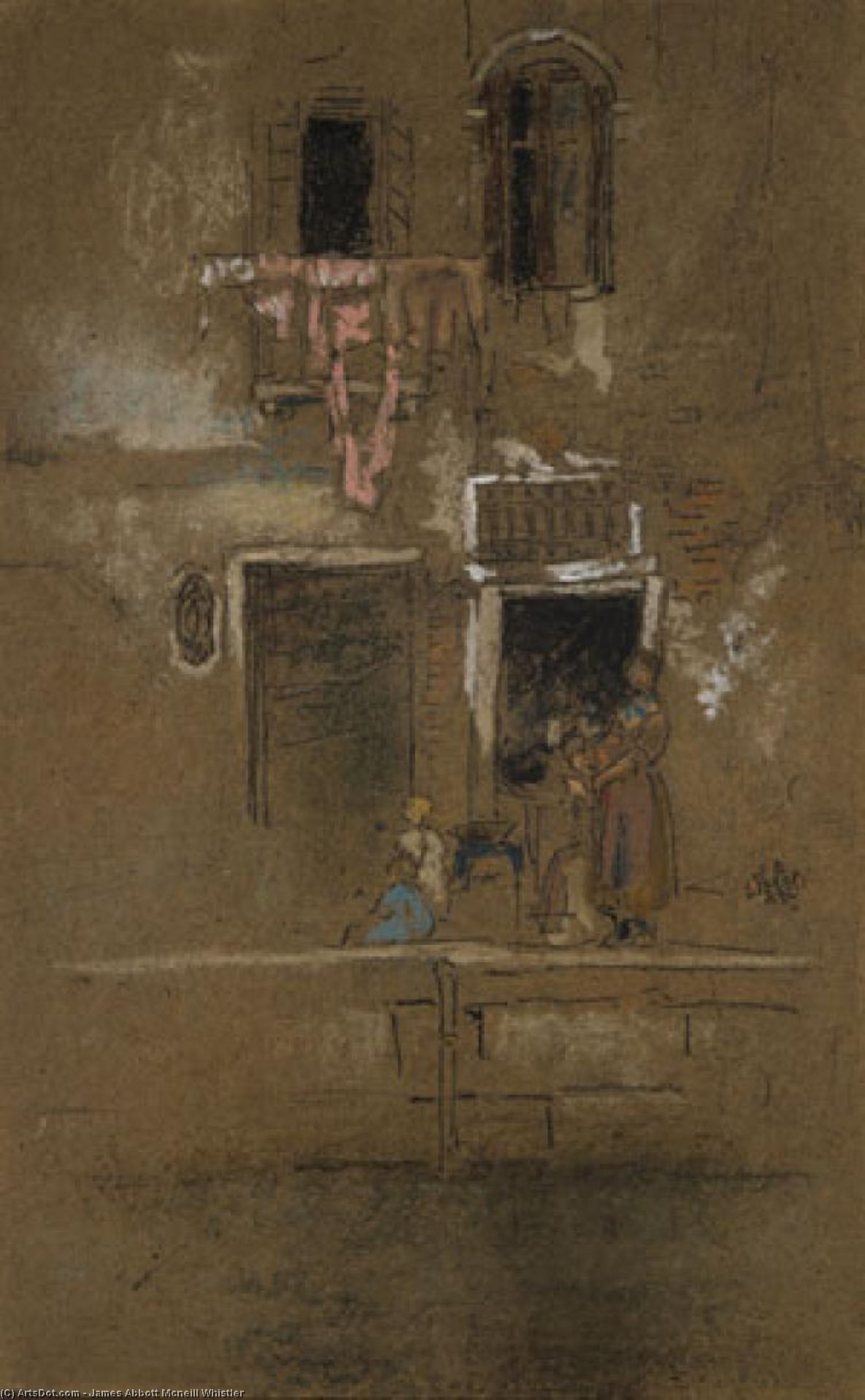
- Subject Matter & Composition: The painting captures an ordinary scene—a trio of individuals observing a building exterior. Whistler eschewed grand narratives or heroic subjects, favoring instead the quiet contemplation of everyday life. This deliberate choice underscores his belief that beauty could be found in the mundane, elevating commonplace occurrences into artistic statements.
- Style & Technique: Whistler’s signature style is characterized by tonal harmony and subtle color gradations—a technique he termed “harmonious abstraction.” He employed a muted palette dominated by browns and pinks, skillfully blending shades to create an atmosphere of understated elegance. The use of thin washes of paint allows for remarkable luminosity and textural nuance, revealing the artist’s meticulous attention to detail.
The painting emerged during a period profoundly influenced by philosophical debates surrounding art's role in society. Whistler actively engaged with discussions about Impressionism and Neo-Romanticism, recognizing their challenges to prevailing artistic conventions. However, he steadfastly maintained his commitment to Aesthetic principles—a belief that art should exist solely for its aesthetic qualities, independent of any moral or didactic intention. This stance reflects a broader cultural shift away from Victorian sentimentalism toward a more refined appreciation of visual beauty.
Symbolism & Emotional Resonance:
The inclusion of a dog adds an element of domestic tranquility to the scene, subtly reinforcing Whistler’s focus on sensory experience. The building itself serves as a grounding presence, symbolizing stability and permanence against which the fleeting gestures of human interaction are contrasted. Ultimately, “Note in Pink and Brown” evokes feelings of serenity and contemplative observation—a testament to Whistler's ability to transform ordinary subjects into emotionally resonant artworks.
Whistler’s Aesthetic Vision: Beyond Narrative
Whistler’s rejection of narrative storytelling wasn’t merely stylistic preference; it represented a fundamental critique of Victorian artistic values. He argued that art should liberate the viewer from moral judgments and allow for pure aesthetic contemplation—a radical notion at the time. By prioritizing color and form over plot or character development, Whistler sought to elevate painting beyond mere representation, aiming instead to capture the essence of visual experience itself.
Reproductions & Interior Design Considerations
A high-quality reproduction of “Note in Pink and Brown” can bring a touch of understated sophistication into any interior space. Its muted palette and harmonious tonal qualities complement a variety of design styles—particularly those favoring natural materials and calming hues. Consider framing it with simple wooden surrounds to enhance its visual impact and preserve Whistler’s original aesthetic vision.