Palaces of Brussels: A Whistlerian Study in Light and Urbanity
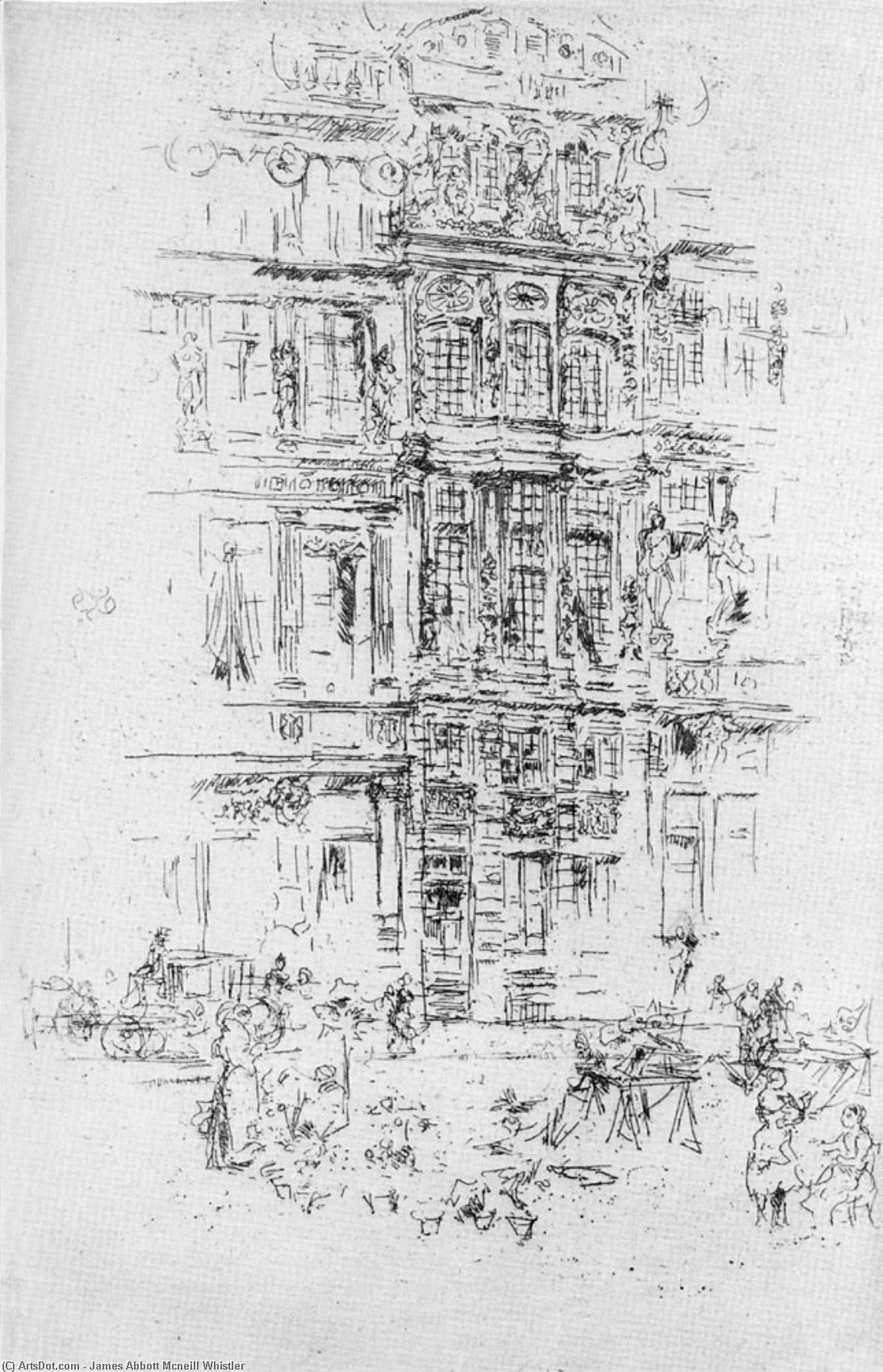
James Abbott McNeill Whistler’s “Palaces, Brussels,” painted circa 1887, isn't merely a depiction of a city street; it’s an exquisitely crafted meditation on light, atmosphere, and the very essence of urban life. Rendered with a masterful command of line and tonal variation in a strikingly monochromatic palette, this sketch captures a fleeting moment within the bustling heart of Brussels – a scene brimming with both grandeur and quiet observation. The work speaks to Whistler's core aesthetic philosophy: “art for art’s sake,” prioritizing the visual experience above narrative or moralistic intent.
Whistler, a pivotal figure in the Aesthetic movement, rejected the prevailing Victorian emphasis on grand historical narratives and sentimental subject matter. Instead, he sought to distill painting down to its purest elements – color, line, and form – believing that these could evoke powerful emotions without resorting to explicit storytelling. “Palaces, Brussels” embodies this approach perfectly. The focus isn’t on individual portraits or dramatic events but rather on the interplay of light and shadow across the facades of the buildings, creating a sense of depth and atmosphere that transcends simple representation.
The Language of Line: Technique and Composition
Executed primarily in pen and ink on paper – likely with touches of charcoal – the artwork’s power lies in its meticulous attention to line. Whistler employs a sophisticated range of hatching, cross-hatching, and contour lines to build up tonal values and suggest form. Dense hatching creates areas of shadow and texture, while lighter, more delicate lines delineate windows, balconies, and architectural details. This technique isn't simply about rendering; it’s about creating an illusion of volume and depth through the manipulation of line alone.
The composition is carefully balanced, adhering to a central perspective that draws the viewer’s eye towards the imposing building at the center. The arrangement feels subtly symmetrical, reinforcing the sense of order and grandeur associated with the architecture. However, this formality is tempered by the dynamic movement suggested by the figures in the street below – a lively contrast to the static solidity of the buildings. The inclusion of these human elements hints at the vibrant life that unfolds within the city’s heart.
A Brussels Moment: Context and Symbolism
Brussels, in 1887, was a burgeoning European capital, a hub of commerce, politics, and artistic innovation. Whistler's choice to depict this particular cityscape reflects his fascination with urban environments and his desire to capture the fleeting impressions of modern life. The palaces themselves – symbols of power, wealth, and tradition – stand in stark contrast to the everyday activity of the street scene below, creating a visual dialogue between past and present.
The monochromatic palette contributes significantly to the artwork’s mood. The absence of bright colors emphasizes the play of light and shadow, lending the scene an air of quiet contemplation. The muted tones evoke a sense of atmospheric perspective – suggesting distance and depth through subtle variations in value. It's reminiscent of Whistler's nocturnes, where he sought to capture the ethereal beauty of twilight.
Whistler’s Aesthetic Vision: A Legacy of Impressionism
“Palaces, Brussels” is a key example of Whistler’s evolving artistic style, bridging the gap between his earlier, more representational works and his later, more abstract explorations. While influenced by Impressionist techniques – particularly in its focus on capturing fleeting moments of light and atmosphere – Whistler ultimately sought to transcend mere imitation. He aimed to create paintings that were self-contained aesthetic experiences, independent of any narrative or symbolic content.
Reproductions of this captivating sketch offer a unique opportunity to appreciate the subtle nuances of Whistler’s artistic vision. The delicate interplay of lines and tones invites viewers to slow down, observe closely, and lose themselves in the beauty of a single moment captured on paper. It remains a testament to Whistler's belief that art could be both beautiful and profound – a celebration of form, light, and the enduring spirit of urban life.