A Study in Subtlety: James Abbott McNeill Whistler’s ‘Study of a Head’
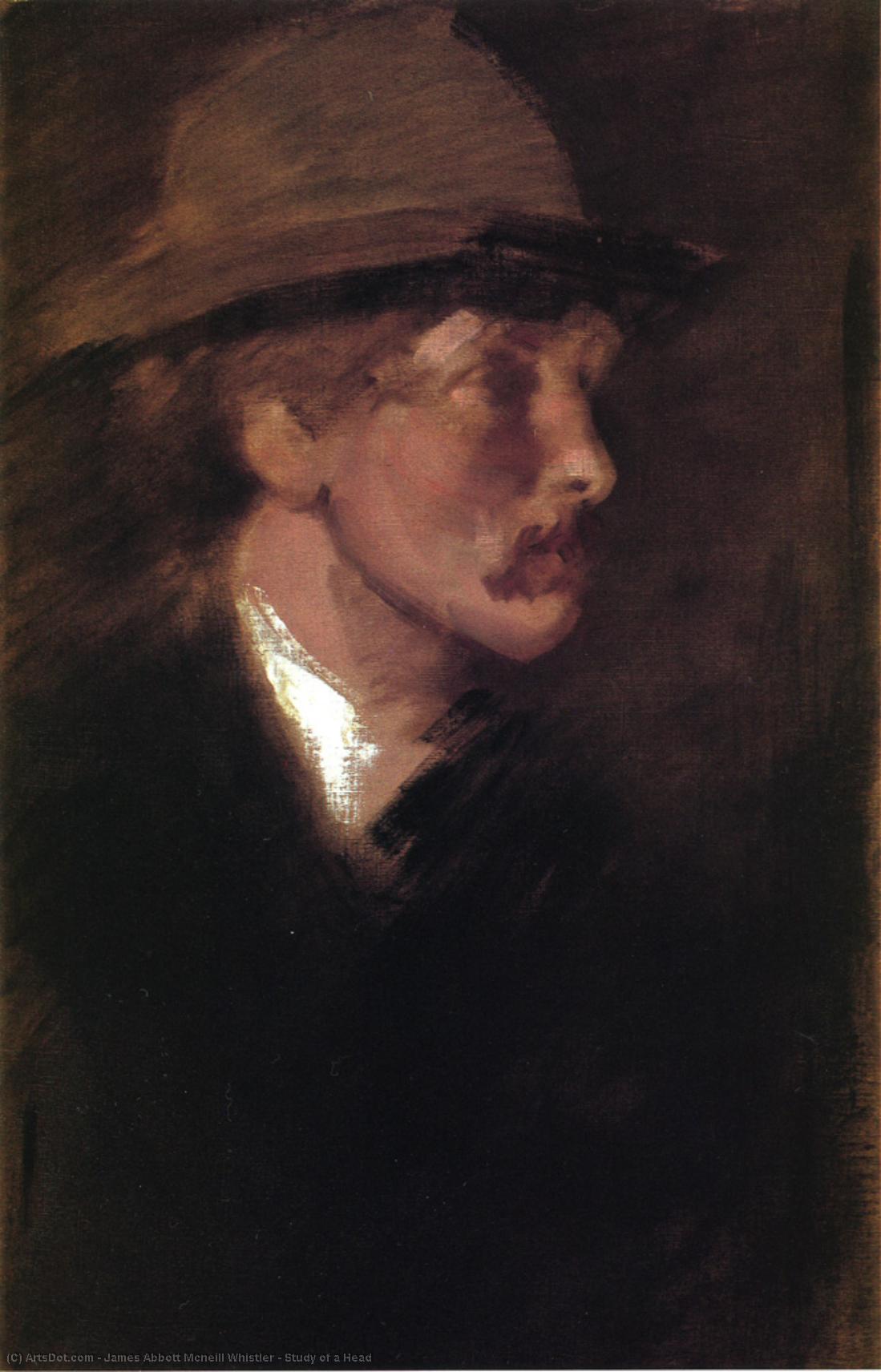
James Abbott McNeill Whistler's “Study of a Head,” painted in 1881, is not merely a portrait; it’s an intimate exploration of mood and character rendered with the artist’s signature blend of Impressionism and Realism. Held within the collection of the Columbus Museum of Art, this unassuming oil on canvas reveals a masterful command of tonal harmony and a profound understanding of human expression—a testament to Whistler's revolutionary approach to art during the late 19th century.
Whistler’s artistic philosophy centered around “art for art’s sake,” rejecting the didactic narratives prevalent in much of his contemporary work. He sought to capture not just a likeness, but an *impression* – a fleeting moment of feeling conveyed through color and form. This is particularly evident in "Study of a Head," where the subject, a man wearing a hat and tie, appears almost lost within a deliberately muted and atmospheric background. The painting’s somber palette—dominated by deep browns, grays, and blacks—creates an aura of quiet contemplation, inviting the viewer to engage with the figure's internal state.
Deconstructing the Composition: Color, Light, and Symbolism
The artist’s deliberate use of color is central to the painting’s impact. Whistler eschewed bright hues in favor of subtle tonal contrasts, emphasizing the flatness of the canvas – a characteristic often associated with his “harmonies” or “nocturnes.” The most striking element is the carefully placed highlight on the man's collar, drawing immediate attention and creating a powerful sense of visual contrast. This strategic use of light not only defines the subject’s features but also subtly directs the viewer’s gaze.
Beyond its technical brilliance, “Study of a Head” carries symbolic weight. The man’s attire—a suit jacket and tie—suggests a certain social standing and sophistication, while his contemplative expression hints at introspection or perhaps even melancholy. The hat, resembling a fedora, adds to this air of stylish reserve. The background's obscurity further isolates the subject, reinforcing the feeling of private reflection.
Whistler’s Influences and Artistic Context
Whistler’s work emerged during a period of significant artistic ferment, influenced by Impressionism, Realism, and the burgeoning Aesthetic movement. He drew inspiration from artists like Leonardo da Vinci, as evidenced by his meticulous study of the head – a technique reminiscent of Da Vinci's preparatory sketches for works such as “The Head of Saint Anne.” Whistler’s own approach, however, diverged significantly from traditional portraiture, prioritizing mood and atmosphere over detailed representation.
His rejection of overt narrative and moralizing themes aligned with the Aesthetic movement’s emphasis on beauty and formal qualities. Whistler believed that art should be judged solely on its aesthetic merit, independent of any external message or purpose. “Study of a Head” embodies this philosophy perfectly—a captivating work of art in its own right, devoid of extraneous symbolism or didactic intent.
Reproductions and Artistic Legacy
ArtsDot offers meticulously crafted hand-painted reproductions of “Study of a Head,” allowing you to experience the painting’s subtle beauty and evocative atmosphere firsthand. Our artists replicate Whistler's delicate brushwork, tonal harmonies, and masterful use of light with exceptional precision, ensuring that your reproduction captures the essence of this iconic work.
“Study of a Head” remains a pivotal piece in the history of art, influencing generations of painters and shaping our understanding of portraiture. Whether you are an art enthusiast, collector, or simply seeking to add a touch of timeless elegance to your interior space, a ArtsDot reproduction of this remarkable painting is sure to be a treasured addition to your collection.