Introduction to the Painting and its Creator
James Abbott McNeill Whistler, an influential American artist, is renowned for his oil paintings, watercolors, and printmaking during the Gilded Age. He advocated for 'art for art's sake,' distancing his work from moralistic or sentimental narratives. Among his most famous works is
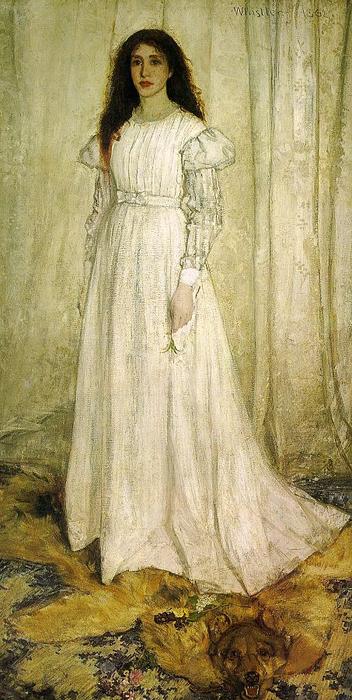
Symphony in White, No. 1: The White Girl, a Tonalist painting that exemplifies the movement's emphasis on mood, atmosphere, and tonal values over detail and color.
Background and Analysis of Symphony in White, No. 1: The White Girl
Created in 1862,
Symphony in White, No. 1: The White Girl (
View the Painting) is an iconic work of art that measures 214 cm × 107 cm (84 in × 42 in) and is housed at the National Gallery of Art, London. The painting features a young woman, possibly Whistler's mistress Joanna Hiffernan, dressed in white and standing against a white background. The title,
Symphony in White, suggests that Whistler intended for this work to be perceived as a visual symphony of whites, with subtle variations in tone and hue. The painting is divided into three main areas: the woman's dress, her face, and the background. Each area displays different shades of white, creating an overall sense of harmony and unity.
Tonalism Art Movement
Symphony in White, No. 1: The White Girl is a prime example of Tonalism, an American art movement that emerged in the 1880s and lasted until the early 20th century. This style is characterized by its emphasis on mood, atmosphere, and tonal values over detail and color. Tonalist paintings often depict landscapes with soft, muted colors and a limited palette, creating an overall sense of calmness and tranquility.
Whistler's Other Notable Tonalist Paintings
In addition to
Symphony in White, No. 1: The White Girl, Whistler created several other notable Tonalist paintings, including:
These works further illustrate Whistler's mastery of Tonalism and his commitment to creating art for art's sake.
Conclusion
Symphony in White, No. 1: The White Girl is a remarkable work of art that embodies the principles of Tonalism and showcases Whistler's exceptional talent as an artist. This painting, along with his other notable Tonalist works, demonstrates Whistler's dedication to creating art for art's sake and his ability to evoke mood and atmosphere through subtle variations in tone and color.
Discover more about James Abbott McNeill Whistler and his masterpieces by visiting: James Abbott McNeill Whistler.