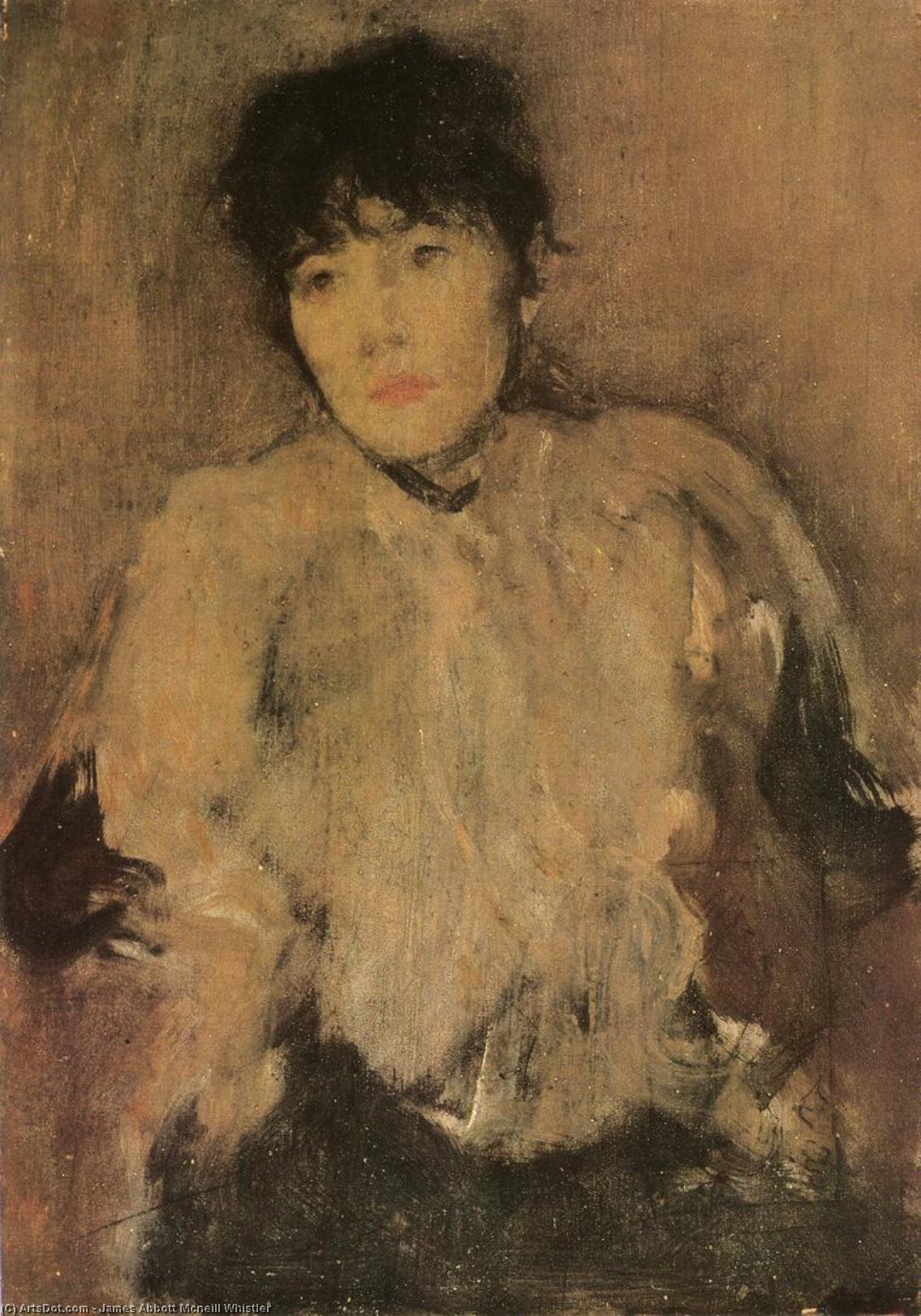
Discover Whistler’s ‘The Rose Scarf,’ a captivating 1890 oil painting of elegant beauty. Explore Impressionistic brushwork & muted tones in this iconic piece from the Hunterian Museum.
Explore James Abbott McNeill Whistler (1834-1903): American artist of Tonalism & Aestheticism. Discover 'Whistler's Mother,' nocturnes, portraits & his 'art for art's sake' philosophy.
An Intimate Moment: Exploring Whistler’s ‘The Rose Scarf’
James Abbott McNeill Whistler's *The Rose Scarf*, painted in 1890, is more than just a portrait; it’s an evocative study of feminine grace and quiet contemplation. Housed at the Hunterian Museum and Art Gallery, this oil on canvas offers a glimpse into Whistler’s distinctive aesthetic – one that prioritized artistic harmony over strict representational accuracy. The painting depicts a woman, her dark hair cascading around her shoulders, seated in an interior space. She wears a simple white shirt adorned with a delicate rose-patterned scarf, the focal point of the composition and source of its title.
A Master of Tonalism & Impressionistic Influence
Whistler was a pivotal figure bridging Realism and Impressionism, ultimately forging his own path through *Tonalism*. *The Rose Scarf* exemplifies this style beautifully. Notice the muted palette – soft browns, creams, and subtle ochres dominate, creating a harmonious and atmospheric effect. Whistler wasn’t interested in vibrant color for its own sake; instead, he used tone to evoke mood and feeling. The brushwork is loose and visible, characteristic of Impressionistic techniques, but employed with a greater emphasis on overall tonal relationships than fleeting light effects. The painting isn't about *what* is depicted, but *how* it’s depicted – the arrangement of color and form creating a visual symphony.
Subject & Composition: A Study in Elegance
The woman in *The Rose Scarf* exudes an air of quiet dignity and introspection. Her gaze is averted, inviting viewers to project their own emotions onto her. The composition is deliberately simple, focusing attention on the figure and the scarf itself. Whistler often chose models who were not necessarily famous or wealthy, but whose features and demeanor suited his artistic vision. He sought a certain *type* – a refined sensibility that resonated with his aesthetic ideals. The shallow depth of field further emphasizes this intimacy, drawing us into her private world.
Historical Context & Whistler’s ‘Art for Art’s Sake’
Whistler was a staunch advocate of “art for art's sake,” believing that the purpose of art should be beauty alone, independent of moral or narrative concerns. This philosophy was radical for its time and often put him at odds with critics who demanded more explicit meaning in his work. *The Rose Scarf*, like many of Whistler’s paintings, reflects this belief. It's not a portrait intended to tell a story; it’s an exercise in aesthetic arrangement – a carefully considered composition designed to please the eye and evoke emotion through its formal qualities. His “Arrangements,” such as *Arrangement in Black and Brown* (Portrait of Miss Rosa Corder) demonstrate this principle, prioritizing color harmony over detailed representation.
Symbolism & Emotional Resonance
While Whistler eschewed overt symbolism, the rose scarf itself carries subtle connotations. Roses traditionally symbolize love, beauty, and fragility – themes that subtly resonate within the painting’s quiet mood. The softness of the fabric contrasts with the woman's composed posture, hinting at a delicate inner life. The overall effect is one of melancholic beauty, inviting contemplation on themes of femininity, solitude, and the passage of time. *Rose and Silver: The Princess from the Land of Porcelain* shares this ethereal quality, showcasing Whistler’s fascination with feminine subjects and decorative patterns.
Collecting & Reproductions
For art enthusiasts seeking to enrich their collections, high-quality handmade oil painting reproductions of *The Rose Scarf* are readily available. These meticulously crafted replicas capture the nuances of Whistler’s brushwork and tonal palette, bringing the beauty of this iconic work into your home or office. Consider how its muted tones and elegant composition could complement a variety of interior design styles – from traditional to contemporary. The painting's understated elegance makes it a versatile addition to any space, fostering an atmosphere of tranquility and refined taste. Explore other works by Whistler, such as Arrangement in Black and Gold, to further appreciate his unique artistic vision.