‘Arrangement in Yellow and Gray’: Effie Deans, James Abbott McNeill Whistler, c. 1876 - c. 1878 – This evocative painting by Whistler explores themes of melancholy and beauty through subtle color palettes and delicate lines, mirroring the influence of Japanese prints.
A Symphony of Stillness: The Essence of Whistler’s The Wine-Glass
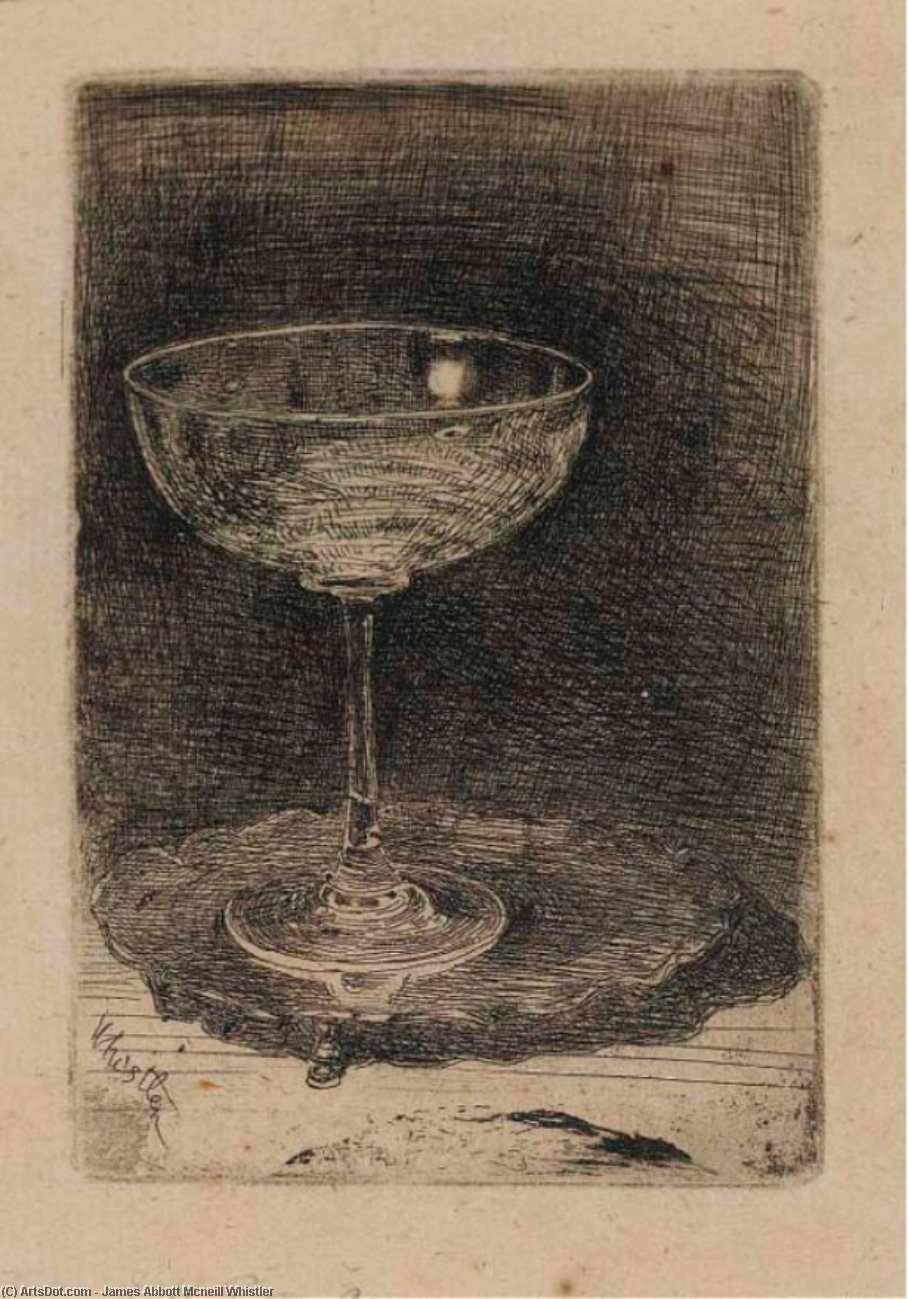
In the quiet corners of art history, few works capture the profound beauty of silence as masterfully as James Abbott McNeill Whistler’s 1859 masterpiece, The Wine-Glass. To gaze upon this composition is to step away from the frantic noise of the modern world and enter a realm of contemplative stillness. At its heart, the painting presents a delicate arrangement: a wine glass positioned with intentional grace beneath a bowl of water, creating a mesmerizing interplay of light, shadow, and transparency. This central focus is complemented by the presence of two vases—one ornate and tall, the other modest and simple—which together weave a rich tapestry of texture and form. The scene does not demand attention through grand gestures or dramatic action; instead, it invites the viewer into a muted, ethereal world where every object exists in perfect, harmonious equilibrium.
Whistler’s technique in this work serves as a bridge between Western tradition and the radical influence of Japanese ukiyo-e prints. Eschewing the heavy-handed realism prevalent in his era, he utilized soft lines and a sophisticated palette of muted tones—primarily ochre, gray, and subtle yellows—to achieve an atmospheric depth that feels almost musical. The painting’s surface is a testament to his meticulous craftsmanship, built through thin, luminous layers of paint that allow light to breathe from within the canvas. This approach creates a sense of "arrangement" rather than mere depiction, a hallmark of the Aesthetic movement. For the discerning collector or interior designer, this piece offers a sophisticated anchor for a room, providing a sense of calm and tonal elegance that complements both contemporary minimalism and classical decor.
The Philosophy of Beauty and the Art of Mood
To understand The Wine-Glass, one must understand the rebellious spirit of its creator. Emerging during a period when art was often expected to deliver moral lessons or historical narratives, Whistler championed the radical credo of "art for art’s sake." He sought to distance himself from the didacticism of Victorian conventions, arguing instead that the true purpose of an artist is to capture mood and atmosphere. In this painting, color and form are not merely tools for description but are symbols in themselves. The warmth of the yellow hues evokes a sense of optimism and light, while the encroaching gray tones introduce a touch of melancholy, creating a psychological tension that keeps the viewer emotionally engaged.
This deliberate use of symbolism transforms a simple still life into a profound meditation on existence. By focusing on the ephemeral qualities of light reflecting through glass and water, Whistler reminds us of the beauty found in the fleeting and the mundane. For those seeking to bring inspiration into their living spaces, a high-quality reproduction of this work offers more than just decoration; it provides a window into a period of intense artistic revolution. It is an invitation to slow down, to observe the subtle gradations of light, and to find luxury in the quietest moments of life.