A Quiet Moment: James Abbott McNeill Whistler’s “Turkeys”
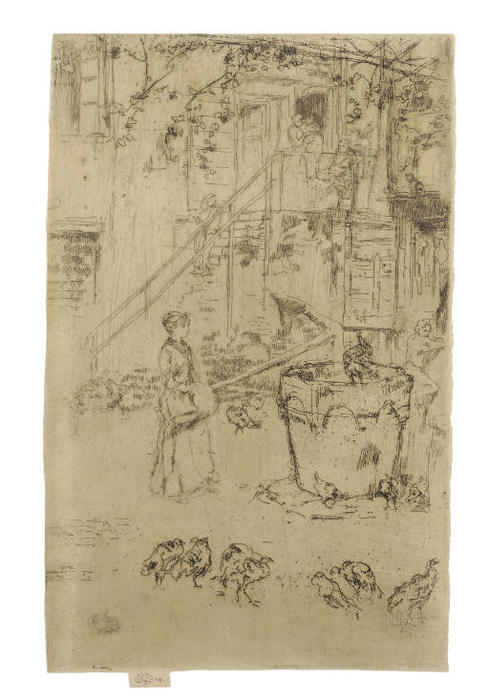
“Turkeys,” a captivating tonalist painting by American master James Abbott McNeill Whistler, offers a serene and subtly evocative glimpse into rural life. Executed in delicate shades of black and white, the artwork transcends a simple depiction of fowl and becomes a study in atmosphere, form, and the artist’s signature aesthetic principles.
Subject & Composition
The scene centers around a woman standing amidst a scattered flock of turkeys. The birds are rendered with varying degrees of clarity – some sharply defined in the foreground, others dissolving into soft tones in the distance – creating a sense of depth and naturalism. A solitary chair occupies a central position, suggesting human presence and perhaps a moment of rest or observation. Whistler masterfully balances the figures of the woman and the turkeys within the composition, inviting the viewer to contemplate their relationship to one another and the surrounding environment.
Style & Technique: Tonalism and Artistic Philosophy
“Turkeys” is exemplary of Whistler’s embrace of
tonalism, a late 19th-century artistic movement characterized by its muted palettes, emphasis on atmospheric effects, and rejection of detailed realism. Whistler believed in “art for art's sake,” prioritizing aesthetic harmony over narrative content or moralizing themes. He sought to create paintings that were akin to musical compositions – arrangements of color and form designed to evoke a specific mood or feeling. The limited monochrome palette in "Turkeys" reinforces this concept, focusing attention on the interplay of light and shadow and the subtle gradations of tone. Whistler’s technique involved layering washes of paint to achieve these delicate effects, demonstrating his skill as both an oil painter and printmaker.
Historical Context & Whistler's Place in Art History
Born in 1834, James Abbott McNeill Whistler was a pivotal figure bridging American art with European avant-garde movements. He spent much of his career in Europe, particularly England, where he became associated with the Aesthetic Movement and exerted considerable influence on artists like Walter Sickert. Whistler’s emphasis on formal qualities and subjective experience paved the way for abstract expressionism in the 20th century. His famous legal battle over “Arrangement in Grey and Black No.1” (commonly known as "Whistler's Mother") solidified his commitment to artistic independence and challenged conventional notions of what constituted ‘art’.
Symbolism & Emotional Impact
While Whistler eschewed overt symbolism, the painting invites interpretation. The turkeys themselves can be seen as representing rural simplicity and natural abundance. The woman’s presence suggests a connection between humanity and nature, perhaps hinting at themes of domesticity or quiet contemplation. The overall effect is one of peacefulness and tranquility.
“Turkeys” evokes a sense of nostalgia for a simpler time, inviting viewers to pause and appreciate the beauty of everyday life. The painting’s subdued tones and atmospheric quality create an intimate and contemplative mood, making it a compelling addition to any collection or interior space.
Collecting & Reproduction
- Ideal for collectors interested in American tonalism and 19th-century art.
- Suits interiors seeking a calming and sophisticated aesthetic – particularly bedrooms, studies, or living rooms with neutral color palettes.
- High-quality reproductions capture the delicate nuances of Whistler’s technique, making it accessible for a wider audience.