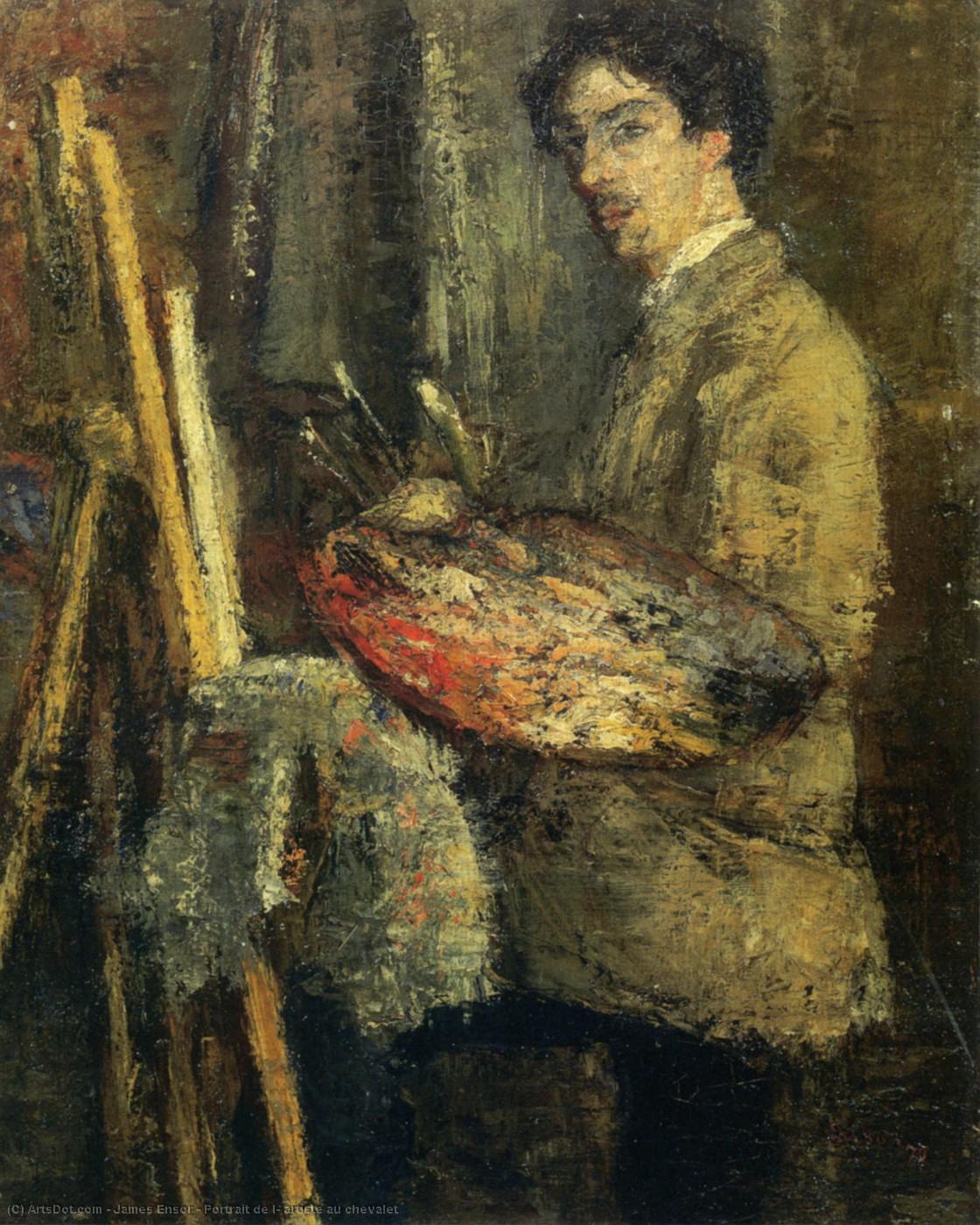
James Ensor's 'Portrait de l'artiste au chevalet' captures an artist amidst his creative process. Explore the unsettling beauty and social commentary of this iconic Belgian masterpiece.
Discover James Ensor (1860-1949), a Belgian painter who pioneered Expressionism & Surrealism. Explore his unsettling scenes of masks, carnivals & skeletons.
A Portrait of an Artist’s World: James Ensor's ‘Portrait de l'artiste au chevalet’
James Ensor’s “Portrait de l’artiste au chevalet” isn’t merely a depiction of a man with a paintbrush; it’s a meticulously constructed window into the artist’s psyche, a visual embodiment of his lifelong fascination with masks, shadows, and the unsettling beauty of the everyday. Painted in 1884, this work, now housed within the Musées royaux des Beaux-Arts de Belgique in Brussels, reveals a complex interplay of observation, memory, and deliberate theatricality – hallmarks of Ensor’s distinctive artistic vision. The painting immediately draws the eye to the central figure, an artist absorbed in his craft, holding a brush poised as if mid-stroke. His brown jacket, a practical yet subtly worn garment, contrasts with the vibrant chaos of the scene behind him. It's not a studio brimming with pristine order, but rather a space alive with potential, populated by two indistinct figures and a collection of paintbrushes – tools that represent both creation and destruction, precision and abandon. The inclusion of these elements suggests an ongoing process, a work perpetually in progress, mirroring the artist’s own restless creative spirit.
The Language of Masks and Shadows
Ensor's artistic language is deeply rooted in the theatrical traditions he encountered growing up in Ostend, a bustling seaside resort town renowned for its annual carnival. The presence of masks – not just in the painting itself but hinted at in the artist’s biography – speaks to this formative influence. These aren’t celebratory masks of joy and revelry; rather, they represent concealment, deception, and the hidden anxieties beneath the surface of social interaction. The two figures in the background, partially obscured, could be interpreted as representations of these concealed identities, adding a layer of ambiguity and intrigue to the composition. Furthermore, Ensor's masterful use of shadow – particularly evident in the way he renders the light falling across the canvas and the artist’s face – creates an atmosphere of mystery and introspection. It’s not simply about illuminating the subject; it’s about revealing something deeper, a sense of vulnerability and perhaps even melancholy.
Technique and Symbolism: A Deliberate Distortion
Ensor's technique is characterized by a deliberate distortion of reality, a hallmark of his Expressionist approach. He employs a loose, gestural brushstroke, prioritizing emotional impact over photographic accuracy. The colors are rich and saturated, yet not entirely naturalistic – they’re heightened to amplify the painting’s dramatic effect. Notice how he uses dark browns and blues to create depth and contrast, drawing the viewer's eye towards the central figure while simultaneously suggesting a sense of unease. The composition itself is slightly off-kilter, creating a subtle feeling of imbalance that mirrors the artist’s own internal struggles. The placement of the paintbrushes isn’t random; they are strategically positioned to suggest both the act of creation and the potential for destruction – a recurring theme in Ensor's work. The chair, a simple object, anchors the scene and provides a sense of grounding amidst the surrounding chaos.
A Window into an Artist’s Mind
“Portrait de l’artiste au chevalet” is more than just a portrait; it’s a psychological exploration of the artist's creative process. Ensor wasn’t interested in presenting a polished, idealized image of himself. Instead, he chose to depict a moment of intense concentration, capturing the very essence of his artistic practice. The painting invites us to contemplate the relationship between the artist and his work – the struggle, the frustration, and ultimately, the profound satisfaction that comes from bringing an idea to life on canvas. It’s a testament to Ensor's ability to transform personal experience into universal themes of identity, perception, and the human condition. Reproductions of this powerful artwork offer a unique opportunity to engage with one of the most innovative and unsettling figures in modern art history. ArtsDot offers high-quality reproductions that faithfully capture the nuances of Ensor’s masterful technique and evocative imagery, allowing you to bring this captivating portrait into your own space.