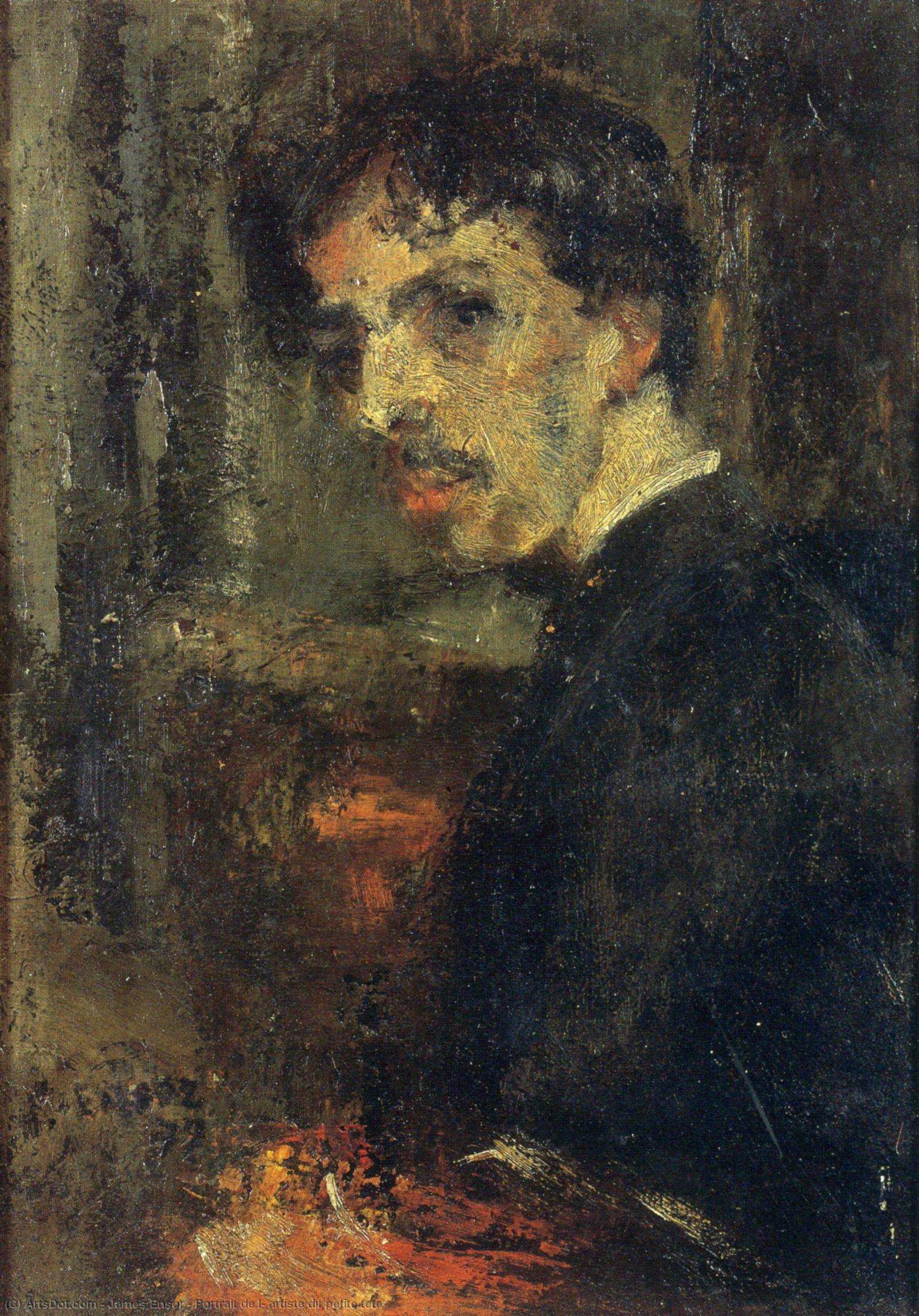
Admire James Ensor's 'Portrait de l' artiste dit petite tete,' a haunting depiction of introspection and formality rendered in oil on paper. Explore high-quality reproductions at ArtsDot.
Discover James Ensor (1860-1949), a Belgian painter who pioneered Expressionism & Surrealism. Explore his unsettling scenes of masks, carnivals & skeletons.
A Visionary's Reflection: Unpacking James Ensor’s “Portrait de l’artiste dit petite tête”
James Sidney Edouard Ensor (1860 – 1949), a Belgian painter who irrevocably altered the course of artistic expression, stands as one of the foremost figures in Expressionism and Surrealism. His oeuvre is characterized by unsettling imagery—masks, carnivals, skeletons—yet simultaneously imbued with profound symbolic depth and lasting influence on subsequent generations of artists. “Portrait de l’artiste dit petite tête,” completed around 1884, exemplifies Ensor's distinctive approach: a meticulously crafted oil painting that transcends mere representation to delve into the complexities of identity and psychological introspection. This artwork isn’t simply a depiction of a man; it’s an exploration of perception itself.
Style and Technique: Embracing Distortion for Emotional Resonance
Ensor’s stylistic choices immediately distinguish “Portrait de l’artiste” from academic conventions prevalent during his time. Rejecting idealized beauty, he opted for deliberate distortion—a technique central to Expressionist aesthetics—to convey inner turmoil and emotional intensity. The artist employs a muted palette dominated by earthy tones – browns, ochres, and greys – creating an atmosphere of subdued gloom that mirrors the subject’s solemn gaze. Thick impasto brushstrokes contribute to textural richness, emphasizing the physicality of the portrait and amplifying its expressive power. These bold marks aren't merely decorative; they actively communicate a sense of unease and vulnerability.
Historical Context: The Seeds of Expressionism in Brussels
Painted during Ensor’s formative years in Brussels—a city grappling with social anxieties and artistic experimentation—the painting reflects the burgeoning spirit of Symbolist and Proto-Expressionist thought. Influenced by artists like Edvard Munch and Gustave Moreau, Ensor sought to capture not just what he saw but what he *felt*. The backdrop – a simple chair and clock – serves as grounding elements against which the figure’s contemplative posture is accentuated. These objects aren't merely props; they subtly underscore themes of time passing and the inescapable realities of existence—subjects frequently explored by Ensor’s contemporaries.
Symbolism: Masks, Silence, and the Burden of Consciousness
The portrait’s title itself – “Portrait de l’artiste dit petite tête” – is laden with symbolic significance. "Petite tête" translates to "little head," a deliberate diminutive that underscores the artist's preoccupation with concealment and illusion. Ensor famously stated his belief that artists should “mask” themselves, concealing their true selves beneath layers of artifice—a concept powerfully embodied in this artwork. The man’s gaze is unwavering yet distant, conveying a profound sense of solitude and introspection. This stillness speaks volumes about the artist's internal landscape – a realm haunted by anxieties and shadowed by unspoken truths.
Emotional Impact: A Portrait That Remains Unsettlingly Relevant
“Portrait de l’artiste dit petite tête” continues to resonate with viewers today precisely because it confronts us with uncomfortable questions about identity, perception, and the human condition. Ensor's masterful manipulation of color, texture, and composition compels us to contemplate the complexities of selfhood—the masks we wear, the silence we inhabit, and the burdens of consciousness. It’s a painting that lingers in the mind long after viewing, prompting reflection on the enduring power of art to illuminate the darkest recesses of human experience. A stunning reproduction from ArtsDot offers an unparalleled opportunity to appreciate Ensor's visionary genius.