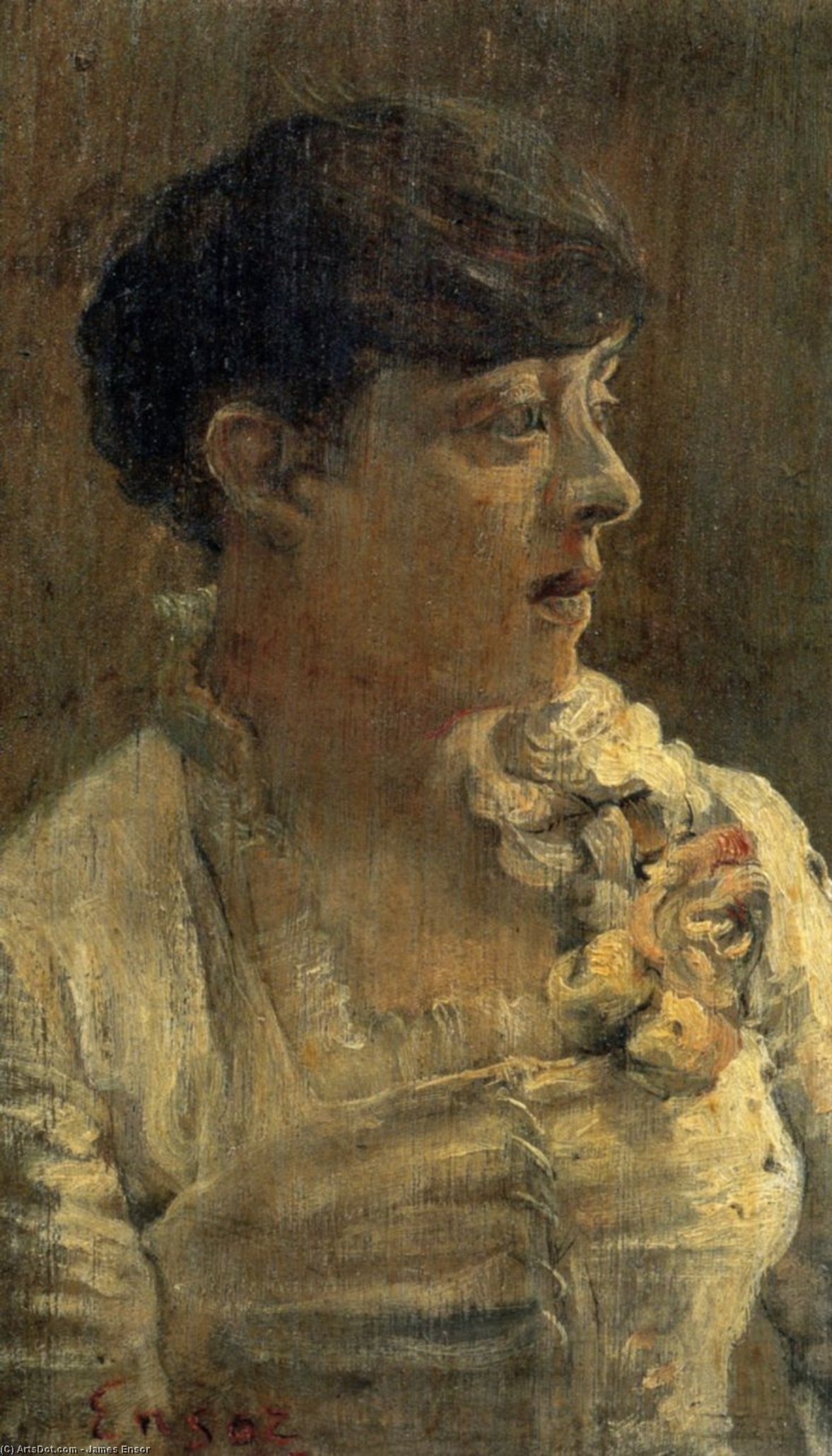
Explore James Ensor’s "Portrait of the Artist’s Sister," a haunting impressionistic portrait from 1888. Discover its muted tones, layered brushstrokes & contemplative subject – perfect for art collectors.
Discover James Ensor (1860-1949), a Belgian painter who pioneered Expressionism & Surrealism. Explore his unsettling scenes of masks, carnivals & skeletons.
A Glimpse into Intimacy: James Ensor’s Portrait of His Sister
This captivating portrait by Belgian master James Ensor offers a tender and introspective glimpse into the artist's personal life. Painted in an impressionistic style, the work depicts his sister in profile, radiating a quiet contemplation that draws the viewer into her inner world. The signature ‘Ensoz’ in the lower right corner confirms its authenticity and connection to the renowned artist.
Style & Technique: Bridging Realism and Impressionism
The painting beautifully exemplifies Ensor's evolving style, a fascinating blend of realism and the burgeoning impressionistic movement of the late 19th century. While maintaining a recognizable likeness of his subject, Ensor employs loose, visible brushstrokes and subtle shading to create depth and atmosphere. The technique – layering paint in short, broken strokes – is characteristic of Impressionism’s focus on capturing fleeting moments and the effects of light. This approach softens the edges and imbues the portrait with a sense of delicate transience. The muted color palette—dominated by browns, creams, and grays—contributes to the painting's somber yet elegant mood, enhancing its emotional resonance.
Subject & Composition: A Study in Quietude
The composition is vertically oriented, skillfully focusing attention on his sister’s face and upper body. Her downward gaze and contemplative expression invite speculation about her thoughts and feelings. She is elegantly dressed in a white dress adorned with delicate lace detailing and a floral embellishment at the neck – subtle indicators of status and refinement. The indistinct, dark background serves to isolate the figure, further emphasizing her presence and drawing the eye towards her nuanced features. The profile view adds an element of mystery and introspection, allowing viewers to project their own interpretations onto her silent expression.
Historical Context: Ensor’s Early Portraiture
Born in Ostend, Belgium, in 1860, James Ensor initially struggled against the constraints of traditional academic art training. He eventually studied at the Académie Royale des Beaux-Arts in Brussels but quickly developed a unique and often unconventional artistic vision. This portrait likely dates from an earlier period in his career, before he became widely known for his more satirical and grotesque works featuring masks and carnival imagery. It provides valuable insight into Ensor’s development as an artist and demonstrates his early mastery of portraiture techniques. It showcases a softer side to the artist who would later become famous for challenging societal norms through his art.
Emotional Impact & Symbolism
Beyond its technical brilliance, this portrait evokes a profound sense of intimacy and quiet emotion. The subdued color palette and contemplative pose suggest a moment of private reflection. While specific symbolism remains open to interpretation, the floral adornment could represent youth, beauty, or perhaps even a fleeting sense of joy. The painting’s overall effect is one of gentle melancholy and understated elegance. It's a testament to Ensor’s ability to capture not just a likeness, but also the inner life of his subject.
For Collectors & Designers
This artwork would be a stunning addition to any collection focused on 19th-century European painting or Impressionism. Its muted tones and introspective mood make it particularly well-suited for interiors seeking a sense of calm sophistication. A high-quality reproduction would bring the subtle beauty and emotional depth of Ensor’s work into any home or office, serving as a constant source of inspiration and contemplation.