A Vision of Divine Radiance and Human Emotion
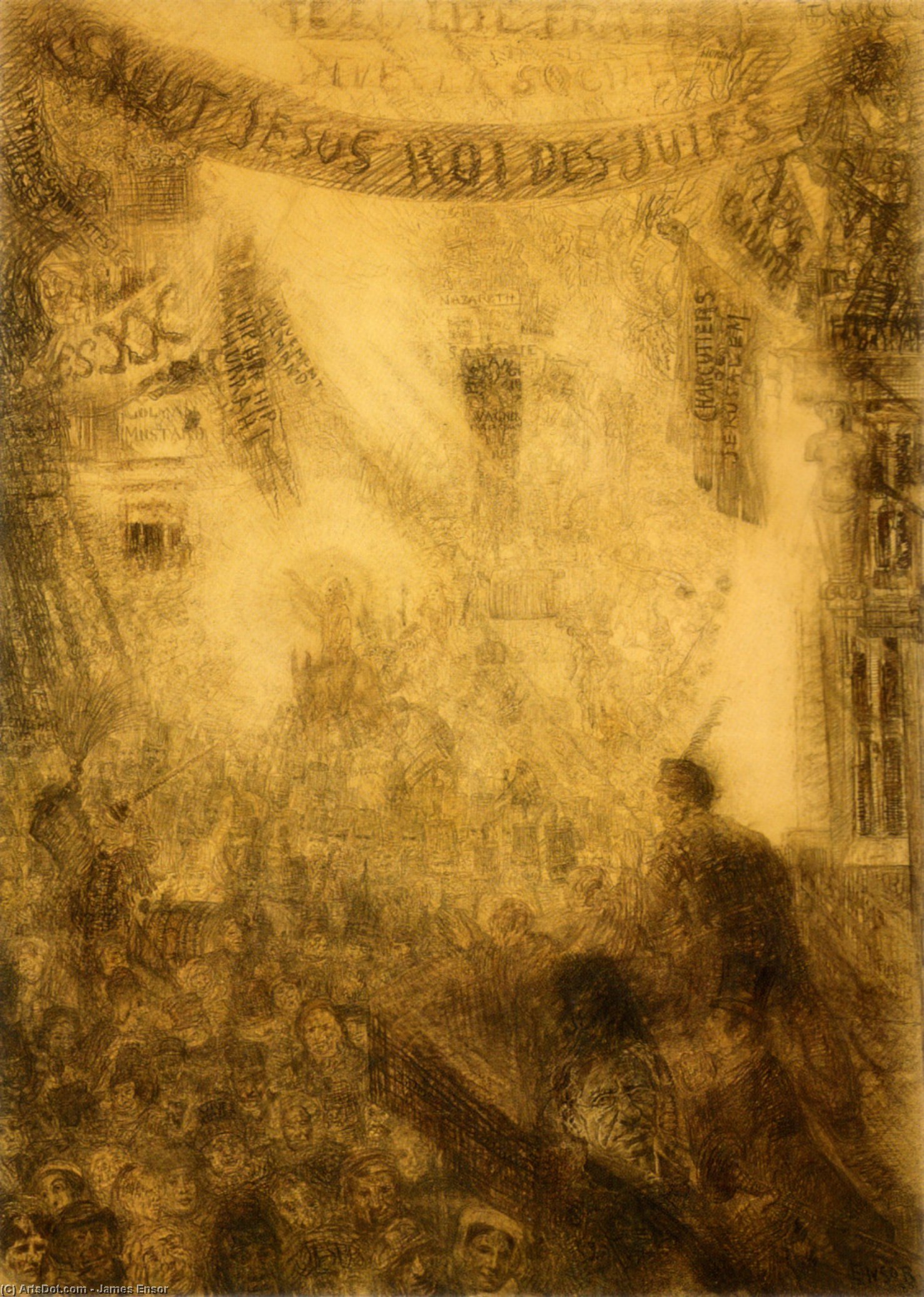
In the masterful oil painting The Great and Glorious Entry of Christ into Jerusalem, James Ensor invites the viewer into a moment of profound spiritual and sensory intensity. This remarkable work serves as a cornerstone of Expressionism, capturing not merely a biblical event, but the raw, pulsating energy of a crowd caught in a whirlwind of reverence and awe. As Jesus rides into the city on a donkey, the canvas erupts with a vibrant palette that breathes life into every corner of the composition. Ensor does not merely depict a historical narrative; he orchestrates a symphony of color and movement that pulls the observer directly into the heart of the procession.
The scene is teeming with life, featuring at least thirteen distinct figures whose varied postures and expressions create a rich tapestry of human emotion. Some onlookers press forward with faces alight with admiration, while others linger in the periphery, their silhouettes adding depth to the crowded streets of Jerusalem. Through his expert use of light and shadow, Ensor imbues the scene with a sense of sacredness, where the brilliance of the colors reflects the spiritual significance of the triumphal entry. For the discerning collector or interior designer, this piece offers a commanding presence, capable of serving as a dramatic focal point that evokes both historical grandeur and emotional depth.
The Mastery of Expressionist Technique
Ensor’s technique in this large-scale oil on canvas is nothing short of extraordinary. Eschewing the rigid constraints of traditional academic realism, he embraces a more fluid, emotive approach that anticipates the movements of Surrealism and modern expressionism. The brushwork is deliberate yet energetic, used to sculpt the forms of the crowd and the textures of the landscape. This tactile quality allows the viewer to feel the dust of the road and the heat of the midday sun, making the atmosphere palpable.
The artist’s use of color is particularly noteworthy; he employs rich, saturated hues that dance across the canvas, creating a sense of rhythmic vitality. This vibrancy is not merely decorative but serves a symbolic purpose, heightening the sense of divine arrival. The interplay between the bright, luminous highlights and the deeper, more somber tones creates a chiaroscuro effect that lends a sculptural weight to the figures. Such technical prowess ensures that every time one gazes upon this reproduction, new details emerge—a subtle flicker of light on a garment or a poignant expression in the eyes of a bystander.
A Legacy of Symbolism and Artistic Defiance
To understand this work, one must consider the turbulent artistic landscape inhabited by James Ensor. A prominent member of the Belgian group Les XX, Ensor was often viewed as a provocateur, a man whose fascination with masks, shadows, and the grotesque challenged the sensibilities of his era. In The Great and Glorious Entry of Christ into Jerusalem, we see a more luminous side of his genius, where the themes of carnival and disguise are replaced by themes of communal faith and spiritual triumph.
Yet, even within this celebratory scene, Ensor’s unique psychological depth remains. The crowd is not a monolithic entity but a collection of individual souls, each reacting to the divine presence in their own way. This focus on the individual experience within a collective event is a hallmark of his style. For those looking to adorn a space with art that tells a story, this painting offers more than just aesthetic beauty; it provides a window into the complex intersection of the sacred and the human. Owning a high-quality reproduction of this masterpiece allows for the infusion of Ensor's legendary spirit—a blend of light, shadow, and unyielding emotion—into any sophisticated collection or curated interior.