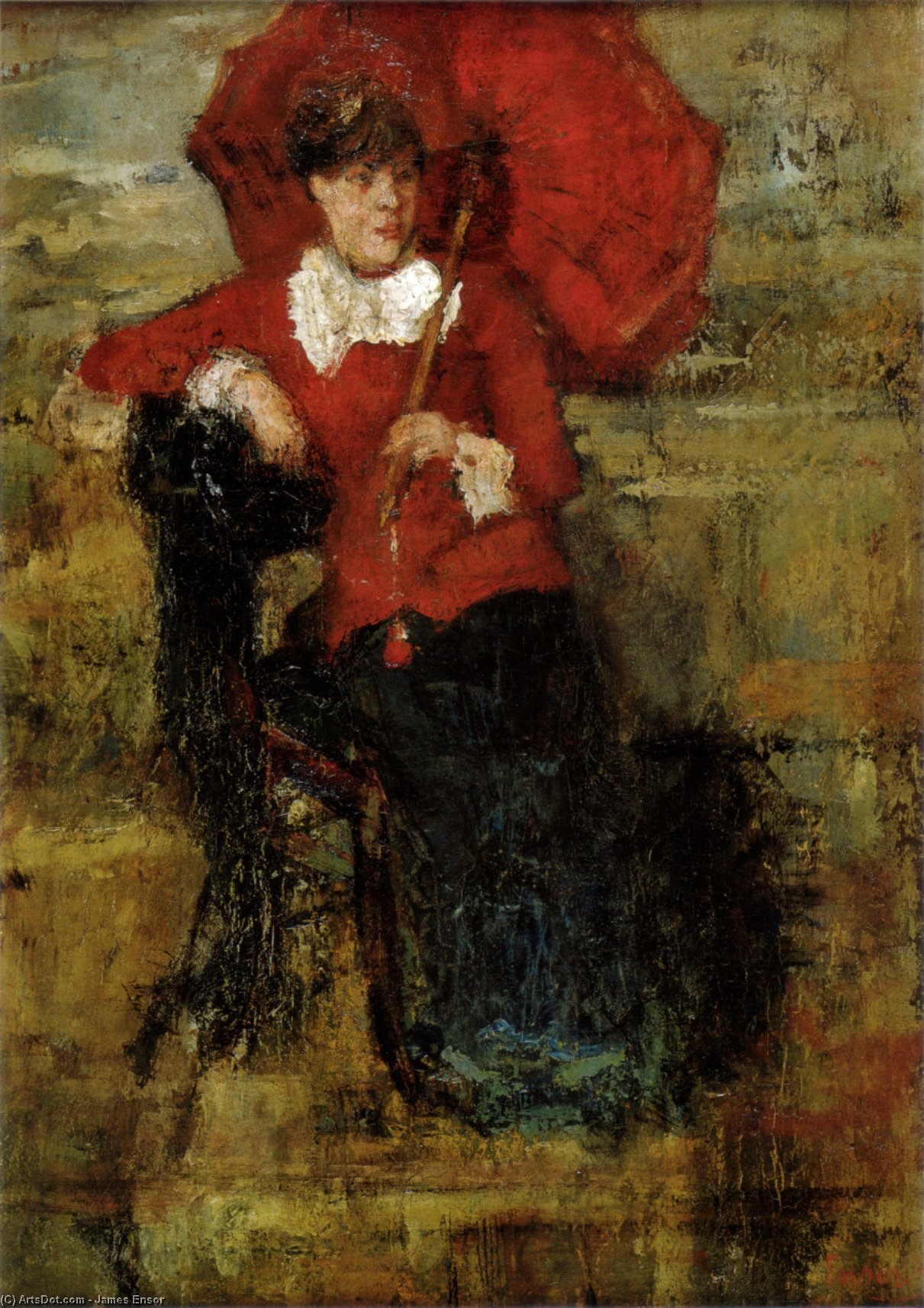
The Lady with the Red Parasol: A Portrait of Unease and Innovation
James Ensor’s “The Lady with the Red Parasol,” completed in 1880, stands as a cornerstone of Expressionist art—a painting that simultaneously captivates with its meticulous detail and unsettles viewers with its profound psychological depth. More than just a depiction of a woman seated elegantly beneath an umbrella, it embodies Ensor’s signature preoccupation with masks, anxieties surrounding societal norms, and his masterful manipulation of color and texture to convey emotion.
Subject Matter & Composition: The painting portrays a woman in repose on a chair, her legs crossed—a posture that exudes composure yet hints at hidden vulnerability. She holds a crimson parasol aloft, its vibrant hue juxtaposed against the muted tones of the surrounding interior. Alongside it rests a black parasol, adding to the visual complexity and subtly reinforcing themes of concealment and duality. Ensor’s careful arrangement creates a balanced composition, positioning the woman as the focal point while anchoring her within the confines of the chair and umbrellas—elements that contribute to an atmosphere of quiet contemplation tinged with apprehension.
Style & Technique: Ensor's stylistic approach aligns squarely with Expressionism, rejecting academic conventions in favor of conveying subjective experience. He employs a technique characterized by thick impasto – applying paint thickly onto the canvas—creating palpable textural surfaces that heighten visual impact. The artist’s brushstrokes are deliberate and expressive, capturing minute details while simultaneously injecting dynamism into the scene. Notably, Ensor meticulously reconstructed the painting from a charcoal drawing made in his studio, demonstrating an unwavering commitment to artistic precision.
Historical Context & Symbolism: Created during the Belle Époque—a period of opulent social life and burgeoning anxieties about modernity—the artwork reflects the broader cultural currents of its time. Ensor’s fascination with masks is evident not only in his subject matter but also in his artistic process; he deliberately obscured certain facial features to emphasize psychological states rather than literal representation. The red parasol, a symbol of protection and perhaps concealment, contrasts sharply with the black one—suggesting internal conflict and an awareness of societal pressures. Furthermore, Ensor’s reference to Daniel Morgan's medal – reproduced in *La Gazette des Beaux-Arts*– underscores his engagement with political commentary and his desire to challenge prevailing artistic orthodoxies.
Emotional Impact & Legacy: “The Lady with the Red Parasol” transcends mere visual beauty, eliciting a visceral response from viewers. Ensor’s masterful use of color—particularly the dominant red—amplifies emotional intensity, conveying feelings of unease and introspection. The painting's enduring influence stems from its pioneering spirit—its rejection of academic ideals and embrace of subjective expression—establishing Ensor as a pivotal figure in the development of modern art.