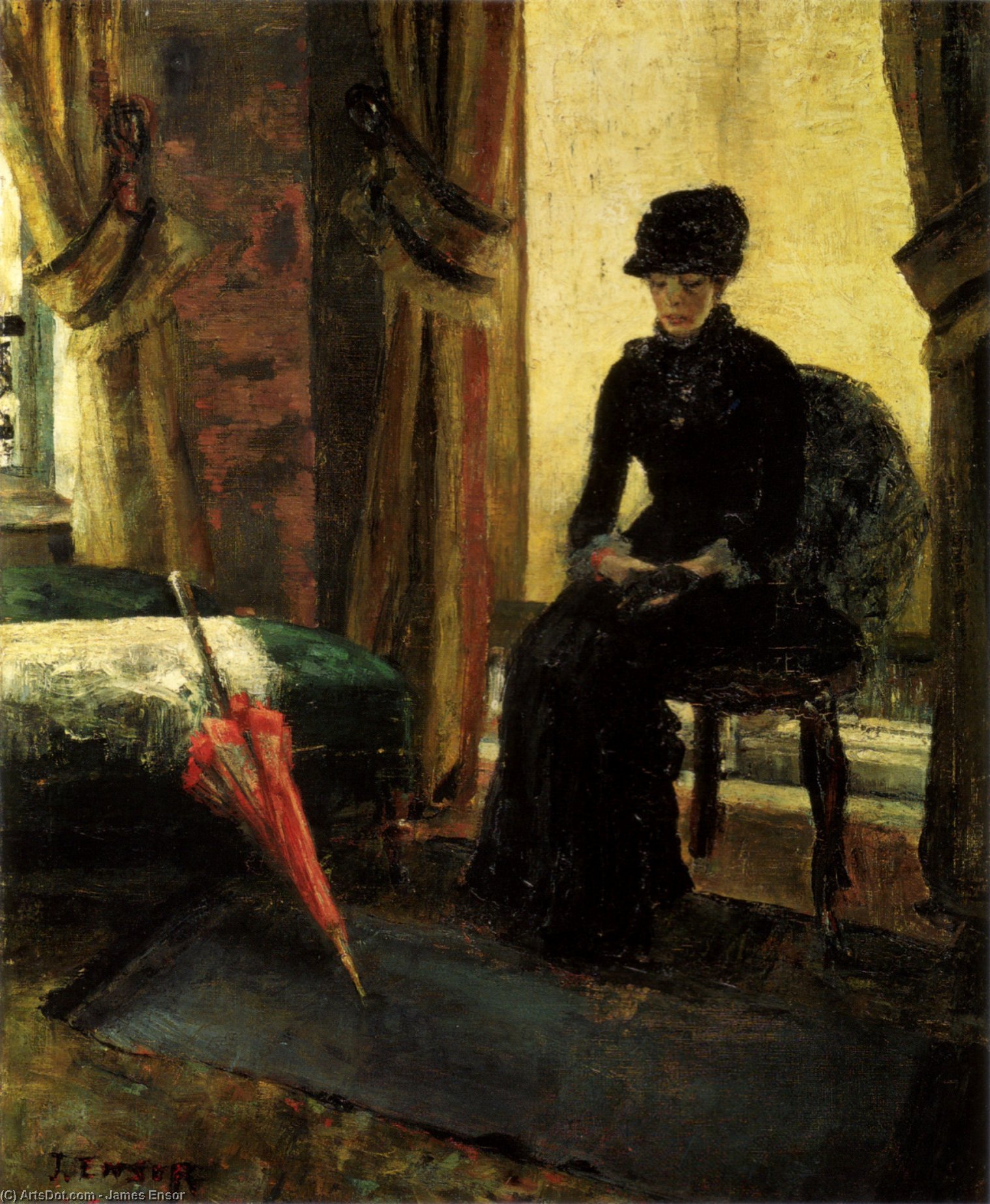
A Portrait of Quiet Despair: James Ensor’s “The Somber Lady”
James Ensor's "The Somber Lady," often referred to as "The Lady in Black," isn’t merely a depiction of a woman seated by a window; it’s a profound exploration of the human psyche, rendered with the raw intensity characteristic of Expressionism. Painted around 1894, this oil on canvas immediately draws the viewer into a world steeped in melancholy and introspection. The scene unfolds within a modestly furnished room – a bed draped in a striking crimson blanket, two chairs arranged as if awaiting conversation, and a handbag resting thoughtfully near the woman’s chair – elements that subtly contribute to an atmosphere of both comfort and unease. It's a space designed for contemplation, yet the central figure radiates a palpable sense of isolation.
The Language of Expressionism: Distortion and Emotion
Ensor was a pivotal figure in bridging the gap between Impressionism and the burgeoning movements that would define the 20th century. “The Somber Lady” exemplifies his unique brand of Figurative Expressionism, rejecting the detached observation favored by earlier styles in favor of an intensely subjective portrayal of emotion. Notice the deliberate distortions – not of form, but of feeling. The woman’s face is a mask of sorrow, her eyes fixed on something unseen beyond the window, conveying a depth of sadness that transcends simple portraiture. The brushstrokes are deliberately rough and agitated, mirroring the turmoil within the subject's mind. This isn’t an attempt to realistically capture a likeness; it’s a visceral representation of inner experience. The use of oil allows for rich textures and layering, intensifying the painting’s emotional impact – the deep reds of the blanket, the shadowed corners of the room, all contribute to this feeling of oppressive quiet.
Symbolism Within the Scene: Masks and Hidden Meanings
Ensor's work is famously laden with symbolism, often drawing upon his fascination with masks and disguise. The woman herself can be interpreted as a representation of societal expectations and the hidden burdens carried by women in Victorian society. The black dress, a traditional symbol of mourning and formality, reinforces this interpretation. The window acts as a portal – not to an external world of beauty or excitement, but to an unseen realm of reflection and perhaps regret. Even the handbag, a commonplace object, takes on significance here, suggesting a contained life, a collection of unspoken thoughts and anxieties. The red blanket, so vibrant against the muted tones of the room, could symbolize passion, anger, or even blood – hinting at unresolved conflicts.
A Legacy of Unease: Ensor’s Influence and Artistic Context
Born in Ostend, Belgium, in 1860, James Ensor's upbringing amidst a diverse cultural landscape profoundly shaped his artistic vision. His early exposure to carnival traditions and the exotic objects of his parents’ shop instilled within him a lifelong interest in the theatrical and the unsettling. “The Somber Lady” is not simply a product of its time; it anticipates many of the themes explored by later Expressionist artists. It resonates with the anxieties and uncertainties of the late 19th century, a period marked by rapid social change and growing disillusionment. Ensor’s work paved the way for movements like Surrealism, demonstrating the power of art to delve into the subconscious and expose the darker aspects of human experience. Reproductions of this powerful piece offer a unique opportunity to engage with a pivotal moment in art history, capturing the enduring resonance of Ensor's profound exploration of the human condition.