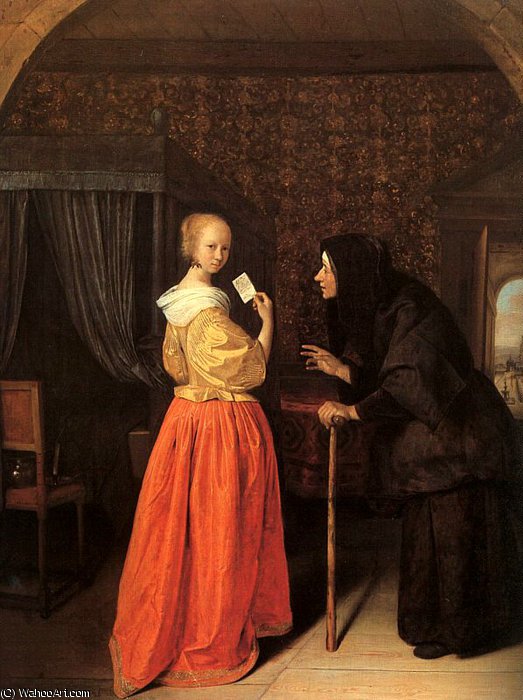
Explore Jan Steen’s "Bathsheba Receiving Davids Letter," a Baroque realism oil painting depicting an intimate scene of exchange & revelation. Detailed textures & dramatic lighting capture a pivotal moment.
Jan Steen (1626-1679) was a leading Dutch Golden Age genre painter known for lively, humorous scenes filled with psychological insight & moral themes. Explore his colorful depictions of everyday life and influence on Baroque art.
A Moment of Revelation: Jan Steen’s “Bathsheba Receiving David's Letter”
This captivating oil on panel by Jan Havickszoon Steen offers a glimpse into a pivotal moment from the biblical story of Bathsheba, rendered with the characteristic warmth and narrative skill of the Dutch Golden Age. The painting depicts not a grand historical spectacle, but an *intimate interior scene* – a young woman receiving a letter, attended by an older figure who observes with quiet intensity. Steen masterfully transforms a dramatic biblical episode into a relatable human interaction, focusing on the psychological weight of the moment rather than overt displays of power or seduction. The composition centers our attention on this exchange, drawing us into their private world within the richly decorated chamber.
Baroque Realism and Technical Brilliance
Steen’s style is firmly rooted in Baroque realism, yet infused with a uniquely Dutch sensibility. He demonstrates exceptional technical skill through his meticulous rendering of textures – from the shimmering silk of Bathsheba's dress to the aged stone walls and the soft folds of the attendant’s robe. Light plays a crucial role, entering from an unseen source and dramatically illuminating the figures, creating depth and emphasizing their emotional states. The visible brushwork adds a tactile quality, enhancing the painting’s realism and vibrancy. Steen's technique involved careful layering and glazing to achieve luminosity and richness in color – particularly evident in the warm tones that dominate the palette. This isn’t merely representation; it’s an evocation of atmosphere and feeling.
Symbolism & Narrative Context
The scene depicts Bathsheba receiving a letter from King David, initiating a chain of events with profound consequences. While Steen doesn't explicitly portray the illicit desire that fueled David’s actions, the painting subtly hints at the gravity of the situation. The older woman likely serves as a confidante or advisor, her gaze suggesting both concern and perhaps a premonition of trouble. The letter itself becomes a symbol of fate, carrying with it not just words but also power, temptation, and potential downfall. Steen was known for embedding moral themes within seemingly everyday scenes, inviting viewers to contemplate the complexities of human behavior and the consequences of choices. This painting is representative of his ability to blend historical narrative with psychological insight.
Emotional Resonance & Interior Appeal
“Bathsheba Receiving David's Letter” possesses a quiet emotional power that transcends its historical context. The intimacy of the scene, combined with the masterful use of light and shadow, creates a sense of contemplation and intrigue. This artwork would be a stunning focal point in any interior – particularly spaces designed to evoke warmth, sophistication, and intellectual curiosity. Its rich color palette complements both traditional and contemporary settings, while its narrative depth provides endless opportunities for conversation and reflection. For collectors seeking a piece that embodies the artistic spirit of the Dutch Golden Age, this painting offers both beauty and enduring significance.