A Window into 17th-Century Dutch Life: Jan Steen’s Self-Portrait as a Lutenist
Jan Steen, a name often whispered with a mixture of delight and bewilderment, stands as one of the most singular figures in the pantheon of Dutch Golden Age painters. Unlike his contemporaries who meticulously rendered grand historical scenes or idealized portraits, Steen possessed an almost audacious gift: he captured the messy, vibrant, and frequently absurd reality of everyday life. His paintings aren’t simply depictions; they're miniature dramas, brimming with psychological insight, sly humor, and a profound understanding of human nature. Within this distinctive oeuvre resides “Self Portrait as a Lutenist,” a work that offers an intimate glimpse into the artist’s personality and his unique approach to portraying the world around him – a world rich in social commentary and painted with a palette of bold colors and infectious laughter.

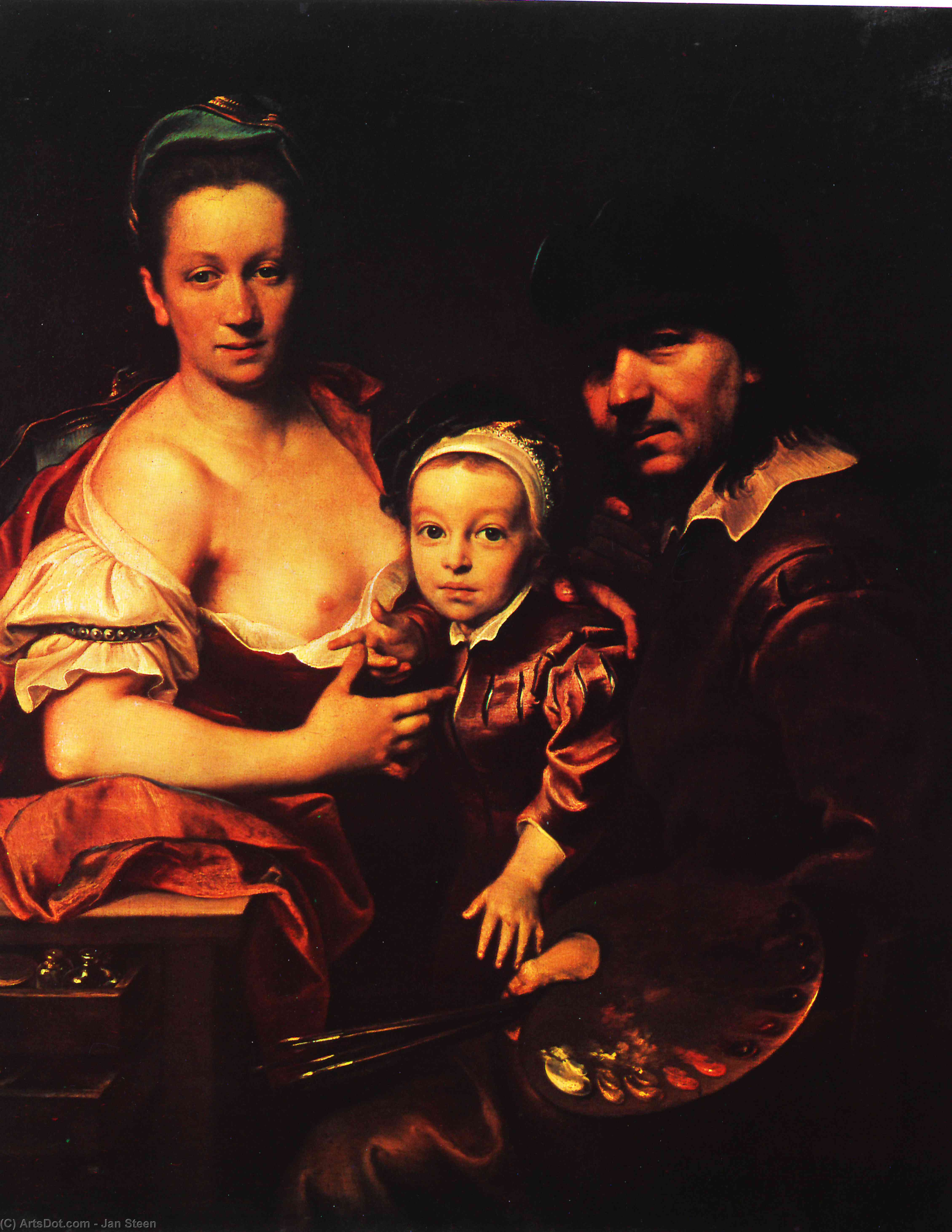
Painted in 1663, this oil on panel masterpiece measures a modest 55.3 x 43.8 cm and currently resides within the prestigious Museo Thyssen-Bornemisza in Madrid, Spain. The painting immediately draws the eye with its dynamic composition – Steen himself, seated at a table laden with books, wine glasses, and musical instruments, plays a lute with an air of self-assured amusement. Surrounding him are a cast of characters engaged in various activities: a young boy attempting to steal a book, a woman seemingly oblivious to the chaos, and a dog playfully gnawing on a piece of meat. It’s not merely a portrait; it's a stage set for a miniature comedy, a snapshot of a bustling domestic scene.
The Baroque Brushstroke: Style and Technique
Steen’s artistic style is immediately recognizable as firmly rooted in the Baroque period, yet he possesses a distinctly individual voice. He employs vibrant colors – deep reds, rich blues, and earthy browns – with an almost theatrical intensity. The brushstrokes are loose and expressive, conveying movement and emotion rather than striving for photographic realism. Notice how Steen uses light to sculpt form, creating dramatic contrasts between illuminated areas and deep shadows that lend a sense of depth and volume to the figures. This chiaroscuro effect is particularly evident in the rendering of Steen’s own face – his features are sharply defined against the darker background, drawing our attention to his gaze and conveying an air of playful self-awareness.
- Loose Brushwork: Steen's signature style emphasizes spontaneity and movement.
- Vibrant Palette: Bold colors contribute to the painting’s lively atmosphere.
- Chiaroscuro Lighting: Dramatic contrasts enhance form and create a sense of depth.
Symbolism and Social Commentary
Beyond its immediate visual appeal, “Self Portrait as a Lutenist” is laden with symbolic meaning. The lute itself represents Steen’s love for music and his artistic pursuits. The books on the table signify his intellectual curiosity and engagement with literature – a common aspiration of the educated elite in 17th-century Holland. The wine glass and bottle suggest a fondness for conviviality and social gatherings, while the mischievous boy attempting to steal a book hints at the playful rebellion characteristic of youth. However, it’s not merely a celebration of domesticity; Steen subtly critiques societal norms and human folly through his depiction of these seemingly ordinary scenes. The painting serves as a gentle satire on the pretensions and vanities of the time, reminding us that even in the midst of merriment, there is often an element of absurdity.
A Timeless Masterpiece: Relevance Today
“Self Portrait as a Lutenist” transcends its historical context to resonate with viewers today. Steen’s ability to capture the essence of human experience – our joys, our follies, and our inherent contradictions – remains remarkably relevant. The painting's humor is timeless, and its depiction of everyday life offers a poignant reminder of our shared humanity. Reproductions of this captivating work continue to inspire artists and art lovers alike, offering a window into the past while retaining an enduring appeal for the present. It’s a testament to Steen’s genius that his paintings, created over three centuries ago, still possess the power to make us laugh, think, and feel.