A Snapshot of Everyday Chaos: Jan Steen's "Sick Woman"
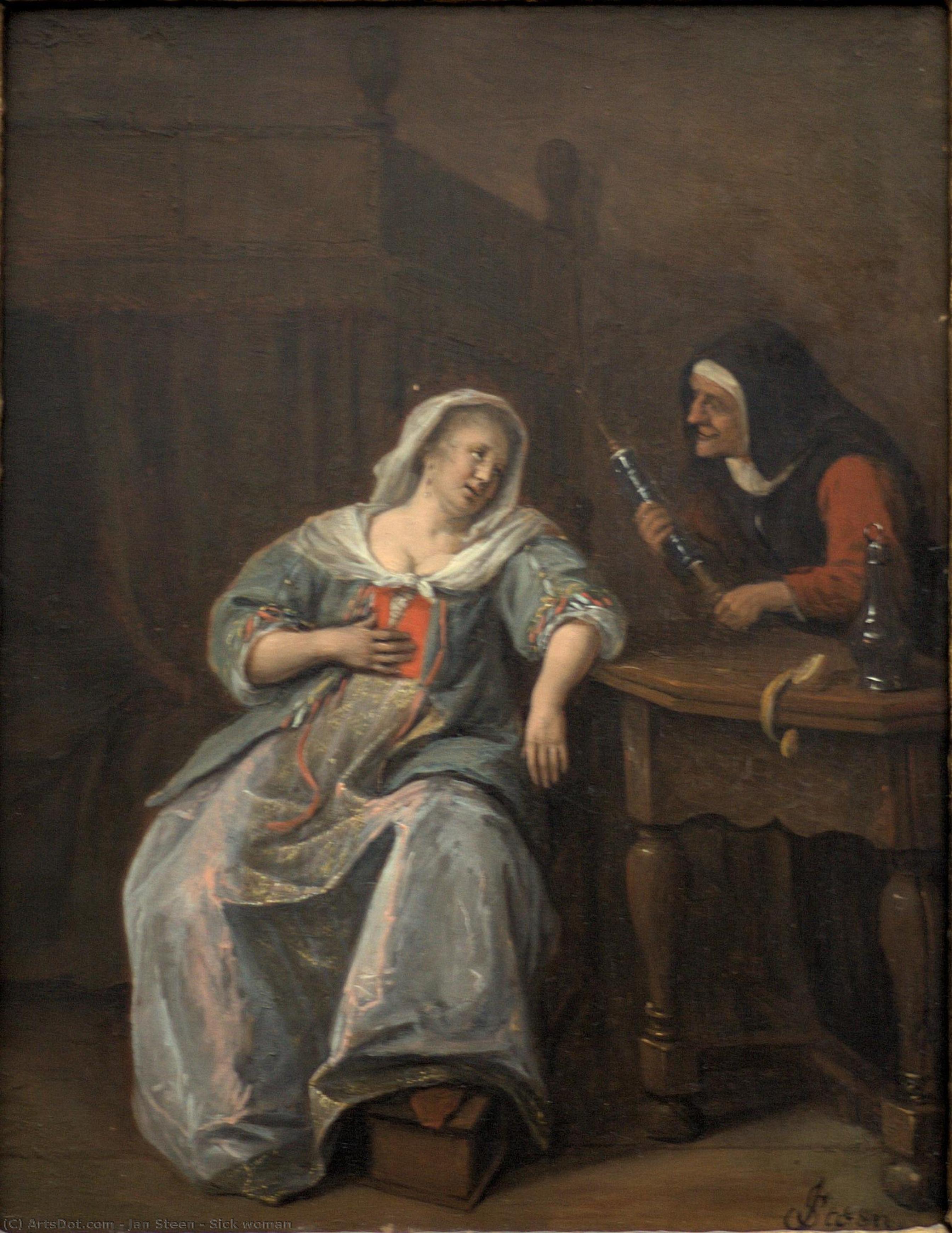
Jan Havickszoon Steen’s “The Sick Woman,” painted around 1663, isn’t a grand historical scene or a solemn portrait; it’s a vibrant, chaotic snapshot of domestic life in the Dutch Golden Age. It’s a painting that immediately grabs you with its sheer energy – a swirling tableau of figures caught in moments of confusion, suspicion, and barely-contained humor. The scene unfolds within what appears to be a modest home, dominated by a young woman lying pale and weakened on a bed. But it's not simply a depiction of illness; it’s a carefully constructed commentary on social dynamics, superstition, and the often-absurd realities of everyday existence.
Steen was a singular figure in 17th-century Dutch painting. Unlike many of his contemporaries who focused on heroic narratives or formal portraits, he dedicated himself to capturing the nuances of ordinary life – farmers’ families, tavern gatherings, schoolrooms—with an unparalleled ability to infuse these scenes with psychological insight and subtle moral lessons. His work wasn't about idealized beauty or historical grandeur; it was about revealing the complexities and contradictions inherent in human behavior. “The Sick Woman” exemplifies this perfectly, offering a glimpse into a world where appearances can be deceiving and simple gestures hold layers of meaning.
A Baroque Masterpiece: Technique and Composition
Steen’s style is distinctly Baroque, characterized by dramatic contrasts in light and shadow – *chiaroscuro* – that heighten the emotional impact of the scene. He employs a rich, vibrant palette, layering colors to create a sense of depth and movement. The figures are rendered with remarkable detail, capturing their expressions and gestures with astonishing accuracy. Notice, for example, the subtle shift in the woman’s posture as she reacts to the approaching figure, or the skeptical gaze of the man examining the strip of cloth.
The composition itself is deliberately complex, almost overwhelming at first glance. Steen masterfully uses overlapping figures and multiple viewpoints to create a sense of immediacy and involvement. The eye is constantly drawn from one detail to another, mirroring the confusion and uncertainty that permeate the scene. The dark background serves to isolate the figures, drawing our attention to their interactions and amplifying the drama.
Decoding the Scene: Symbolism and Social Commentary
“The Sick Woman” is rife with symbolism, inviting viewers to interpret its meaning. The central figure’s illness isn't simply a medical condition; it’s a catalyst for suspicion and speculation. The man examining the strip of cloth – a common practice used by charlatans to diagnose illnesses—represents the gullibility of the public and the prevalence of superstition. The woman’s reaction, a mixture of fear and curiosity, reflects the anxieties and uncertainties of the time.
Furthermore, the scene subtly critiques social hierarchies and power dynamics. The older man, seemingly in charge, is not necessarily trustworthy; his actions are driven by self-interest rather than genuine concern. The painting suggests a world where appearances can be deceiving and where authority figures are not always to be trusted. It’s a sharp commentary on the complexities of human relationships and the dangers of blindly accepting social norms.
A Window into Dutch Life: Historical Context
Painted in 1663, “The Sick Woman” reflects the vibrant cultural landscape of the Dutch Golden Age – a period of unprecedented prosperity, artistic innovation, and intellectual ferment. Steen’s work captures the spirit of this era, offering a glimpse into the everyday lives of ordinary people. The painting also reveals the anxieties and uncertainties that were prevalent during this time, including concerns about health, superstition, and social inequality.
The painting's popularity stemmed from Steen's ability to portray familiar scenes with an uncanny realism and a touch of humor. He wasn’t simply documenting life; he was interpreting it, offering viewers a mirror to their own experiences and inviting them to contemplate the complexities of human nature. “The Sick Woman” remains one of Steen’s most celebrated works, a testament to his genius as a painter and social observer.