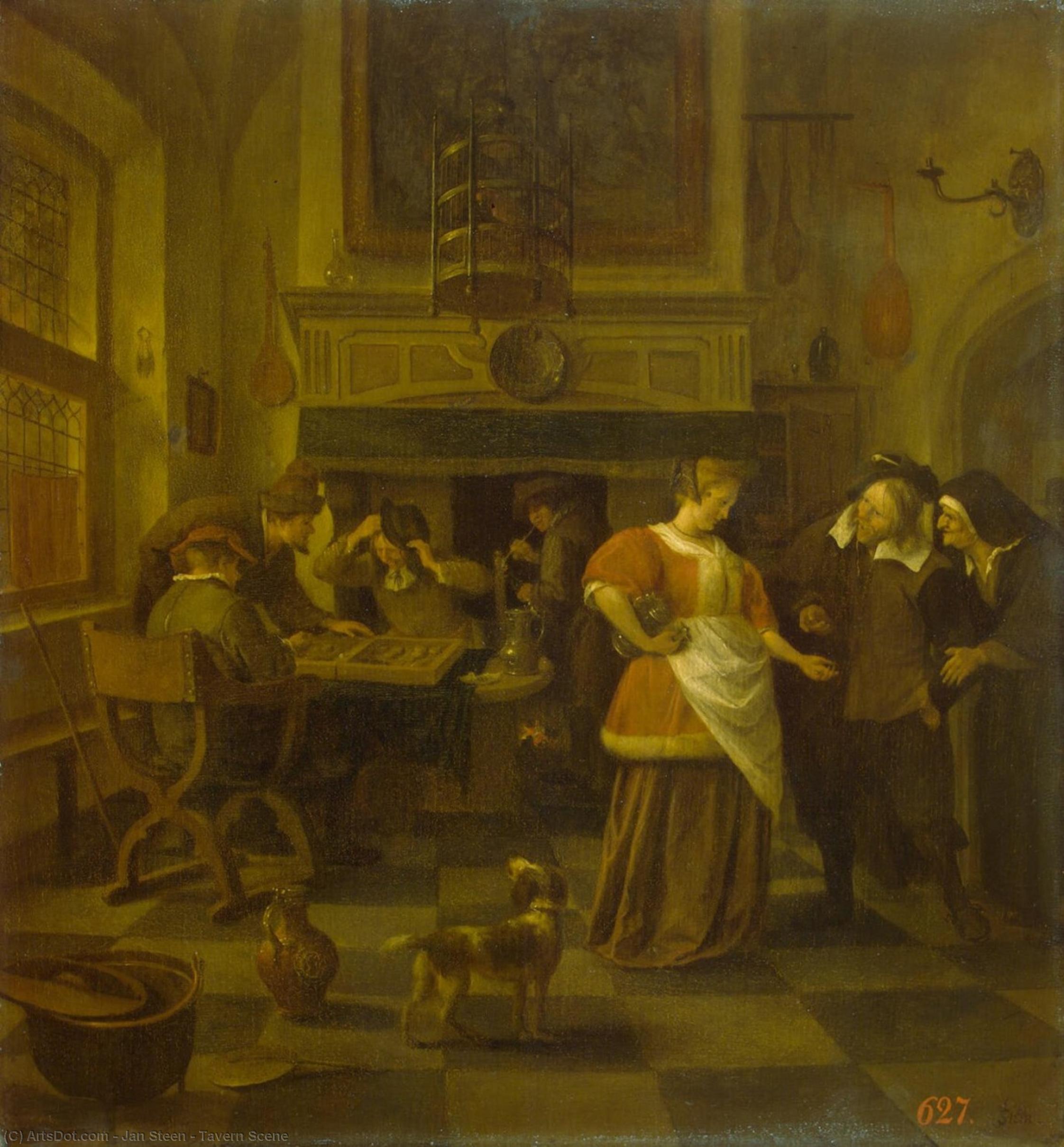
A Window into the Dutch Golden Age
In the heart of a bustling seventeenth-century interior, Jan Havickszoon Steen captures a moment that feels as immediate and alive today as it did in 1670. Tavern Scene is not merely a depiction of a social gathering; it is a masterful window into the soul of the Dutch Golden Age. As we gaze upon this lively assembly, we are transported to an era where the boundaries between the domestic and the communal were beautifully blurred. The painting vibrates with the energy of human interaction, centered around a woman whose poised gesture toward a seated figure draws our eye into the very rhythm of the room. Steen, a painter who found profound beauty in the mundane, invites us to witness a snapshot of life where laughter, conversation, and perhaps a hint of mischief reside in every corner.
The composition is a masterclass in narrative depth. Within this single frame, Steen orchestrates a complex dance of figures—some standing in animated discussion, others seated around a communal table, all part of a larger social tapestry. The presence of two dogs, one near the center and another tucked toward the right, adds a layer of domestic warmth and grounded reality, reminding us that even in moments of boisterous celebration, the comforts of home and hearth remain present. A solitary clock hanging upon the wall serves as a subtle, poignant reminder of the passage of time, contrasting the fleeting nature of this joyous gathering with the inevitable march of the hours.
The Artistry of Human Comedy
Technically, Tavern Scene showcases Steen’s extraordinary ability to employ trompe l'oeil elements to create a palpable sense of three-dimensional space. Through the meticulous layering of pigments and an uncanny attention to texture, the artist renders the heavy fabrics of clothing and the smooth surfaces of wooden furniture with such precision that they seem almost touchable. His use of light is particularly evocative; it does not merely illuminate the room but sculpts the characters, casting soft shadows that lend a sense of weight and psychological presence to each individual. This mastery of light and shadow—a hallmark of the Baroque period—allows the viewer to feel the atmospheric density of the tavern, from the warmth of the candlelight to the smoky air of a crowded room.
Beyond its technical brilliance, the painting serves as a profound piece of social commentary. Steen was renowned for his ability to weave subtle moral lessons into his depictions of everyday life, often using humor and satire to reflect upon the behaviors of the Dutch bourgeoisie. In this tavern setting, the spilled drink or the boisterous gesture might hint at the chaotic temptations of excess, yet the overall emotional impact is one of conviviality and shared humanity. For the collector or the interior designer, this piece offers more than just aesthetic beauty; it provides a conversational centerpiece that evokes nostalgia for a time of rich storytelling and communal spirit.
Whether displayed in a grand gallery or as a sophisticated accent in a contemporary living space, a high-quality reproduction of this work brings with it the enduring legacy of Jan Steen. It is an invitation to slow down, to observe the fine details of human connection, and to appreciate the timeless beauty found in the simple, unscripted moments of our lives.