A Glimpse into Domestic Merriment: The Allure of Everyday Life
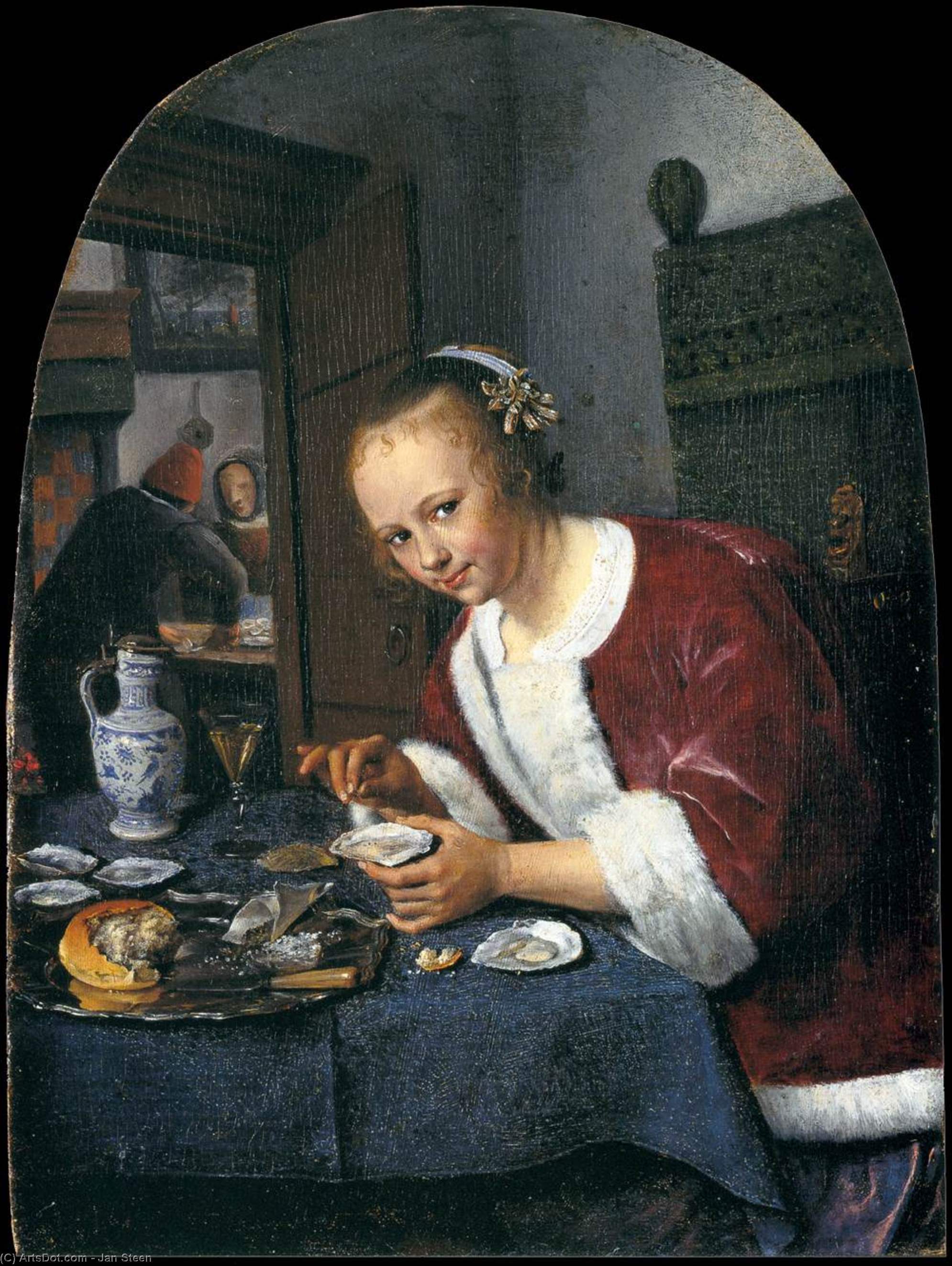
To gaze upon Jan Havickszoon Steen's The Oyster-eater is to be invited across the threshold of a warmly lit, bustling Dutch interior from the mid-seventeenth century. This painting is not merely a depiction of a meal; it is a vibrant tableau vivant, capturing the ephemeral joy and rich texture of daily existence. The central figure, absorbed in the delicate ritual of consuming oysters, anchors the scene, yet the surrounding details—the array of cups, the gleam on the spoons, the presence of bottles—weave a complex tapestry of domesticity. Steen masterfully places us right at the table, allowing us to almost smell the brine and hear the low murmur of conversation from the partially visible figure in the background.
Mastery of Genre Scene and Light
Steen’s genius lay in his ability to elevate the mundane to the monumental. As a quintessential painter of everyday life, he eschewed grand historical epics for the intimate drama unfolding over a simple dining table. Technically, the work showcases the characteristic richness of Dutch Baroque genre painting. Observe the handling of light; it seems to emanate from an unseen source, catching the polished wood and highlighting the sheen on the shells. His brushwork, while detailed enough to render individual oyster husks, possesses a lively spontaneity that prevents the scene from feeling stiff or overly posed. It is a celebration of the moment, executed with academic precision.
Symbolism Woven into the Setting
In the context of 17th-century Dutch culture, such scenes were often imbued with subtle moral undertones, even when depicting pleasure. The abundance on the table speaks to prosperity and conviviality, hallmarks of the burgeoning merchant class that patronized this art. While the act of eating oysters suggests simple indulgence, the overall composition hints at a balance—a momentary pause in the rhythm of life. For the modern collector or designer, this translates into an object that brings warmth and narrative depth to any space, suggesting gatherings, shared meals, and cherished company.
Bringing Dutch Golden Age Charm Home
For those seeking art reproductions that breathe history into contemporary decor, The Oyster-eater offers unparalleled charm. The size of this piece (21 x 15 cm) makes it an ideal focal point—perfect for mantelpieces, gallery walls, or above a console table where you wish to evoke the sophisticated intimacy of a Dutch parlor. Owning a reproduction allows one to connect directly with the spirit of Steen’s observation: that true art resides not in myth, but in the beautifully imperfect moments shared between people.
None