A Window into Baroque Rome: The Vibrant Energy of Jan Miel’s “Carnival Time in Rome”
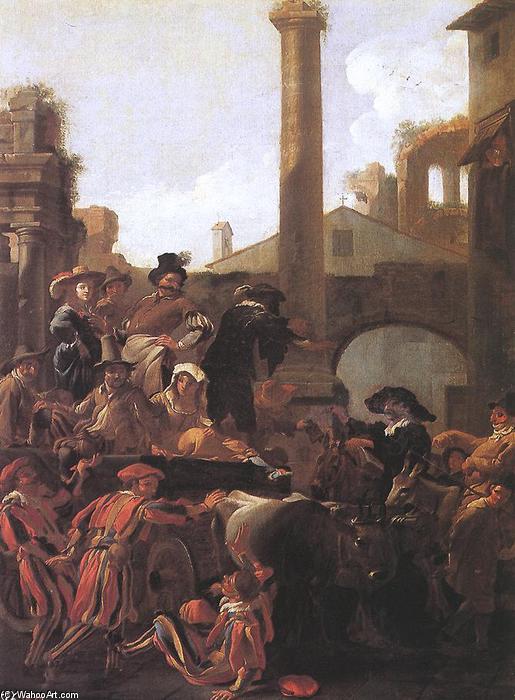
Jan Miel's "Carnival Time in Rome," painted around 1653, isn’t merely a depiction of a festive street scene; it’s a vibrant portal to the heart of Baroque Rome. More than just a historical record, this painting pulsates with the energy and social dynamics of a city caught in the intoxicating swirl of Carnival – a period renowned for its elaborate costumes, masked revelry, and temporary suspension of everyday order. Miel masterfully captures this atmosphere, transforming a bustling Roman street into a stage for human interaction, theatrical performance, and sheer joyous abandon.
The painting immediately draws the eye with its rich, earthy palette dominated by ochres, siennas, and deep reds – colors that evoke the warm glow of candlelight and the vibrant hues of the carnival attire. These tones are skillfully layered to create a sense of depth, pulling the viewer into the scene. The background, anchored by ancient Roman ruins—columns, arches, and fragments of walls—provides a dramatic counterpoint to the lively foreground, grounding the fantastical elements in a tangible historical context. Notice how Miel uses light and shadow to sculpt the architecture, lending it an almost palpable weight and solidity.
The Bamboccianti Tradition: A Window into Roman Life
Miel’s work belongs to the ‘Bamboccianti’ genre – a distinctive style of painting that emerged in Rome during the 17th century. These artists, largely Dutch and Flemish exiles, gained renown for their intimate portrayals of everyday life within the city, particularly among the lower classes. Unlike the grand portraits favored by the aristocracy, the Bamboccianti focused on scenes of street vendors, musicians, beggars, and laborers – offering a surprisingly nuanced glimpse into the social fabric of Rome. Miel’s “Carnival Time in Rome” exemplifies this approach, presenting a diverse cast of characters engaged in various activities, from dancing and conversing to playing games and hawking their wares.
The figures themselves are rendered with remarkable detail and dynamism. Miel doesn't shy away from portraying the imperfections of life – wrinkles, weathered faces, and humble clothing—yet he imbues each character with a sense of personality and vitality. The composition is carefully balanced, guiding the eye through the crowded scene towards key focal points: a group of musicians playing lively tunes, a couple engaged in an animated conversation, and a street performer captivating his audience. The inclusion of animals – horses and dogs—further contributes to the painting’s sense of bustling activity and adds a touch of rustic charm.
Symbolism and the Spirit of Carnival
Beyond its visual appeal, “Carnival Time in Rome” is rich in symbolic meaning. The masks worn by many of the figures represent the anonymity and freedom associated with Carnival – a temporary escape from social constraints and expectations. The vibrant costumes, particularly the reds and oranges, symbolize celebration, excess, and the embrace of pleasure. The presence of the ancient ruins serves as a reminder of Rome’s glorious past, juxtaposed against the lively present. It suggests that the spirit of the city—its dynamism, its resilience, and its enduring appeal—has remained constant throughout the centuries.
Miel's masterful use of perspective creates an illusion of depth and movement, drawing the viewer into this immersive scene. The painting’s emotional impact is undeniable – it evokes a sense of joy, excitement, and communal spirit. “Carnival Time in Rome” isn’t just a beautiful artwork; it’s a captivating snapshot of a vibrant culture at its most exuberant.
Restoring the Vision: Reproductions and Beyond
Reproductions of "Carnival Time in Rome" offer an accessible way to experience the artistry and historical significance of this remarkable painting. When selecting a reproduction, consider the quality of materials and printing techniques – ensuring that the colors and details are faithfully reproduced. This artwork would be a stunning addition to any interior space, bringing a touch of Baroque elegance and Roman charm to your home or office.