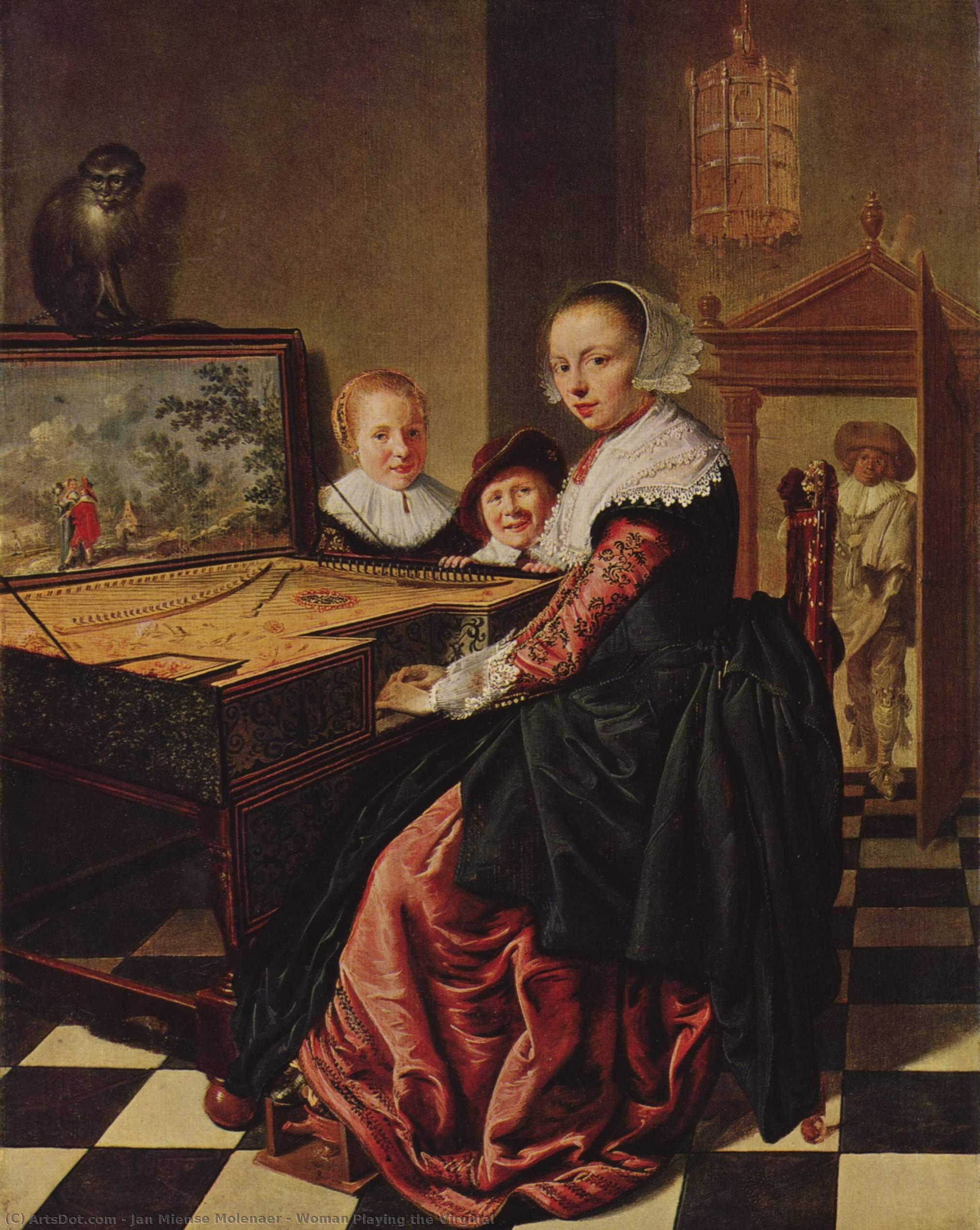
A Moment Frozen in Time: Jan Miense Molenaer’s “Woman Playing the Virginal”
Jan Miense Molenaer's "Woman Playing the Virginal," painted around 1637, isn’t merely a depiction of a musical scene; it’s a captivating window into the domestic life and burgeoning cultural landscape of 17th-century Haarlem. This remarkable genre painting, now residing in the Rijksmuseum, transports us to a warmly lit room where music intertwines with family intimacy – a testament to Molenaer's skill in capturing fleeting moments of everyday existence.
The scene unfolds with an immediate sense of warmth and familiarity. A young woman, likely a member of the artist’s own household, is seated at a virginal—a keyboard instrument resembling a harpsichord—her fingers poised above the keys. Her posture suggests both concentration and grace, while her attire, though modest, hints at wealth and status. Behind her stand two children, their faces turned towards the music, embodying youthful attentiveness and perhaps even a nascent appreciation for art. The inclusion of a man entering the room adds another layer to the narrative – a subtle suggestion of family life and social interaction.
A Masterclass in Dutch Realism
Molenaer’s style is deeply rooted in the traditions of Dutch Golden Age painting, yet he possesses a distinctive voice. He eschews the idealized forms often favored by his contemporaries, opting instead for a remarkably realistic portrayal of his subjects. Every detail—the texture of the woman's dress, the worn wood of the virginal, the subtle expressions on the children’s faces—is rendered with meticulous precision. This commitment to realism is further enhanced by Molenaer’s masterful use of light and shadow, creating a sense of depth and atmosphere within the room.
The painting's composition is carefully balanced, drawing the viewer's eye through the scene. The placement of the figures, the arrangement of objects in the room, and the subtle interplay of colors all contribute to a harmonious and engaging visual experience. Molenaer’s technique demonstrates a keen understanding of perspective and spatial relationships, creating an illusion of three-dimensionality that is both convincing and aesthetically pleasing.
Symbolism and Social Context
Beyond its technical merits, “Woman Playing the Virginal” is rich in symbolic meaning. The virginal itself was a popular instrument during this period, often associated with domesticity, refinement, and musical education—particularly for women. Its presence in the scene underscores the importance of music within the home and the role it played in shaping social values. The inclusion of the children suggests an investment in cultivating future generations through artistic pursuits.
Furthermore, the painting offers a glimpse into the social dynamics of 17th-century Dutch society. The family setting—the dining table, the clock on the wall—reflects the growing prosperity and comfort enjoyed by many merchants and artisans during this era. The man entering the room could represent a husband returning from business, or perhaps a visiting relative – highlighting the importance of social connections within the community.
A Timeless Portrait of Domestic Harmony
“Woman Playing the Virginal” is more than just a painting; it’s a poignant snapshot of a moment in time. Molenaer has captured not only the visual appearance of his subjects but also their emotions, their relationships, and their place within the broader social context. The painting's enduring appeal lies in its ability to evoke a sense of warmth, intimacy, and quiet beauty—a testament to the artist’s skill and sensitivity.
Reproductions of this captivating artwork offer a wonderful opportunity to bring this scene into your home, allowing you to experience the same sense of tranquility and artistic appreciation that captivated viewers centuries ago. It's a piece that speaks volumes about family life, musical tradition, and the enduring power of art to capture the essence of human experience.