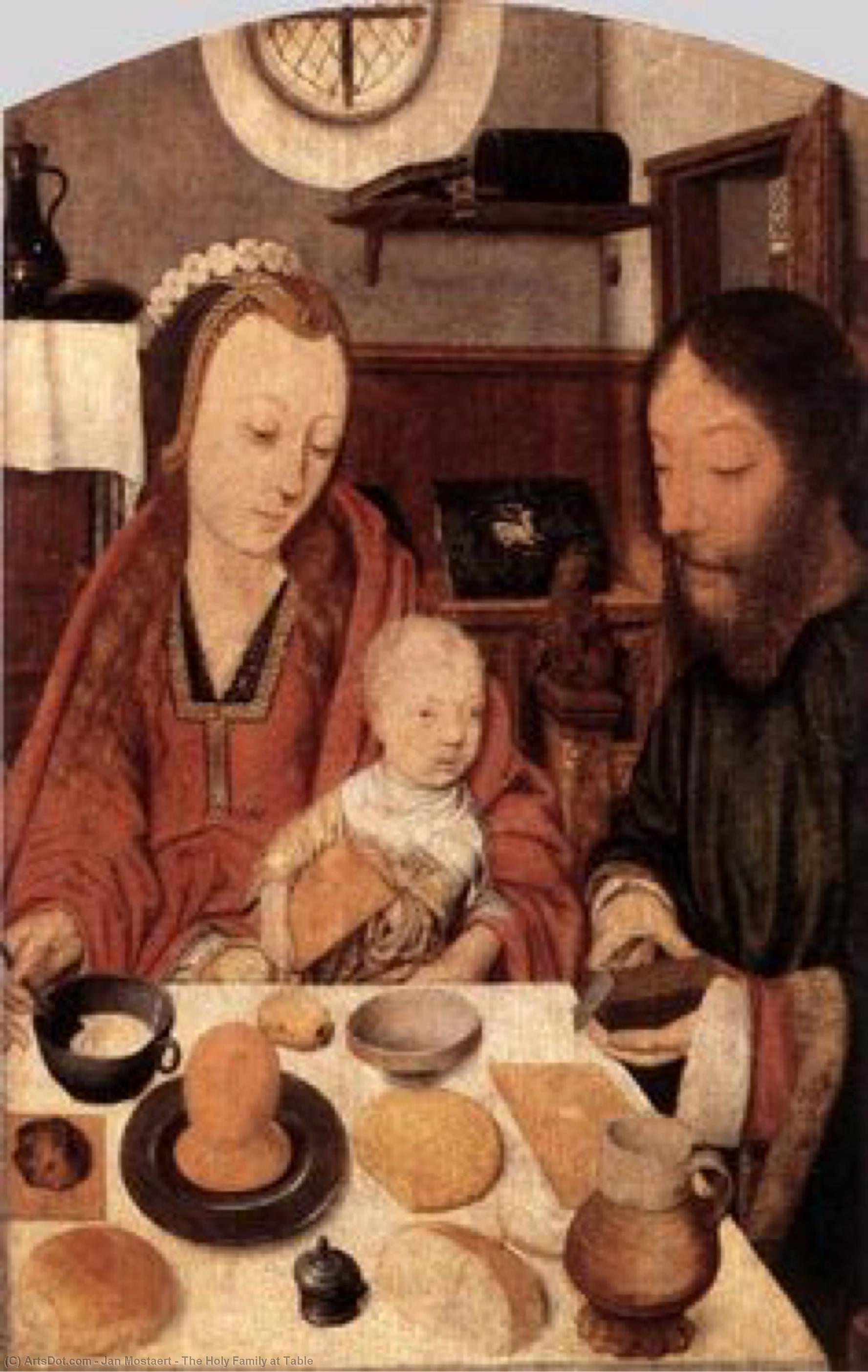
A Moment of Domestic Grace: Jan Mostaert’s “The Holy Family at Table”
Jan Mostaert's "The Holy Family at Table," painted around 1495-1500, isn’t merely a depiction of a biblical scene; it’s a carefully constructed tableau of domestic tranquility and spiritual resonance. This oil on panel painting, now residing in the Wallraf-Richartz Museum in Cologne, offers a rare glimpse into the heart of Renaissance family life – a world where faith and everyday existence intertwined seamlessly. Mostaert, a pivotal figure bridging the late medieval and early Renaissance artistic landscapes of the Netherlands, masterfully captures a scene both familiar and profoundly moving.
The composition immediately draws the eye to the central figures: Mary, Joseph, and the infant Jesus seated around a richly appointed table. The arrangement isn’t haphazard; it's deliberately balanced, radiating warmth and intimacy. Mary, rendered with a gentle dignity, gestures towards her son, while Joseph observes him with quiet affection. The inclusion of a dog nestled at their feet adds an element of domesticity, grounding the scene in the realities of family life – a subtle yet powerful reminder that even within the sacred narrative, the ordinary holds significance.
Renaissance Realism and Northern Detail
Mostaert’s style is characterized by a remarkable synthesis of influences. He inherited the meticulous detail and rich color palettes of his Haarlem predecessors, particularly Geertgen tot Sint Jans, while simultaneously embracing the burgeoning Renaissance interest in naturalism and perspective. Notice how he skillfully renders the textures of the fabrics – the folds of Mary's robe, the rough-hewn wooden table, the delicate sheen of the fruit – each element imbued with a tactile quality that invites the viewer to step into the scene. The use of oil paint allowed for subtle gradations of color and depth, something largely absent in earlier tempera techniques.
However, Mostaert’s work retains a distinctly Northern European sensibility. The lighting is diffused and atmospheric, creating a soft, almost dreamlike quality. There's a deliberate avoidance of dramatic contrasts; instead, he favors a harmonious blend of light and shadow that enhances the painting’s overall sense of serenity. The figures themselves are not idealized in the manner of Italian Renaissance portraits – they possess a certain earthiness, a palpable humanity that reflects the artist’s engagement with his local community.
Symbolism and Spiritual Resonance
Beyond its immediate visual appeal, “The Holy Family at Table” is rich in symbolic meaning. The table itself represents hospitality, nourishment, and the foundation of family life – a microcosm of God's own provision for humanity. The presence of bread and wine, symbols of the Eucharist, subtly reinforces the religious context of the scene. The dog, often associated with loyalty and fidelity, further underscores the themes of devotion and familial bonds.
Furthermore, the painting’s placement within the broader context of Renaissance art reveals a deeper spiritual purpose. During this period, artists increasingly sought to depict biblical narratives in ways that resonated with contemporary audiences – not as distant theological abstractions, but as relatable human experiences. Mostaert's work exemplifies this trend, offering viewers a poignant meditation on family, faith, and the enduring power of love.
A Timeless Masterpiece: Reproduction Possibilities
Reproductions of “The Holy Family at Table” offer an exceptional opportunity to bring this captivating artwork into your home or office. High-quality prints capture the painting’s nuanced details and atmospheric quality, allowing you to appreciate Mostaert's artistry from a new perspective. Consider framing options that complement the painting’s rich palette and evoke a sense of timeless elegance. This piece is more than just decoration; it’s an invitation to contemplate the beauty and grace of the human spirit.