A Vision of Divine Agony: The Mastery of Jan Sanders van Hemessen
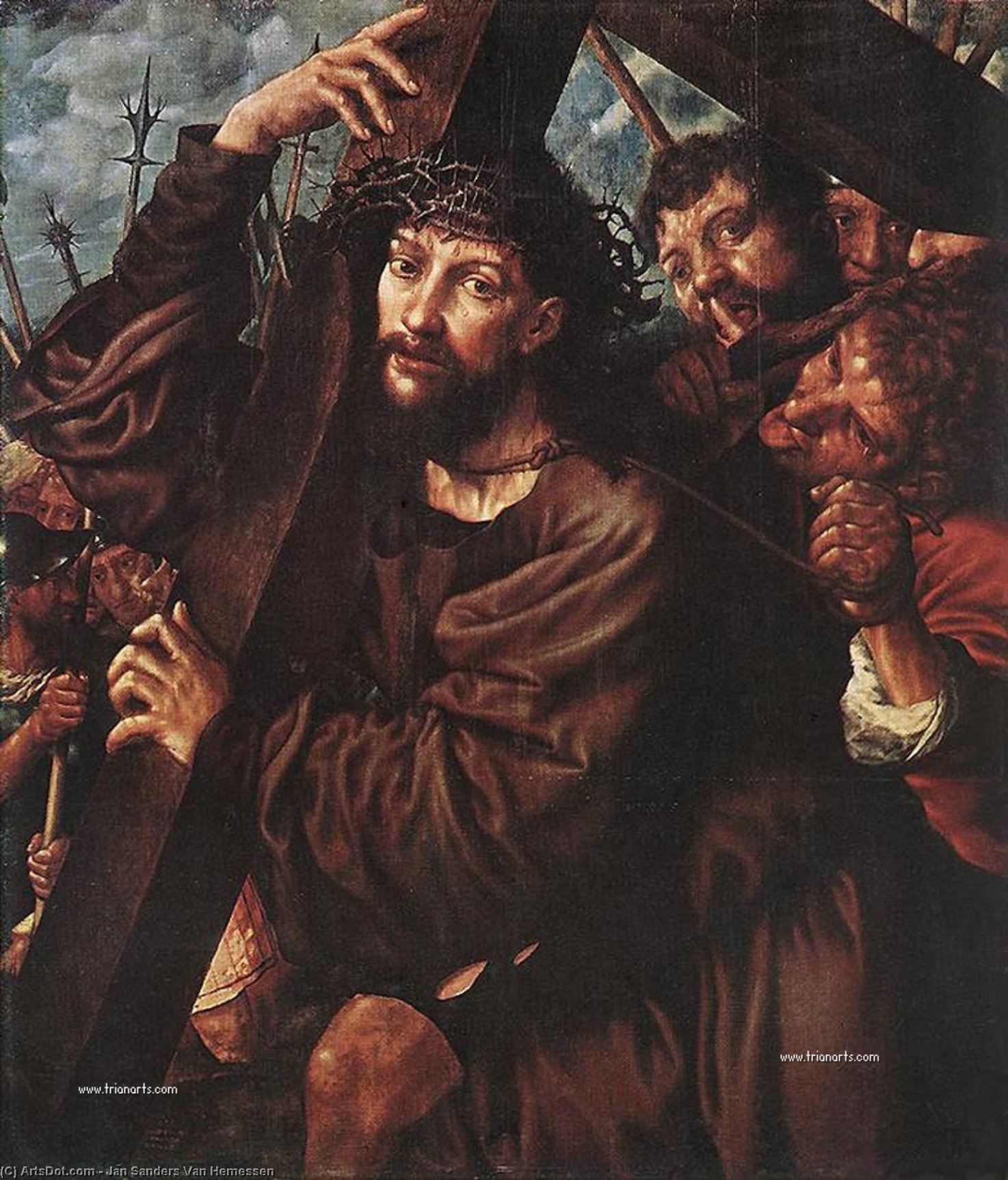
In the profound stillness of 1553, Jan Sanders van Hemessen captured a moment of unparalleled spiritual and physical tension in his masterpiece, Christ Carrying the Cross. This evocative oil painting serves as a visceral window into the heart of the Passion, inviting the viewer to witness the heavy, rhythmic struggle of a deity bearing the weight of humanity's sins. The composition is characterized by an intense, claustrophobic intimacy; there is no vast landscape to offer escape, only the tightly grouped figures that press against the boundaries of the frame. This deliberate lack of spatial breathing room forces an immediate confrontation between the observer and the subject, creating a sense of inescapable drama that has captivated collectors and theologians alike for centuries.
The technique employed by van Hemessen is a testament to the pinnacle of Flemish Renaissance skill. Utilizing the rich, layered traditions of oil on canvas, the artist employs a masterful chiaroscuro—a dramatic interplay of light and shadow—to sculpt the figures from the darkness. A singular, potent light source illuminates the contours of Christ’s suffering face and the strained musculature of his hands, casting deep, velvety shadows that lend a three-dimensional weight to the scene. Every brushstroke contributes to a palpable texture; one can almost feel the rough grain of the wooden cross and the sharp, piercing reality of the crown of thorns. This meticulous attention to detail, reminiscent of the Early Netherlandish masters like Jan van Eyck, ensures that the physical reality of the event is as striking as its spiritual significance.
Symbolism and the Emotional Landscape
Beyond the technical brilliance lies a profound layer of religious iconography designed to stir the soul. The cross itself is not merely a structural element but a heavy, geometric burden that anchors the composition, symbolizing the intersection of the earthly and the divine. The organic, contorted forms of the figures around Christ serve as a mirror to the emotional chaos of the Crucifixion; their expressions of despair, cruelty, and pity create a complex tapestry of human emotion. For the discerning interior designer or art enthusiast, this piece offers more than just decoration; it provides a focal point of deep contemplation. The painting’s ability to evoke empathy through its realistic portrayal of anatomy and facial expression makes it an extraordinary specimen of moralizing art.
For those seeking to integrate a piece of profound historical significance into a curated collection, this reproduction offers an opportunity to possess a fragment of the Northern Renaissance spirit. The artwork's enduring power lies in its ability to balance the brutal realism of physical pain with the transcendent beauty of spiritual sacrifice. Whether placed in a quiet study or as a commanding centerpiece in a grand hall, Christ Carrying the Cross continues to resonate, offering a timeless meditation on resilience, faith, and the enduring human condition.