A Portrait of Solitude and Faith: Jan Sanders van Hemessen’s St. Jerome
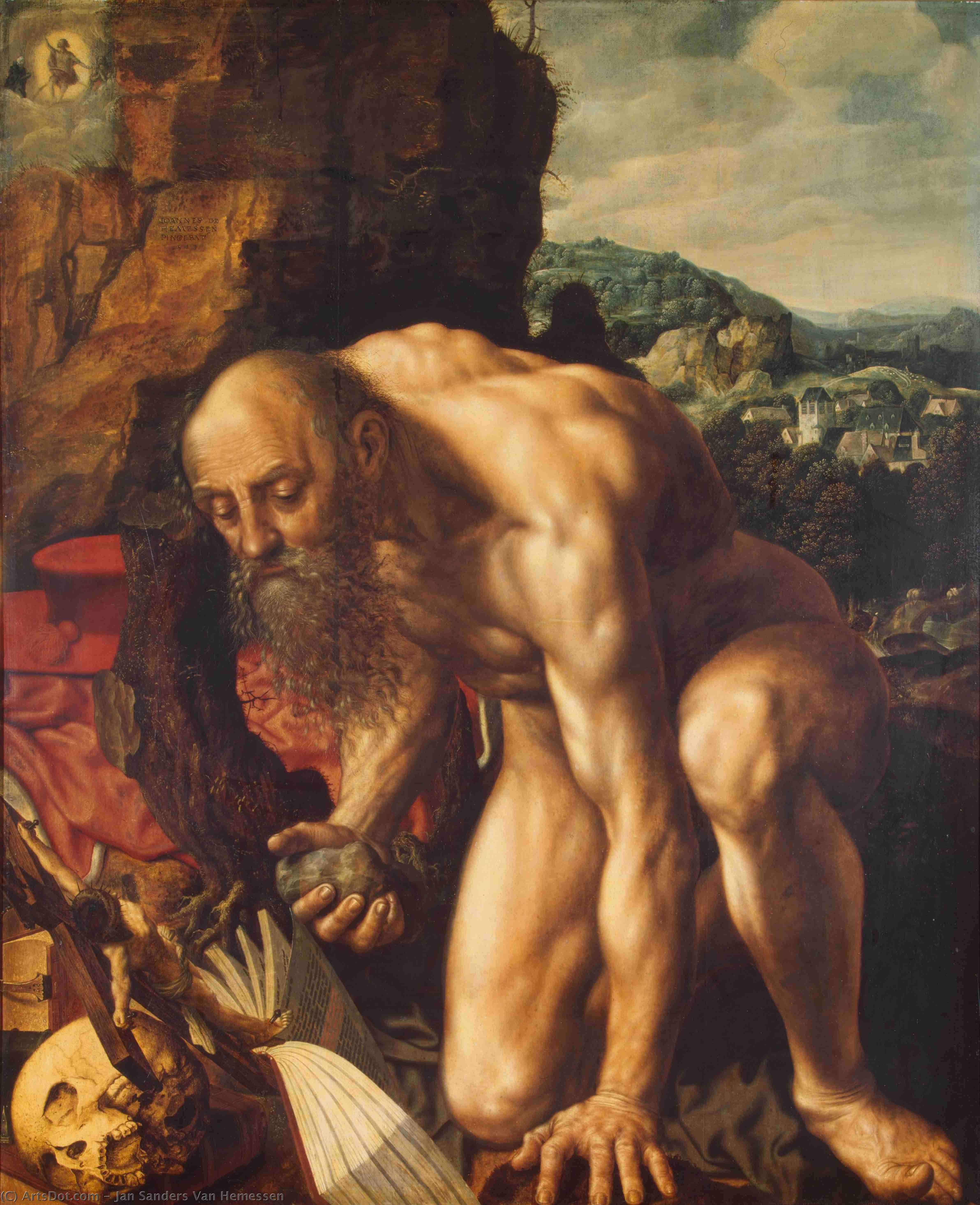
Jan Sanders van Hemessen's "St. Jerome" – a painting completed around 1543 – is more than just a depiction of the biblical figure; it’s a profound meditation on introspection, faith, and the weight of spiritual contemplation. Van Hemessen, a pivotal figure in the burgeoning Flemish Renaissance, masterfully blends elements of Italian Mannerism with the established traditions of Northern European painting, creating an image that resonates with both intellectual depth and emotional resonance. The work immediately draws the viewer into a space of quiet intensity, inviting us to share in Jerome’s solitary journey.

The Anatomy of a Scene: Technique and Composition
Van Hemessen’s technical skill is immediately apparent in the meticulous detail with which he renders Jerome's figure. The painting employs a rich, layered technique—a hallmark of Flemish art—where thin glazes of oil paint are applied over multiple underpaintings to build up depth and luminosity. Notice particularly the subtle variations in tone across his face and hands, conveying a sense of texture and volume. The composition is carefully balanced, with Jerome’s kneeling form anchoring the scene while the mountainous background provides both spatial context and symbolic weight. The use of chiaroscuro—the dramatic contrast between light and shadow—further emphasizes the figure's isolation and spiritual intensity. The dark, almost claustrophobic cave setting serves as a powerful metaphor for Jerome’s inner world.
A Renaissance Mind: Symbolism and Context
St. Jerome is famously known for his translation of the Bible into Latin, a monumental undertaking that shaped Western Christianity. Within the painting, Jerome isn't simply depicted as a saint; he embodies the arduous process of intellectual and spiritual labor. The rock in his hand – a traditional symbol of penance and contemplation – suggests the weight of his task and the sacrifices required for scholarly pursuits. The mountainous landscape behind him is not merely a backdrop but a representation of the challenges and obstacles faced on the path to knowledge and faith. The painting was created during a period of intense intellectual ferment in Europe, marked by the rediscovery of classical learning and a renewed interest in biblical scholarship. Van Hemessen’s work reflects this spirit of inquiry and exploration.
A Legacy of Faith and Art
Jan Sanders van Hemessen's "St. Jerome" stands as a testament to the power of art to capture complex human emotions and spiritual experiences. It is a painting that invites contemplation, prompting us to consider the nature of faith, the pursuit of knowledge, and the importance of solitude in the face of adversity. Reproductions of this work offer a remarkable opportunity to bring this evocative image into any space, serving as a constant reminder of the enduring legacy of Flemish Renaissance art and the profound insights it offers into the human condition. The painting’s quiet dignity and masterful execution make it a timeless treasure for collectors and admirers alike.