A Moment Frozen in Time: Jan Swart van Groningen’s “John the Baptist (or the Apostle Philip)”
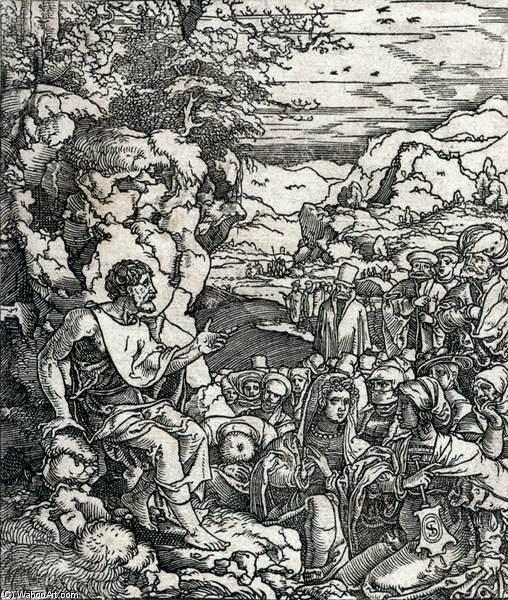
Jan Swart van Groningen’s “John the Baptist (or the Apostle Philip) Preaching,” painted circa 1520, stands as a testament to the burgeoning humanist spirit of the Renaissance and exemplifies the meticulous artistic craftsmanship characteristic of Northern European painting during this period. Housed in the British Museum, London, this monumental wood panel depicts a scene brimming with religious fervor and visual richness—a captivating glimpse into the spiritual landscape of sixteenth-century Flanders.
- Subject Matter: The artwork portrays John the Baptist or Apostle Philip delivering a sermon to a congregation gathered on a rocky outcrop beneath an overcast sky. This biblical narrative captures the essence of Christian evangelism and underscores the importance of faith and divine revelation.
- Style & Technique: Swart’s style aligns closely with the prevailing Mannerist aesthetic, prioritizing expressive detail and dramatic chiaroscuro—the skillful manipulation of light and shadow—to heighten emotional impact. The artist employs a restrained palette dominated by earthy tones, skillfully blending shades of brown and grey to convey the ruggedness of the landscape and the solemnity of the occasion.
- Material & Medium: Executed on wood panel, Swart utilized oil paint combined with tempera—a technique that ensured durability and luminosity—resulting in a surface texture that retains remarkable fidelity to the original canvas. The meticulous layering of pigments demonstrates an unparalleled dedication to achieving visual realism.
Symbolism & Narrative Depth
Beyond its immediate depiction, “John the Baptist (or the Apostle Philip)” resonates with profound symbolic significance. The preacher’s gesture—pointing towards the crowd—represents divine instruction and invites contemplation on the transformative power of faith. The rocky landscape serves as a metaphor for adversity and challenges faced by believers, while the cloudy sky symbolizes uncertainty and spiritual struggle. Swart masterfully integrates these elements into a cohesive visual narrative that speaks to universal themes of piety and moral responsibility.
Historical Context: Renaissance Humanism & Artistic Innovation
Painted during the early decades of the sixteenth century, “John the Baptist (or the Apostle Philip)” reflects the broader humanist movement that swept across Europe. Artists like Swart embraced classical ideals of beauty and proportion while simultaneously exploring psychological depth—a departure from earlier Gothic conventions. Influenced by Karel van Mander’s biographical account and the pioneering techniques of Jan van Scorel, Swart pushed the boundaries of artistic innovation, establishing himself as a pivotal figure in shaping the visual culture of his time.
Emotional Impact & Artistic Legacy
The painting's enduring appeal lies in its ability to evoke empathy and contemplation. Swart’s masterful rendering of human emotion—captured through subtle facial expressions and gestures—transcends temporal boundaries, inviting viewers to engage with the spiritual concerns of the Renaissance. “John the Baptist (or the Apostle Philip)” remains a cornerstone of Northern European art history, inspiring generations of artists and continuing to captivate audiences with its breathtaking beauty and profound artistic merit.