The Weight of the World: An Encounter with Jan van Eyck's Crucifixion
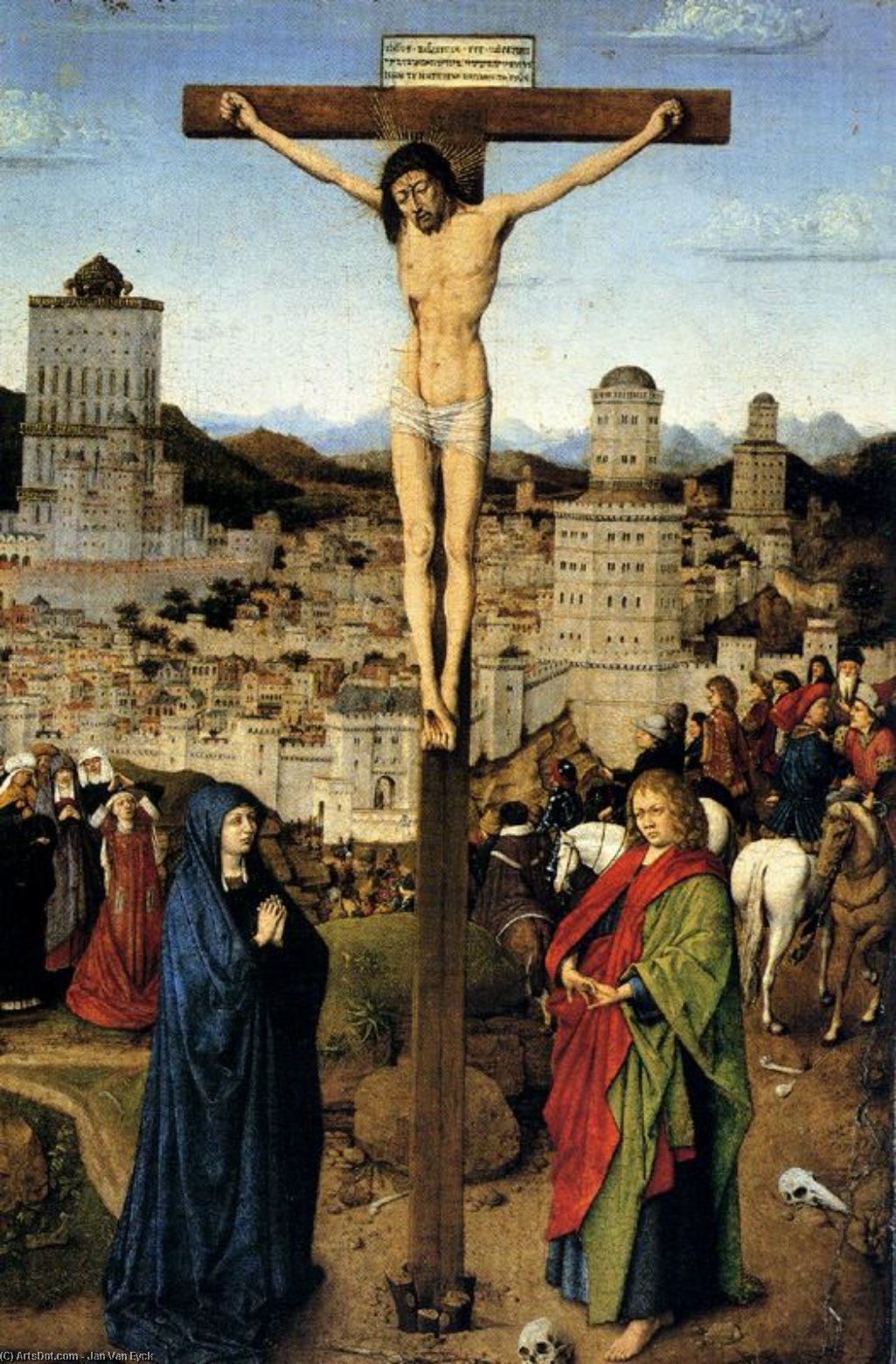
Jan van Eyck’s “Crucifixion” – a work often referred to as “The Crucifixion and Last Judgement Diptych” – isn’t merely a depiction of a pivotal biblical event; it’s an immersive experience, a profound meditation on suffering, faith, and the very nature of humanity. Painted in 1420-1439, this remarkable diptych, housed within the Metropolitan Museum of Art, transcends its historical context to resonate powerfully with viewers centuries later. The sheer detail, rendered with Van Eyck’s revolutionary use of oil paint – a technique he essentially pioneered – immediately draws the eye, inviting close inspection and revealing an astonishing level of realism previously unseen in Northern European art. The scene unfolds within a meticulously constructed space: a stark, almost desolate landscape punctuated by the imposing figure of the cross, dominating the composition with its solemn weight.
At the heart of the diptych lies Jesus Christ, suspended on the cross. His posture is one of agonizing endurance; his arms outstretched in a gesture both vulnerable and defiant. Van Eyck doesn’t shy away from portraying the physical reality of crucifixion – the wounds, the contorted limbs, the visible strain on every muscle. Yet, amidst this brutal depiction of suffering, there's an undeniable sense of dignity and grace. The artist masterfully captures the subtle nuances of emotion: a hint of resignation in Christ’s face, a profound sorrow etched into his features. The surrounding figures – grieving disciples, concerned onlookers, and even soldiers – are rendered with equally meticulous detail, each contributing to the overall atmosphere of grief and contemplation.
A Symphony of Color and Light: Van Eyck's Revolutionary Technique
What truly distinguishes “Crucifixion” is Van Eyck’s groundbreaking application of oil paint. Prior to this period, artists primarily relied on tempera, a medium that produced relatively flat, matte surfaces. Oil paint, however, allowed for layering, blending, and glazing – techniques that enabled Van Eyck to achieve an unprecedented level of luminosity, depth, and realism. The subtle gradations of color, the shimmering highlights, and the delicate textures are all testaments to his mastery of this innovative medium. Notice how light plays across Christ’s body, illuminating the wounds and casting long shadows, creating a dramatic interplay of form and light that elevates the scene beyond mere representation.
Furthermore, Van Eyck's meticulous attention to detail extends far beyond the figures themselves. The landscape, rendered with astonishing precision, is filled with intricate details – from the individual stones in the foreground to the distant cityscape of Jerusalem. The use of aerial perspective—creating a sense of depth through subtle variations in color and tone—further enhances the realism of the scene. This level of detail wasn’t simply for aesthetic effect; it served to immerse the viewer in the narrative, drawing them into the emotional core of the story.
Symbolism and Spiritual Resonance: Unpacking the Layers
Beyond its immediate visual impact, “Crucifixion” is rich in symbolic meaning. The diptych itself represents a duality—the suffering of Christ on the left wing and the anticipation of the Last Judgement on the right. The inscriptions adorning the panels – excerpts from Isaiah, Deuteronomy, and Revelation – provide theological context, reinforcing the narrative’s significance within Christian belief. The presence of various figures – soldiers, mourners, and clergy – represents the diverse range of human responses to Christ's sacrifice.
The overall effect is profoundly moving. “Cruifixion” isn’t a celebration of victory; it’s an honest portrayal of pain, loss, and redemption. It compels viewers to confront uncomfortable truths about humanity’s capacity for cruelty while simultaneously offering a glimmer of hope through the figure of Christ's sacrifice. The diptych invites contemplation on themes of faith, mortality, and the enduring power of compassion – making it a timeless masterpiece that continues to resonate with audiences today.