A Window into Early Netherlandish Devotion
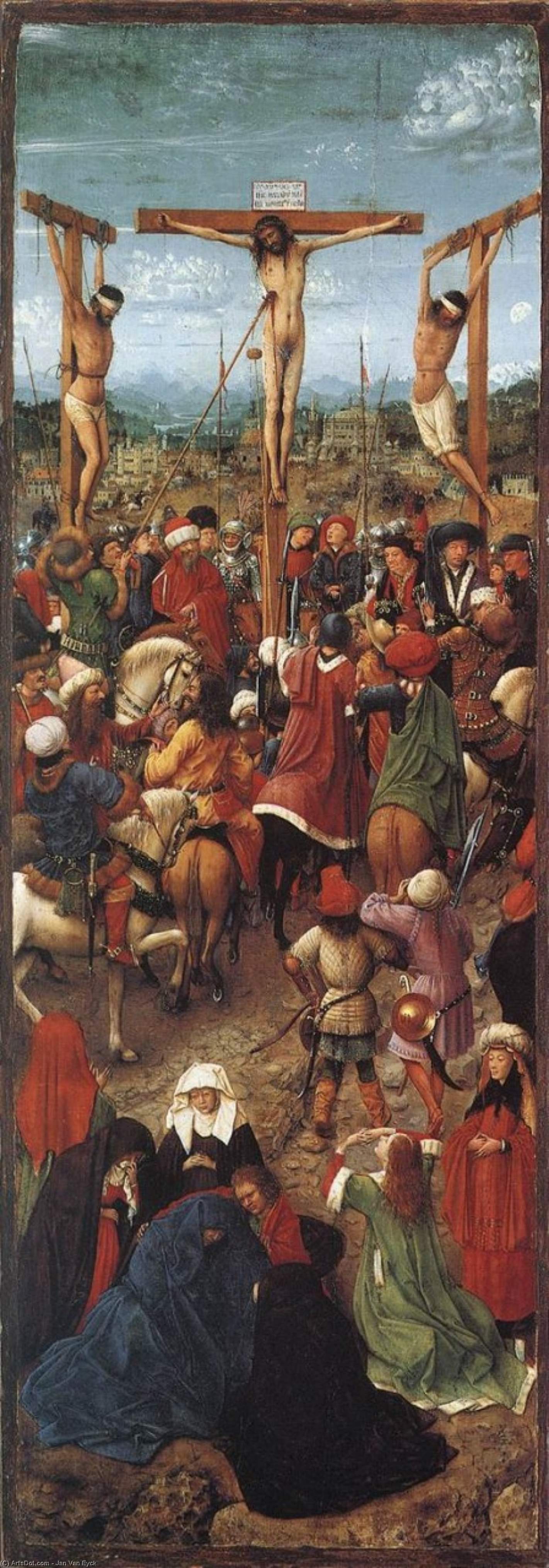
Jan van Eyck’s *Crucifixion*, a small but profoundly impactful panel painting created around 1420, offers an intimate glimpse into the religious fervor and artistic innovation of the Early Netherlandish period. Measuring just 56 x 19 cm, this work—currently housed in the Metropolitan Museum of Art in New York—is part of a diptych originally paired with *The Last Judgment*, creating a powerful meditation on sin, salvation, and sacrifice.
Detailed Realism & Technical Mastery
Van Eyck’s skill is immediately apparent in the meticulous detail lavished upon every element of the composition. Executed in oil on canvas—a medium he helped to pioneer—the painting showcases a remarkable level of realism previously unseen. The artist's mastery lies not only in accurately depicting textures – from the rough-hewn wood of the cross to the rich fabrics adorning the figures – but also in his nuanced rendering of human emotion. Observe the individualized expressions of grief, contemplation, and even stoicism amongst the crowd gathered at Calvary.
Iconography & Symbolic Weight
The scene is densely populated with over thirteen figures, each contributing to the narrative’s emotional weight. Jesus Christ occupies the central position, his suffering palpable yet dignified. Surrounding him are mourners, Roman soldiers, and other witnesses to this pivotal moment in Christian history. The vibrant colors—deep reds, blues, and golds—are not merely decorative; they carry symbolic meaning. Red often represents sacrifice and passion, while gold signifies divinity and the heavenly realm. The careful arrangement of figures and objects isn’t accidental; it's a deliberate orchestration designed to guide the viewer’s eye and reinforce the painting’s theological message.
Historical & Artistic Context
Jan van Eyck (c. 1390-1441) was a pivotal figure in the transition from Gothic to Renaissance art in Northern Europe. Born in Maastricht, he served as court painter to both John III of Bavaria and Philip the Good, Duke of Burgundy. This patronage afforded him access to resources and opportunities that allowed him to experiment with new techniques and push the boundaries of artistic representation. His work embodies the characteristics of the Early Netherlandish style: intense realism, meticulous detail, symbolic imagery, and a profound spiritual depth. He wasn’t alone; his brother Hubert also contributed significantly to this movement, notably co-creating the famed Ghent Altarpiece.
Emotional Resonance & Lasting Impact
*The Crucifixion* is not simply a depiction of a historical event; it's an invitation to empathize with the suffering of Christ and contemplate the meaning of redemption. The painting’s small scale encourages intimate viewing, drawing the viewer into the scene and fostering a sense of personal connection. Its enduring power lies in its ability to evoke feelings of sorrow, reverence, and hope—emotions that transcend time and cultural boundaries.
Key Details
- Artist: Jan van Eyck
- Title: Crucifixion
- Date: c. 1420
- Medium: Oil on canvas
- Dimensions: 56 x 19 cm
- Location: Metropolitan Museum of Art, New York
For those seeking to bring the beauty and spiritual depth of Early Netherlandish art into their homes or collections, high-quality reproductions of this masterpiece are readily available. Its compact size makes it particularly well-suited for smaller spaces, while its rich colors and intricate details will add a touch of timeless elegance to any interior.