A Glimpse into Renaissance Dignity
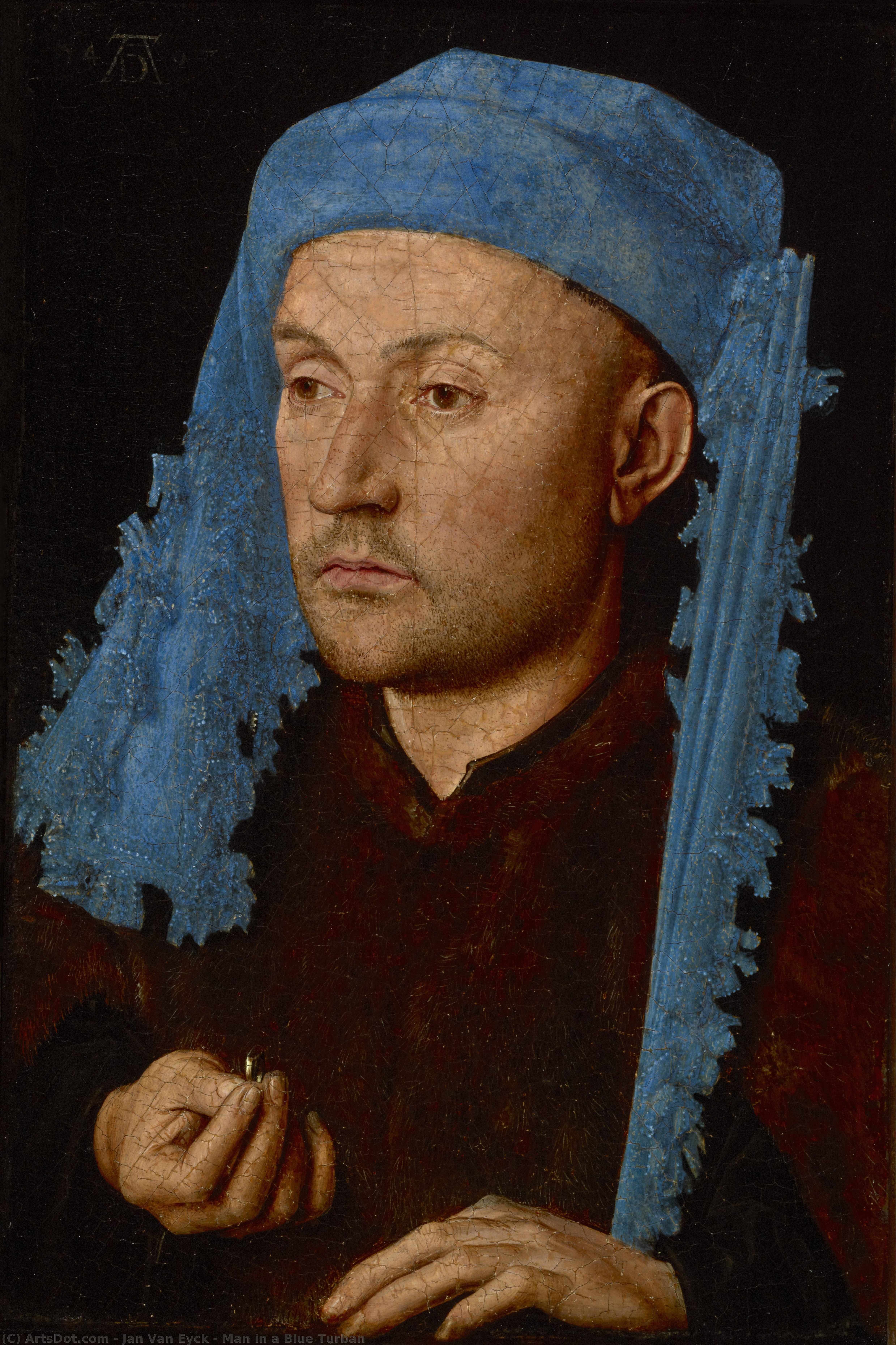
Painted in 1433 by Jan van Eyck, this captivating portrait offers an intimate encounter with a man of quiet contemplation and refined status. More than just a likeness, it’s a window into the burgeoning artistic sensibilities of the Early Netherlandish period, showcasing Van Eyck's mastery of detail and psychological insight.
Masterful Technique & Artistic Innovation
Van Eyck’s groundbreaking use of oil paint is vividly apparent in this work. The medium allows for an unprecedented level of realism – from the subtle textures of skin and fabric to the delicate rendering of facial features. Note the meticulous detail in the man's beard, the folds of his dark clothing, and most strikingly, the luminous quality of the vibrant blue turban. This wasn’t merely representation; it was a revolution in artistic technique, enabling unparalleled depth and luminosity.
Symbolism & Historical Context
The sitter’s identity remains debated, adding to the painting's mystique. The distinctive blue headdress (or chaperon) is particularly intriguing. Blue held significant symbolic weight during this period, often associated with nobility, piety, and even the Virgin Mary. It suggests a man of importance, perhaps connected to religious orders or holding a position within the Burgundian court – where Van Eyck served as a highly esteemed painter. The inscription above his head, though partially obscured, hints at further layers of meaning, likely referencing faith or personal devotion.
Composition & Emotional Resonance
The composition is remarkably direct and engaging. The man’s frontal pose and unwavering gaze create an immediate connection with the viewer. This isn't a distant, idealized portrait; it feels like a genuine encounter. Van Eyck skillfully balances formality with intimacy, conveying a sense of solemnity tempered by quiet dignity. The dark background serves to focus attention entirely on the sitter, emphasizing his presence and inner life.
A Timeless Addition for Discerning Collectors
This artwork transcends its historical context, offering enduring aesthetic appeal. Its restrained color palette, masterful technique, and compelling subject matter make it a captivating focal point for any collection. For interior designers, this reproduction brings an air of sophisticated elegance to living spaces, studies, or libraries. It’s a piece that invites contemplation and sparks conversation – a testament to the power of Renaissance artistry.
Investing in Art History
Owning a high-quality reproduction allows you to experience the beauty and significance of this masterpiece firsthand. ArtsDot.com offers meticulously hand-painted reproductions, capturing the nuances of Van Eyck’s original work with exceptional fidelity. Bring a piece of art history into your home or office and enjoy the enduring legacy of Jan van Eyck.