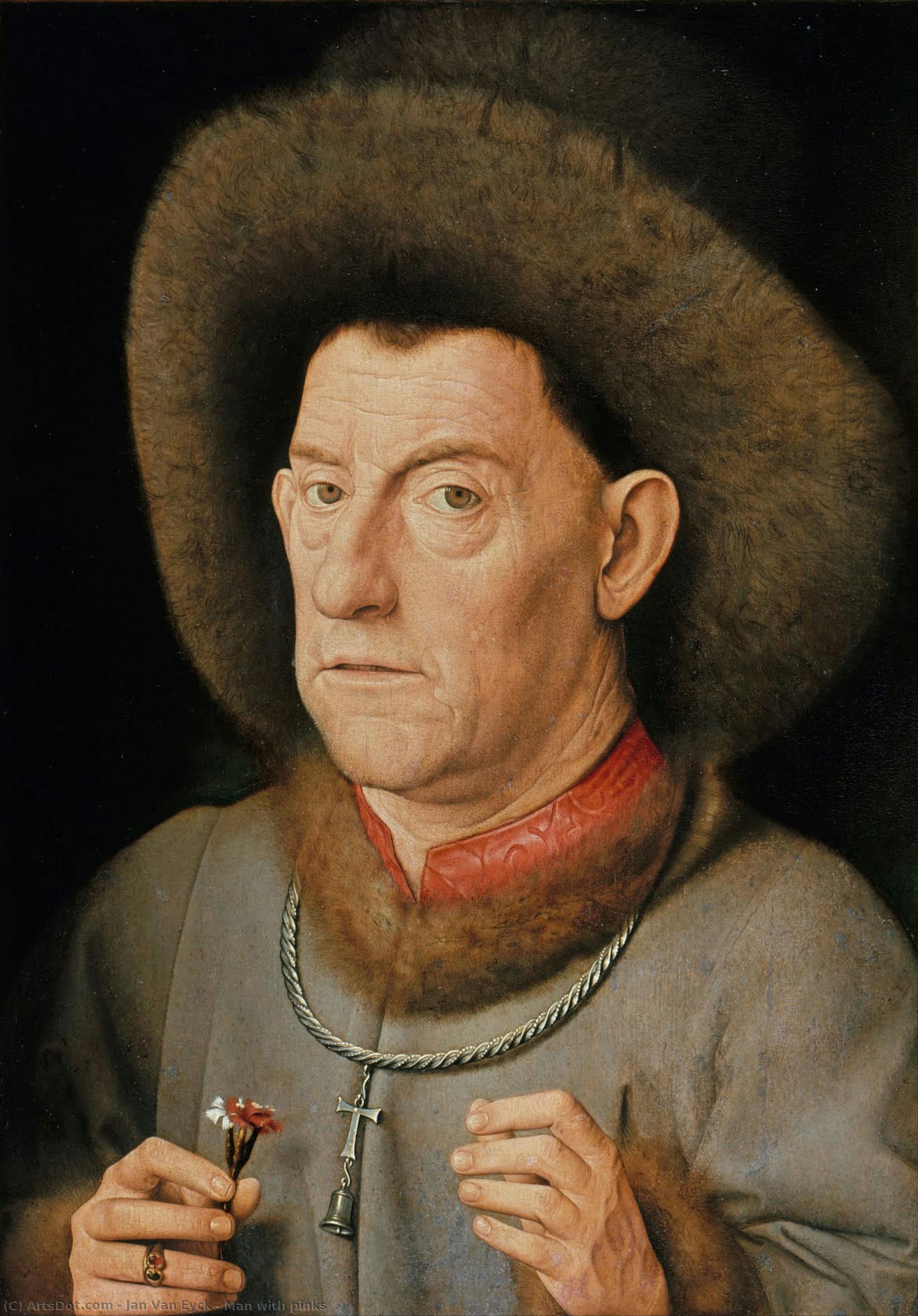
Admire Jan van Eyck’s ‘Man with Pinks,’ a stunning 1510 oil painting showcasing Flemish Renaissance realism & meticulous detail. Explore this iconic portrait.
Jan van Eyck (c. 1390-1441): Pioneer of Early Netherlandish painting, celebrated for his mastery of oil paint & groundbreaking realism. Explore the Ghent Altarpiece & Arnolfini Portrait!
A Glimpse into Renaissance Contemplation
Jan van Eyck’s *Man with Pinks*, painted around 1510, is a captivating portrait that embodies the meticulous realism and profound psychological depth characteristic of the Flemish Renaissance. This oil on panel painting, measuring just 31 x 41 cm, offers an intimate encounter with an elderly gentleman whose gaze invites quiet contemplation.
Subject & Composition
The artwork centers on a distinguished man, depicted from the waist up against a dark, neutral background. He is presented in three-quarter view, allowing for a nuanced portrayal of his facial features and subtle expression. The subject’s attire – a dark robe with a luxurious fur collar and a finely crafted chaperon (a type of hood) – suggests a man of status and refinement. He delicately holds a cluster of pink flowers (“pinks” referring to the Dianthus flower), adding a touch of delicate beauty to the composition. The arrangement is deliberately simple, focusing attention on the sitter’s face and hands.
Masterful Technique & Style
Van Eyck was a pioneer in oil painting, and *Man with Pinks* exemplifies his groundbreaking technique. He employed numerous thin, translucent layers of glaze – a hallmark of Early Netherlandish painting – to build up color, depth, and luminosity. This painstaking process results in an astonishing level of detail: the texture of the fur, the sheen on the fabric, and the subtle wrinkles around the man’s eyes are rendered with breathtaking accuracy. The lighting, emanating from the left, skillfully models the forms, creating a sense of volume and three-dimensionality. The style is firmly rooted in realism, yet transcends mere imitation through Van Eyck's artistic sensitivity.
Historical Context & Artistic Innovation
Born around 1390, Jan van Eyck revolutionized painting in the early 15th century. Moving beyond the International Gothic style prevalent at the time, he embraced a more naturalistic approach and exploited the potential of oil paint to achieve unprecedented levels of detail and realism. Serving as court painter to both John III the Pitiless and Philip the Good, Dukes of Burgundy, Van Eyck enjoyed significant patronage and influence. *Man with Pinks*, though potentially executed by followers, demonstrates the enduring impact of his style and techniques on subsequent generations of artists.
Symbolism & Interpretation
The symbolism within *Man with Pinks* is subtle yet evocative. The pink flowers themselves may represent love, remembrance, or even piety – common associations in Renaissance art. However, the painting’s power lies more in its psychological depth than overt symbolic meaning. The man's expression—a blend of weariness and quiet dignity—suggests a life lived fully, marked by experience and perhaps a touch of melancholy. It is this introspective quality that makes the portrait so compelling.
Emotional Impact & Interior Design
*Man with Pinks* evokes a sense of calm contemplation and quiet dignity. The warm color palette – dominated by browns, reds, and creams – creates an inviting atmosphere. Its relatively small size and intimate subject matter make it ideal for smaller spaces or as part of a curated gallery wall. For interior designers, this artwork offers a touch of Old World elegance and sophistication, complementing both traditional and contemporary settings. Its rich textures and subtle details will add depth and character to any room. The painting’s enduring appeal lies in its ability to connect with viewers on an emotional level, inviting them to reflect on the passage of time and the complexities of human experience.
Collecting & Reproduction
The original *Man with Pinks* is housed in the Gemäldegalerie, Staatliche Museen zu Berlin. Given its historical significance and artistic merit, acquiring a high-quality reproduction allows art enthusiasts to enjoy Van Eyck’s masterpiece within their own homes or offices. When selecting a reproduction, prioritize accurate color representation and attention to detail to fully appreciate the artist's masterful technique.