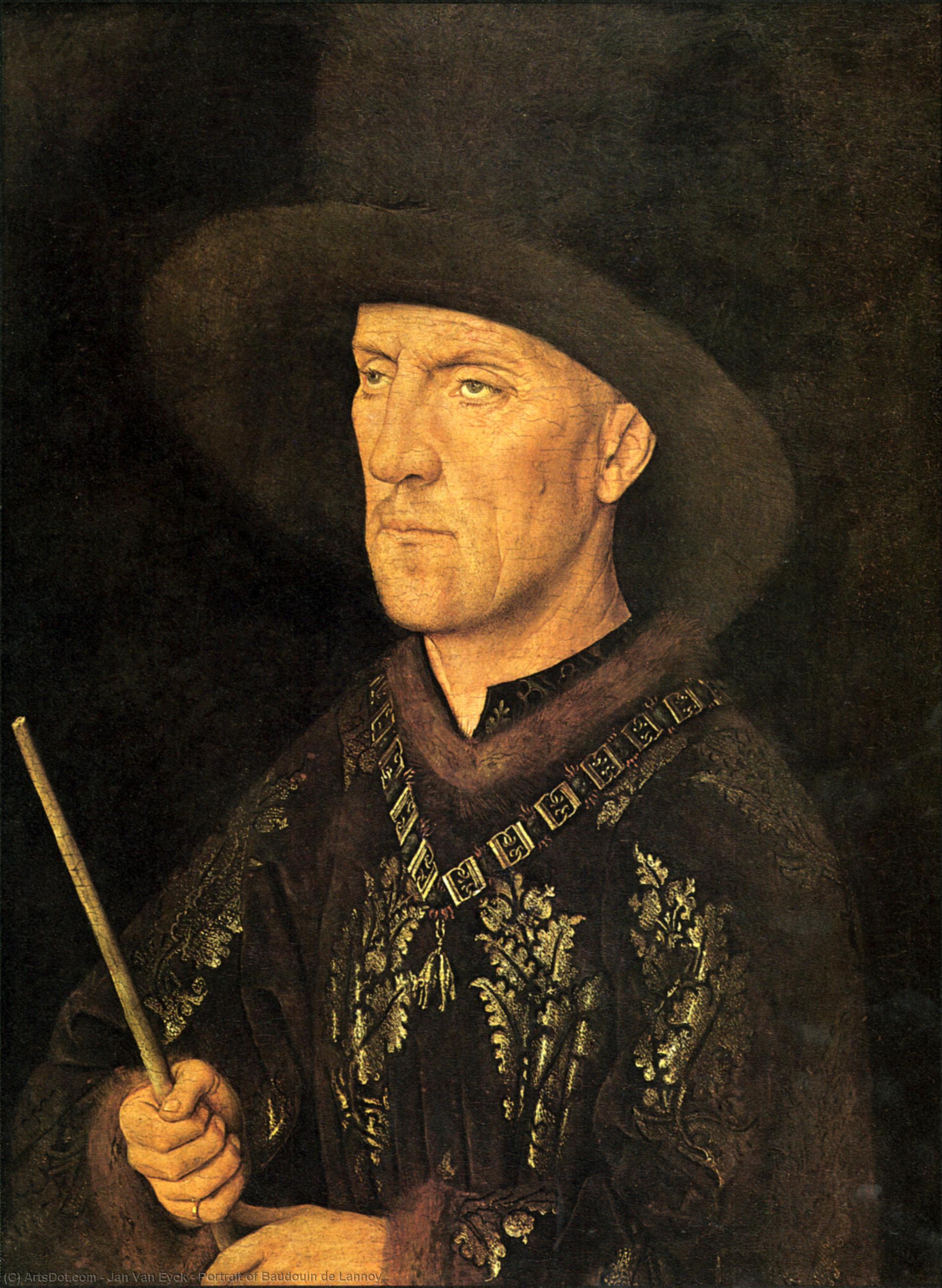
Portrait of Baudouin de Lannoy: A Window Into Burgundian Nobility
Jan van Eyck’s Portrait of Baudouin de Lannoy stands as an emblem of Early Netherlandish painting—a testament to meticulous observation and masterful execution that continues to captivate audiences centuries later. Completed around 1435, this diminutive oil-on panel depicts Baldwin of Lannoy, a prominent diplomat serving Philip the Good during Henry V’s reign, offering a glimpse into the opulent world of Burgundian aristocracy. Currently residing in the Staatliche Museen zu Berlin’s Gemäldegalerie, it's more than just an image; it’s a carefully crafted narrative rendered with unparalleled realism and symbolic richness.
- Subject Matter: The portrait focuses on Baudouin de Lannoy himself—a man of considerable stature within his era—presented in a dignified pose that emphasizes his status as a noble diplomat. His gaze directs firmly toward the viewer, conveying an air of authority and self-assurance.
- Style & Technique: Van Eyck’s signature style is immediately apparent: he employs *sfumato*, a technique pioneered by him—and perfected by Leonardo da Vinci—that softens contours and blends colors seamlessly to create an illusion of depth and luminosity. This masterful blending contributes significantly to the painting's ethereal quality, capturing not merely physical likeness but also conveying a sense of inner character.
- Material & Medium: Executed in oil paint on oak panel, the portrait exemplifies the transformative impact of this medium. Unlike tempera paints which dry quickly and produce relatively flat surfaces, oil allows for gradual layering and blending—essential to achieving Van Eyck’s remarkable level of detail and tonal nuance. The subtle sheen imparted by the oil pigment enhances the visual experience, mirroring the richness of the subject's attire and surroundings.
Historical Context: Burgundy Under Philip the Good
The portrait is inextricably linked to the political landscape of Burgundy during Philip the Good’s reign (1406–1474). Baudouin de Lannoy served as Philip’s ambassador to England, navigating complex diplomatic negotiations amidst the escalating tensions surrounding the Hundred Years' War. Van Eyck skillfully captures this historical moment—reflecting not only Baudouin’s physical appearance but also embodying the ideals of noble leadership and diplomatic prowess prevalent in Burgundian society. The inclusion of symbols like the Order of the Golden Fleece underscores Baudouin’s affiliation with one of Burgundy’s most prestigious chivalric orders, signifying honor and virtue.
Symbolism & Detail: Layers of Meaning
Beyond its depiction of Baudouin himself, the portrait is replete with symbolic elements that enrich its narrative depth. The man's attire—a dark velvet coat adorned with gold embroidery—represents wealth and nobility. The fur lining around his neck and wrist symbolizes status and luxury, highlighting Baudouin’s position within the aristocratic hierarchy. Notably, Van Eyck meticulously rendered the textures of fabric and fur—demonstrating an unparalleled understanding of visual perception. Furthermore, the inclusion of a book suggests erudition and intellectual pursuits—characteristic traits associated with noblemen of the Renaissance. The careful positioning of the book contributes to the overall composition, creating balance and harmony.
Emotional Impact & Legacy
The Portrait of Baudouin de Lannoy transcends mere representation; it evokes a profound sense of stillness and contemplation. Van Eyck’s masterful use of light and shadow—combined with his subtle tonal gradations—creates an atmosphere of solemn dignity, inviting viewers to engage in a dialogue with the subject's gaze. This enduring image continues to inspire admiration for Van Eyck’s artistic genius and serves as a powerful reminder of the meticulous craftsmanship that defined Early Netherlandish painting—a legacy that resonates powerfully even today.