Jan van Eyck (c. 1390-1441): Pioneer of Early Netherlandish painting, celebrated for his mastery of oil paint & groundbreaking realism. Explore the Ghent Altarpiece & Arnolfini Portrait!
Explore Vienna's artistic soul at the Kunsthistorisches Museum! Discover masterpieces by Raphael, Rembrandt, Vermeer & ancient treasures from Egypt to Rome.
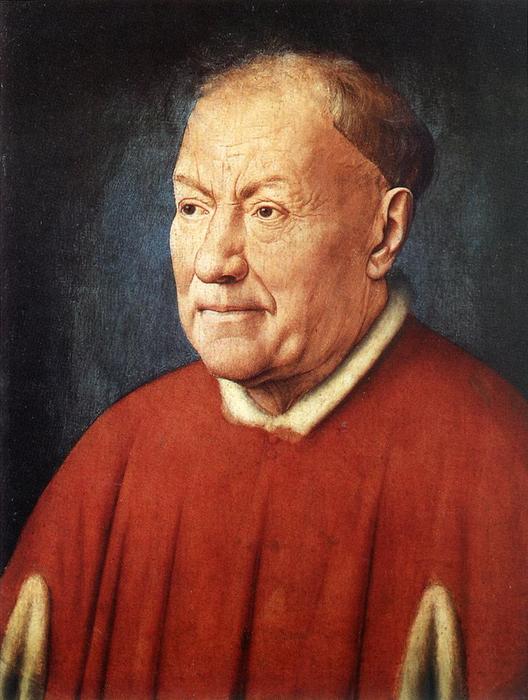
Portrait of Cardinal Niccolò Albergati
The Portrait of Cardinal Niccolò Albergati, painted by Jan van Eyck in 1431, stands as an emblem of Early Netherlandish painting and represents a pivotal moment in the artistic landscape of the fifteenth century. Housed at the Kunsthistorisches Museum in Vienna, Austria, this oil on panel masterpiece transcends mere representation; it embodies meticulous observation, profound psychological insight, and masterful execution—characteristics that define Van Eyck’s unparalleled legacy. Recent scholarship has sparked debate regarding the sitter's identity, suggesting Henry Beaufort as a more plausible candidate than Niccolò Albergati, adding another layer of intrigue to this iconic artwork.
The Subject: Cardinal Niccolò Albergati (?)
Traditionally identified as Niccolò Albergati, a prominent diplomat serving under Pope Martin V, the portrait depicts an elderly clergyman in three-quarters view—a compositional choice common in Flemish art during this period—emphasizing dignity and solemnity. The figure is bathed in diffused light emanating from a window to the left, creating a luminous effect that enhances the realism of his depiction. Detailed attention to anatomical accuracy reflects Van Eyck’s dedication to capturing the human form with unprecedented precision, mirroring the broader humanist movement gaining traction across Europe at the time. However, as noted by several scholars, Henry Beaufort—a respected Benedictine monk and influential figure in English ecclesiastical affairs—is increasingly considered a more probable subject, marking this portrait as potentially the earliest realistic depiction of an Englishman.
Artistic Techniques and Details
Jan van Eyck’s groundbreaking approach to oil painting revolutionized artistic practice. Unlike tempera paints, which required laborious layering and risked cracking over time, oil pigments allowed for gradual blending and achieved astonishing depth and luminosity—a technique that would become synonymous with Northern Renaissance art. The preparatory drawing meticulously documented by the Staatliche Kunstsammlungen of Dresden reveals Van Eyck’s painstaking process: numerous sketches explored variations in pose and expression before committing to the final painting. Notably, adjustments were made to refine features such as the shoulders, nose, mouth, and ear—demonstrating Van Eyck's unwavering commitment to achieving perfection. The artist skillfully employed successive layers of thinly applied oil paint mixed with resin, creating a surface that shimmered with subtle color variations and capturing minute details with remarkable clarity.
Historical Context
The Portrait of Cardinal Niccolò Albergati resides within the vibrant milieu of Early Netherlandish painting—a movement characterized by an unwavering fascination with naturalism and illusionism. Artists like Jan van Eyck, Rogier van der Weyden, and Hans Memling pushed the boundaries of artistic representation, striving to depict reality as faithfully as possible. This era witnessed a burgeoning interest in humanist ideals—particularly observation and rational inquiry—influencing artists’ approaches to portraying human subjects and their environments. The painting reflects the cultural sophistication of the Burgundian court, where patronage fueled artistic innovation and fostered an environment conducive to groundbreaking achievements like this masterpiece.
Significance and Legacy
The Portrait of Cardinal Niccolò Albergati remains a testament to Jan van Eyck’s unparalleled mastery of oil painting technique and his profound understanding of human psychology. Its meticulous detail—from the folds of the robe to the subtle nuances of facial expression—continues to inspire admiration among art historians and collectors alike. As Max J. Friedländer eloquently argued, Van Eyck's work represents “the culmination of medieval artistic tradition,” ushering in a new era of visual realism. Erwin Panofsky’s seminal analysis underscored the painting’s symbolic significance—particularly its portrayal of piety and contemplation—further cementing its place within art history canon. Today, ArtsDot.com offers high-quality reproductions of this iconic artwork, allowing enthusiasts worldwide to experience Van Eyck's genius firsthand. For a deeper exploration of Early Netherlandish painting, consult Wikipedia: Early Netherlandish Painting and The Museum Josephplatz (Vienna-Austria) on ArtsDot.com.