A Window into Renaissance Bruges
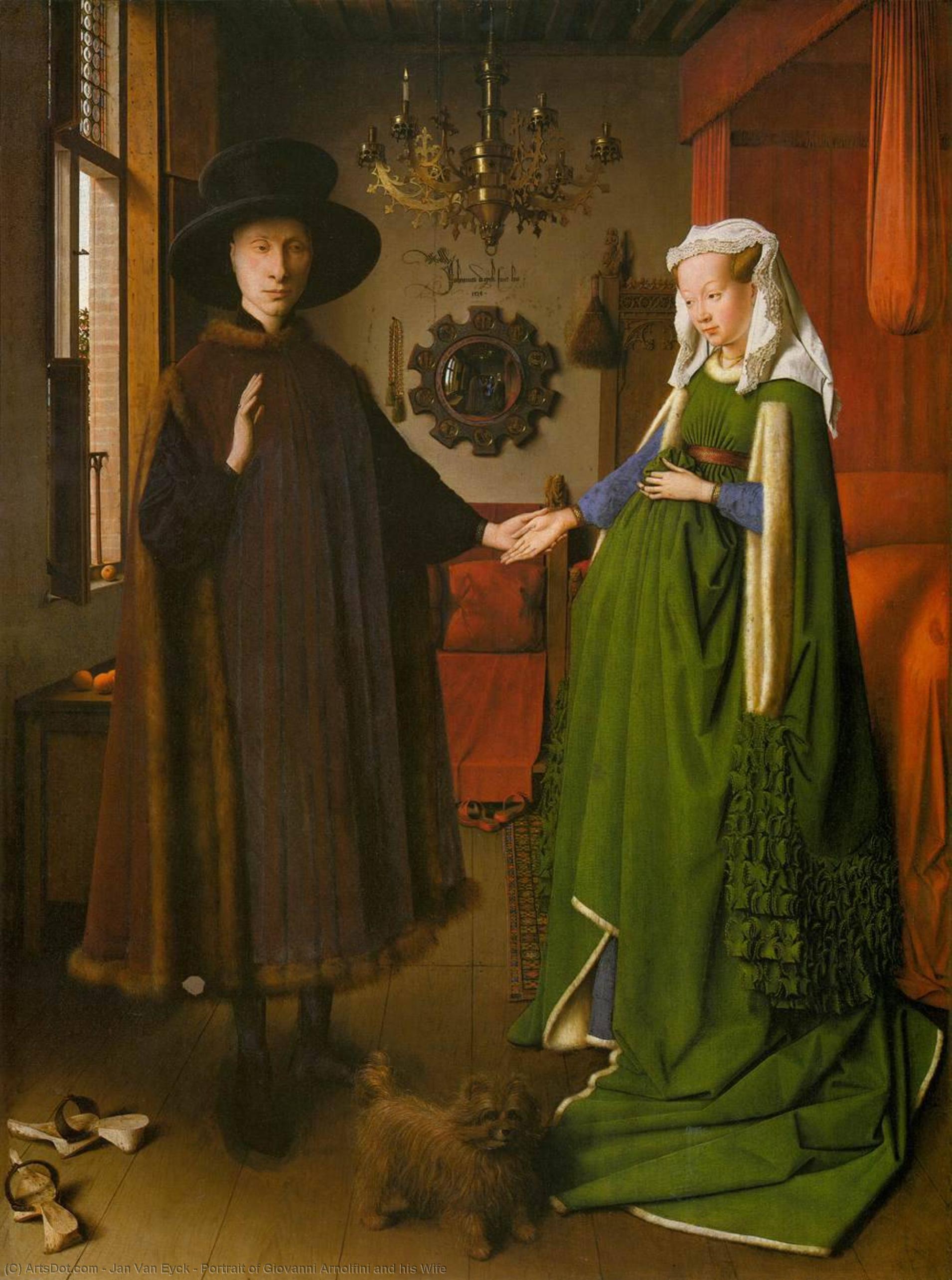
In the quiet, amber-hued stillness of Jan van Eyck’s 1434 masterpiece, Portrait of Giovanni Arnolfini and his Wife, time seems to suspend itself within a single, breathless moment. To gaze upon this panel is not merely to observe a portrait, but to step through a portal into the opulent, meticulously ordered world of Burgundian Flanders. The scene captures an intimate encounter between two figures—the Italian merchant Giovanni Arnolfini and his spouse—standing within a chamber that breathes with the weight of social prestige and spiritual devotion. There is a profound sense of presence here; the air feels heavy with the scent of fine textiles and the soft, diffused light filtering through a window, inviting the viewer to become an unseen witness to a sacred domestic ritual.
Van Eyck’s technical virtuosity serves as the heartbeat of this composition. As a pioneer of the oil painting medium, he moved beyond the flat, matte constraints of tempera to embrace a revolutionary layering process known as glazing. By applying thin, translucent veils of pigment over one another, he achieved an unprecedented depth of color and a luminous glow that seems to emanate from within the wood itself. This mastery allows for a breathtakingly tactile experience: one can almost feel the heavy, fur-lined weight of Giovanni’s dark mantle, the crispness of the white linen, and the luxurious, sweeping folds of the wife's verdant green gown. Through the alla prima technique, Van Eyck captured the subtle interplay of light and shadow, rendering textures so precisely that the distinction between silk, metal, and skin becomes a marvel of optical illusion.
The Language of Symbols and Light
Beyond its surface beauty, the painting functions as a complex tapestry of iconography, where every object serves as a silent narrator. The room is far from a mere backdrop; it is a carefully curated collection of symbols designed to communicate fidelity, wealth, and mortality. At the feet of the couple, a small dog sits with unwavering devotion, embodying the concept of fides—the faithfulness essential to a marital bond. High on the wall, a clock or timepiece acts as a poignant memento mori, a gentle reminder of the fleeting nature of human existence amidst the permanence of art. Perhaps most mesmerizing is the convex mirror positioned on the rear wall. This tiny, crystalline eye reflects not only the backs of the subjects but also two figures entering the room, effectively expanding the boundaries of the canvas and suggesting that the artist himself—or perhaps a divine observer—is present in the very space we inhabit.
For the discerning collector or interior designer, this artwork offers more than just aesthetic splendor; it provides a profound emotional anchor. The painting’s ability to balance grand historical significance with intimate human connection makes it a timeless addition to any curated space. Whether placed in a sunlit gallery or a sophisticated study, a high-quality reproduction of this work brings with it the quiet dignity of the Northern Renaissance. It is a piece that rewards repeated viewing, offering new layers of meaning and a sense of historical continuity that enriches the soul of a home, turning a mere room into a sanctuary of culture and contemplation.