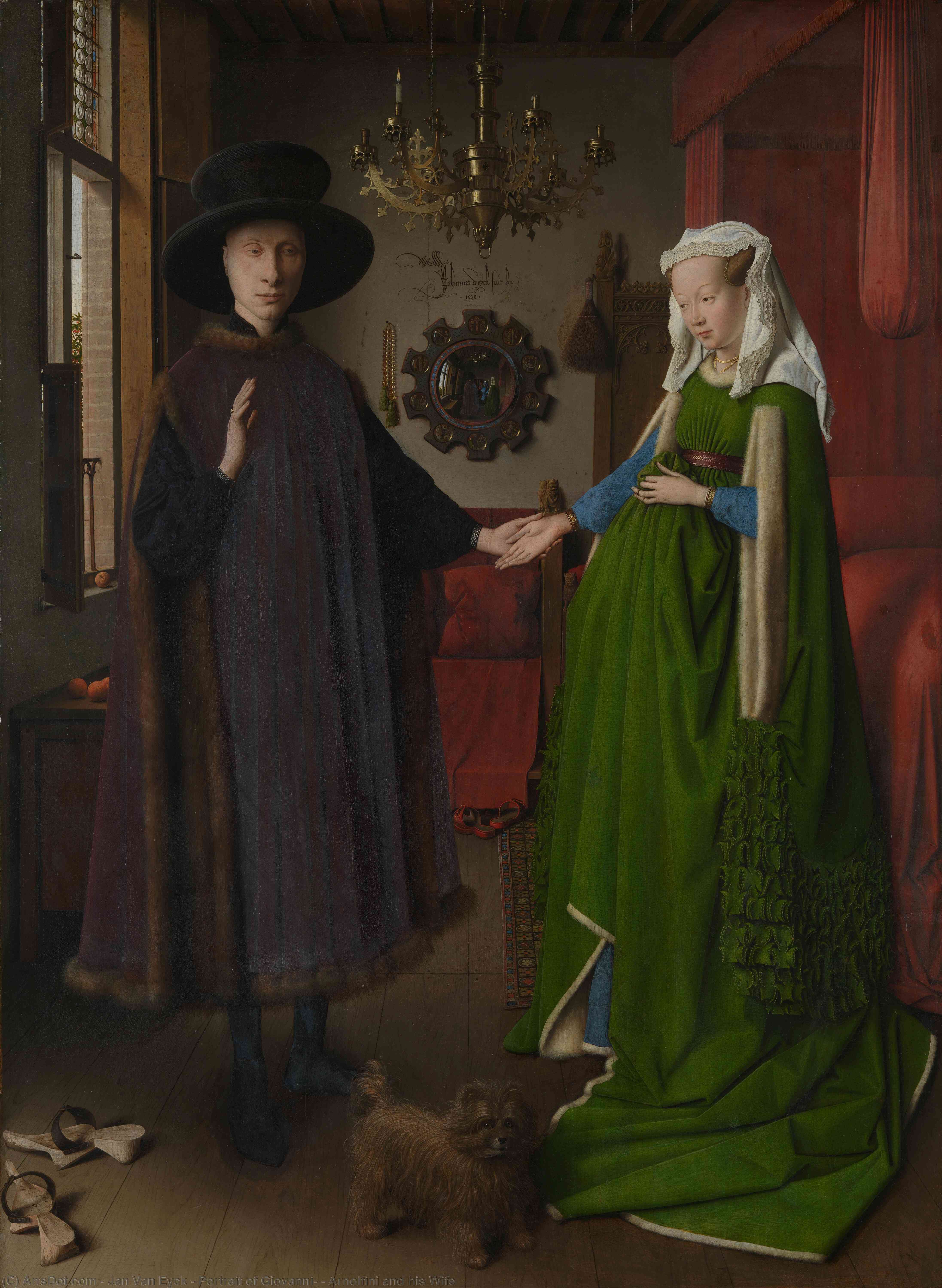
Explore Jan van Eyck’s iconic 'Arnolfini Portrait'! A masterpiece of 15th-century realism, symbolism & oil painting. Discover its rich details, historical significance & timeless beauty.
Jan van Eyck (c. 1390-1441): Pioneer of Early Netherlandish painting, celebrated for his mastery of oil paint & groundbreaking realism. Explore the Ghent Altarpiece & Arnolfini Portrait!
A Mirror to 15th-Century Life & Love
Jan van Eyck’s *Portrait of Giovanni Arnolfini and his Wife* (1434) is far more than a simple depiction of a couple; it's a remarkably detailed window into the world of a prosperous Burgundian merchant, brimming with symbolism and innovative artistry. This iconic work, housed in London’s National Gallery, stands as a cornerstone of Early Netherlandish painting, captivating viewers for centuries with its quiet dignity and unprecedented realism. The painting invites us to contemplate not just *who* these people are, but *what* their lives represented within the social and religious context of 15th-century Bruges.
Mastery of Oil & Revolutionary Detail
Van Eyck’s pioneering use of oil paint on wood panel is central to the painting's enduring appeal. Unlike tempera, oil allowed for an unparalleled level of detail and luminosity through the application of numerous translucent glazes. Observe how light seems to emanate from within the scene, illuminating the textures of velvet, fur, and silk with breathtaking realism. Each fold in the fabric, each strand of hair, is meticulously rendered – a testament to Van Eyck’s dedication and technical skill. This technique wasn't merely about visual accuracy; it was about imbuing the subjects and their surroundings with a sense of tangible presence, almost as if they could step out of the panel. The artist’s control over light and shadow creates depth and volume, pushing the boundaries of representation for his time.
Deciphering the Symbolism
The *Arnolfini Portrait* is richly layered with symbolic meaning, sparking debate among art historians for generations. While traditionally interpreted as a marriage ceremony, recent scholarship suggests it may commemorate a betrothal or even serve as a memorial portrait. The small dog at their feet symbolizes fidelity and loyalty, while the oranges on the windowsill represent fertility and wealth – both desirable qualities in 15th-century society. Perhaps most striking is the convex mirror reflecting not only the couple but also two additional figures—potentially witnesses—and scenes from the Passion of Christ. This subtle inclusion links earthly love to divine devotion, elevating the scene beyond a simple domestic portrait. The single lit candle in the chandelier may symbolize the presence of God, while the discarded clogs suggest a sacred space.
Historical Significance & Enduring Appeal
Created during a period of burgeoning economic prosperity in Bruges – a major trading hub in Flanders – this artwork provides invaluable insight into the lives and values of the merchant class. Van Eyck’s position as court painter to Philip the Good, Duke of Burgundy, afforded him access to wealthy patrons and allowed for artistic experimentation. The painting reflects the growing importance of individual portraiture and the desire for realistic representation that characterized the Early Renaissance in Northern Europe. Beyond its historical context, *The Arnolfini Portrait* evokes a sense of quiet intimacy and solemnity. Its rich color palette – deep reds, greens, browns, and blacks punctuated by the woman’s striking green dress – adds warmth and depth. A reproduction of this iconic painting would serve as a sophisticated focal point in any interior, lending an air of timeless elegance and intellectual curiosity to living rooms, studies, or dining areas. It's a piece that invites contemplation and sparks conversation, offering a lasting connection to the past.