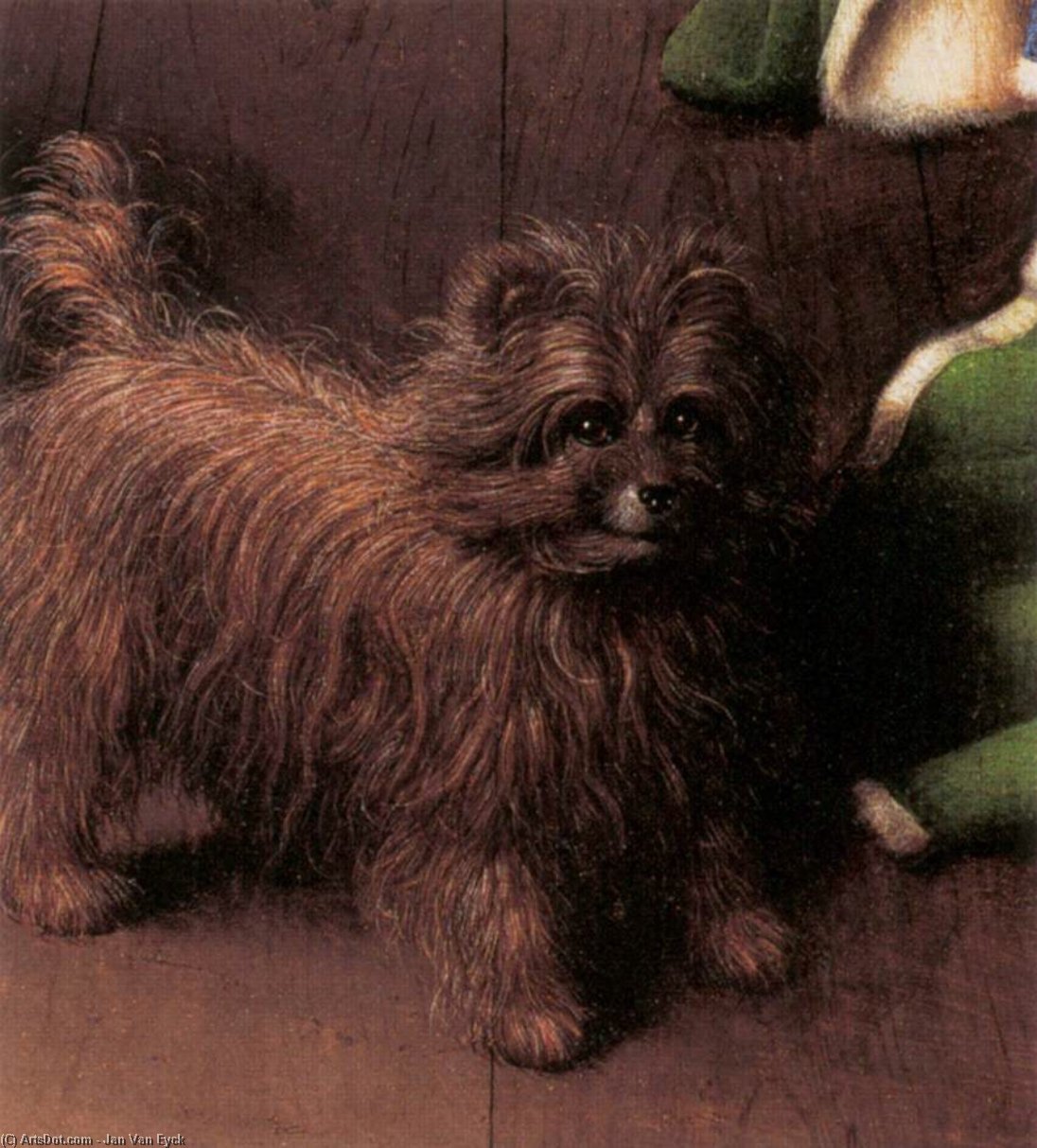
Portrait of Giovanni Arnolfini and his Wife (detail) (8)
The Portrait of Giovanni Arnolfini and his Wife (detail) (8), a masterpiece by the renowned artist Jan Van Eyck, is an oil painting on oak panel that has captivated art enthusiasts for centuries. Created in 1434, this work is housed at the National Gallery in London and is considered one of the most original and complex paintings in Western art.
The Artistic Technique
Jan van Eyck's innovative use of oil paint allowed him to achieve an intensity of both tone and color. He applied several layers of thin, translucent glazes to create a painting with remarkable depth and realism. This technique, known as wet-in-wet or alla prima, was highly utilized by Renaissance painters, including Van Eyck himself. It’s a testament to his mastery—a deliberate choice to capture the subtleties of light and shadow that would have been impossible with tempera.
The Illusionism
The illusionism in the painting is striking, particularly in its depiction of light and space within an interior setting. Van Eyck's use of light from the window on the left, reflected by various surfaces—the mirror, the chandelier, even the wooden planks—adds to the sense of realism and three-dimensionality. This level of detail was unprecedented for its time, making the painting a landmark in the history of art. Consider how Van Eyck meticulously rendered every surface to create an immersive experience for the viewer.
The Subjects
The subjects of the portrait are believed to be Giovanni di Nicolao Arnolfini, an Italian merchant, and his wife, presumably in their residence at Bruges. The inclusion of a small dog and other objects in the background adds to the narrative and symbolic richness of the painting. Each item—the oranges, the chandelier, the mirror—holds significance beyond mere decoration; they speak to Arnolfini’s wealth and status, hinting at an unspoken agreement about marriage and prosperity.
Historical Significance
This work is significant not only for its artistic innovation but also for its historical context. It represents one of the earliest examples of oil on canvas, a medium that would become a staple of Western art. The painting’s purchase by the National Gallery in 1842 further solidified its place in the annals of art history—a symbol of Victorian appreciation for Flemish Primitives and a cornerstone of British artistic heritage.
For those interested in exploring more works by Jan Van Eyck or other artists from the same period, Jan Van Eyck on ArtsDot provides an extensive collection of his paintings. Additionally, the Arnolfini Portrait on Wikipedia offers a detailed analysis of the painting’s history and significance.
Related Paintings - Vincent Van Gogh:Shepherd with a Flock of Sheep - Celis Pérez:Músico - Peter Paul Rubens:The Emperor Charles V - Piet Mondrian:The Gray Tree These paintings, available on ArtsDot, showcase the diversity and richness of art from different periods and styles.