A Window into Renaissance Life: Jan van Eyck’s Masterpiece
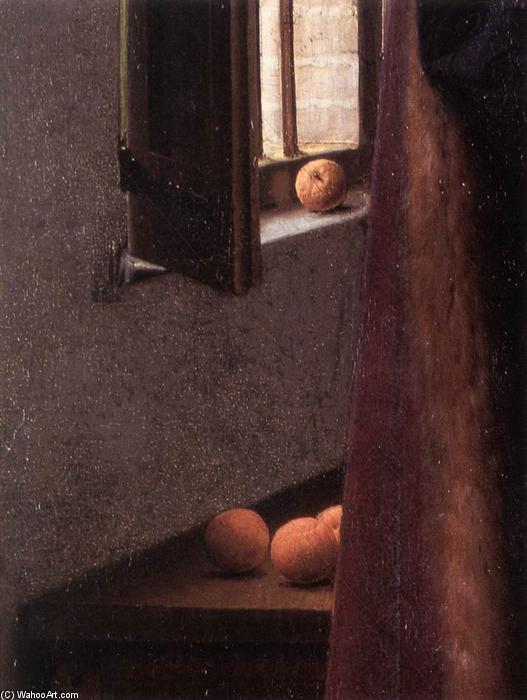
Jan van Eyck's *Portrait of Giovanni Arnolfini and his Wife* (detail) is more than just a painting; it’s a meticulously crafted time capsule, offering an unparalleled glimpse into 15th-century life, love, and societal values. Created in 1434, this iconic work—a cornerstone of the Early Netherlandish movement—continues to captivate viewers with its astonishing realism and complex symbolism. This detail showcases van Eyck’s incredible skill in rendering textures and light, drawing us into the intimate world he created.
Revolutionary Technique: The Dawn of Oil Painting
Van Eyck was a pioneer in oil painting techniques, and this work exemplifies his mastery. He didn't simply *apply* paint; he built it up in layers of translucent glazes, achieving an unparalleled depth of color and luminosity. This innovative approach allowed for subtle gradations of light and shadow, creating forms that appear remarkably three-dimensional. The ability to blend colors “wet-on-wet” was revolutionary, allowing him to capture the precise textures of fabrics, wood, and even skin with breathtaking accuracy.
This technique fundamentally changed painting forever.
Decoding the Symbolism: A Marriage Contract in Paint?
Every element within the composition is laden with meaning. The oranges on the windowsill, for example, are often interpreted as symbols of fertility and wealth – luxuries enjoyed by the prosperous merchant class. The single lit candle in the chandelier represents the all-seeing eye of God. Perhaps most famously, the convex mirror reflects not only the couple but also two additional figures—believed to be van Eyck himself and a witness—suggesting that the painting may function as a visual record of their marriage contract.
The dog at their feet symbolizes fidelity. Even the discarded clogs are thought to represent sacred ground, alluding to the sanctity of the marital bond.
Historical Context: Bruges and the Burgundian Court
Giovanni di Nicolao Arnolfini was an Italian merchant based in Bruges, a thriving center of commerce during the Burgundian period. Van Eyck served as court painter to Philip the Good, Duke of Burgundy, and his work reflects the opulence and sophistication of this era. The painting provides invaluable insight into the material culture and social customs of the time—from the couple’s luxurious clothing to the meticulously rendered details of their domestic interior. It's a portrait not just *of* individuals but *of an entire world*.
Artistic Movement: Early Netherlandish Realism
Van Eyck stands as a central figure in the Early Netherlandish painting movement, characterized by its intense realism, meticulous detail, and symbolic depth. Unlike the more idealized forms of Italian Renaissance art, Northern Renaissance painters like van Eyck focused on capturing the world around them with unwavering accuracy.
This commitment to observation and representation set a new standard for artistic excellence.
Emotional Impact & Legacy
The *Portrait of Giovanni Arnolfini and his Wife* evokes a sense of quiet intimacy and solemnity. The couple’s clasped hands, their serious expressions, and the carefully arranged details create an atmosphere of reverence and commitment. It's a painting that invites contemplation—a reminder of the enduring power of love, faith, and artistic innovation. This work continues to inspire artists, historians, and art lovers alike, solidifying its place as one of the most important and influential paintings in Western art history.