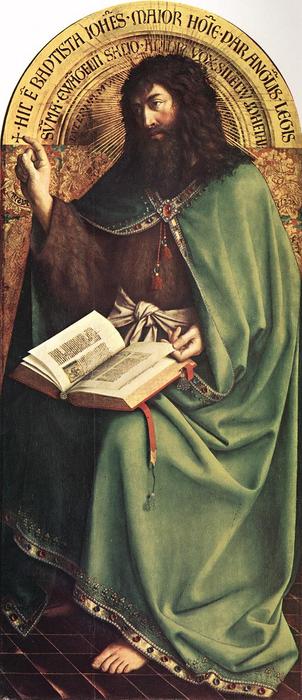
Experience the meticulous detail of Jan van Eyck’s ‘The Ghent Altar,’ a groundbreaking oil painting from 1432 showcasing a figure holding a book and cross, embodying the Northern Renaissance style. Discover this iconic artwork and bring its beauty into your space.
A Moment of Contemplation: Exploring the Detail of Jan van Eyck’s The Ghent Altar
Jan van Eyck's "The Ghent Altar," completed in 1432, stands as a monumental achievement not just within the artist’s oeuvre but as a pivotal moment in the history of Western art. This magnificent polyptych, depicting scenes from the life of Christ, is renowned for its astonishing realism and technical innovation – particularly Van Eyck's masterful manipulation of oil paint. While the entire altar is a breathtaking spectacle of detail and religious fervor, it’s the intimate details, such as this carefully rendered depiction of a seated figure, that truly captivate the viewer, offering a poignant glimpse into the devotional experience of the period.
The Artist's Hand: Technique and Innovation
- Oil Paint Mastery: Van Eyck’s genius lay in his pioneering use of oil paint. Unlike previous tempera techniques, oil allowed for incredibly subtle gradations of color, luminous effects, and a level of detail previously unattainable. The resulting sheen and depth are immediately apparent in this section, where the folds of the robe and the texture of the book seem to shimmer with an almost otherworldly light.
- Geometric Precision: Van Eyck’s meticulous attention to geometry is evident in every brushstroke. The precise rendering of the man's posture, the careful placement of his hands, and the sharp delineation of his features demonstrate a mastery of perspective and spatial representation that was revolutionary for its time.
- Surface Texture: Note the incredible realism achieved through layering thin glazes of oil paint, creating a tactile surface that invites close inspection. This technique is crucial to understanding Van Eyck’s ability to mimic the appearance of materials – wood, fabric, and skin – with astonishing accuracy.
Symbolism and Religious Narrative
This particular detail within "The Ghent Altar" likely represents a scholar or scribe engaged in prayerful contemplation. The book held in his hand symbolizes knowledge, scripture, and the pursuit of spiritual understanding – central tenets of Christian belief. The cross he clutches is a potent reminder of Christ’s sacrifice and redemption. Van Eyck's intention was not merely to depict religious scenes but to evoke an emotional response within the viewer, prompting reflection on faith, morality, and the human condition.
- The Figure as Mediator: The seated figure acts as a visual bridge between the divine and the earthly realms, inviting the observer to participate in this act of devotion.
- Color Symbolism: The green robe, often associated with hope and resurrection, further emphasizes the spiritual significance of the scene.
Historical Context and Legacy
Created during a period of immense religious fervor and artistic innovation in Burgundy, "The Ghent Altar" reflects the patronage of wealthy merchants and civic elites who sought to demonstrate their piety and status through lavish works of art. Van Eyck’s work profoundly influenced subsequent generations of Northern Renaissance painters, establishing new standards for realism, detail, and technical skill. This meticulously crafted reproduction allows you to experience a fragment of this artistic revolution firsthand, bringing the genius of Jan van Eyck into your home or studio.