A Visionary Encounter with the Divine
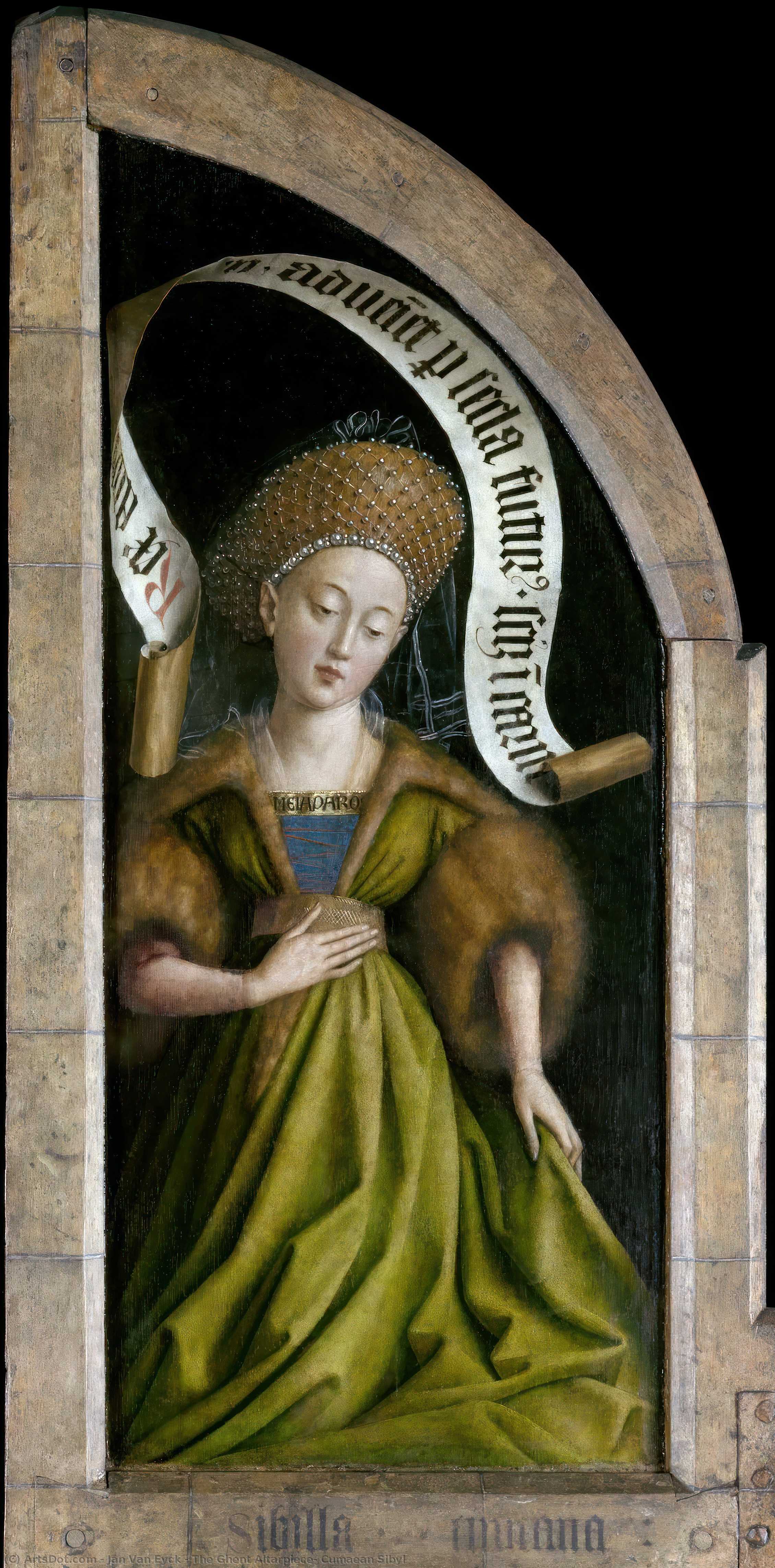
In the quiet, hallowed atmosphere of Saint Bavo's Cathedral in Ghent, there exists a window into another era—a moment where the earthly and the divine converge through the brushstrokes of Jan van Eyck. The Cumaean Sibyl, a profound fragment of the monumental Ghent Altarpiece, serves as more than just a portrait; it is an invitation to introspection. As one gazes upon this figure, part of the legendary "Adoration of the Mystic Lamb" completed in 1432, there is an immediate sense of being pulled into the profound spiritual gravity of the Northern Renaissance. The Sibyl sits with a serene, almost otherworldly dignity, her presence commanding a stillness that transcends the centuries.
The figure herself embodies the transition from medieval mysticism to the burgeoning humanism of the Renaissance. Adorned with a headdress of delicate pearls and draped in a rich green robe trimmed with luxurious fur, she represents a bridge between classical wisdom and Christian prophecy. In her hands, she holds a scroll bearing the Latin command “Nosce te ipsum”—Know thyself. This ancient Delphic maxim, woven into the fabric of a Christian altarpiece, suggests that the path to understanding the divine begins with an honest exploration of one's own soul. It is this layer of intellectual depth that makes the piece so captivating for the modern collector, offering a meditative focal point that rewards repeated contemplation.
The Alchemy of Light and Oil
To understand the emotional impact of Van Eyck’s work, one must appreciate his revolutionary mastery of the oil medium. Before this era, tempera often resulted in flat, opaque surfaces; however, Van Eyck pioneered a technique of layering translucent glazes that allowed light to penetrate the paint itself. This creates a luminous effect where the skin of the Sibyl seems to glow from within, and the textures of her heavy garments possess a tactile, almost palpable reality. The way light catches the individual pearls in her headdress or the soft sheen of the fur trim demonstrates an astonishing level of detail that remains breathtaking even by contemporary standards.
The artist utilizes a dramatic use of shadow, reminiscent of early chiaroscuro, to pull the figure forward from a dark, enigmatic background. This stark contrast ensures that every fold of her robe and every subtle expression on her face is heightened, creating a sense of three-dimensional presence. For interior designers and art enthusiasts, this technique offers incredible versatility; the painting’s deep tones and rich textures provide a sophisticated anchor for a room, bringing a sense of historical weight and quiet luxury to any curated space.
A Timeless Legacy for the Discerning Collector
Owning a reproduction of such a significant masterpiece is an act of preserving cultural heritage. The Cumaean Sibyl is not merely a decorative object but a piece of history that speaks to the very dawn of modern painting. Its themes of self-knowledge, prophecy, and the beauty of the natural world resonate deeply in our fast-paced contemporary life, offering a sanctuary of peace within the home. Whether placed in a sunlit study or a moody, formal gallery, this work serves as a testament to the enduring power of human creativity and the eternal search for meaning.