A Symphony of Faith and Light: Unveiling Jan Van Eyck’s “Singing Angels”
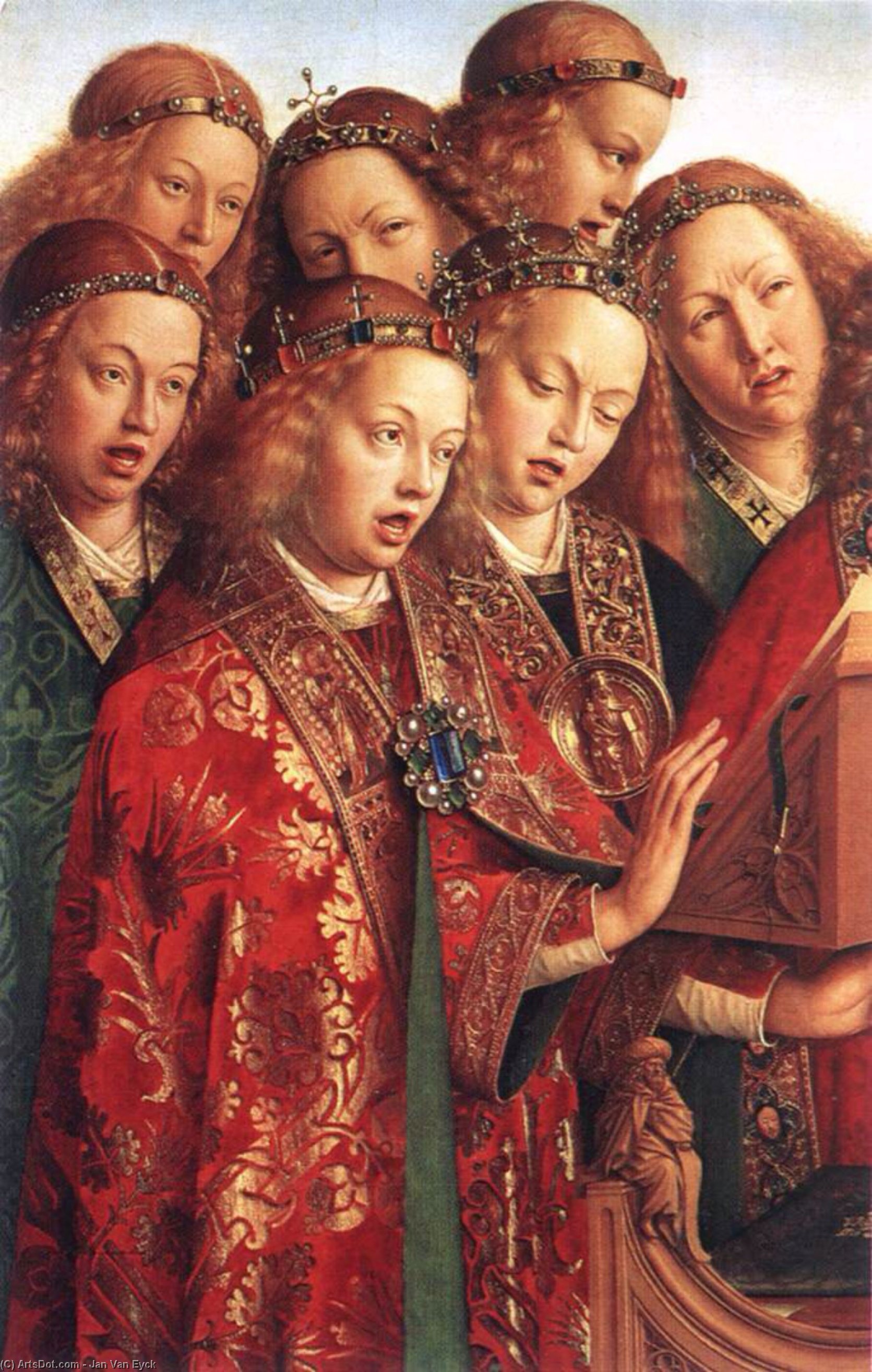
Within the hallowed halls of the Cathedral of St Bavo in Ghent, Belgium, resides a work that continues to mesmerize viewers centuries after its creation – Jan van Eyck's "Ghent Altarpiece: Singing Angels (detail)." More than just a painting, this intricate panel represents a pivotal moment in art history, showcasing the burgeoning mastery of oil paint and embodying the profound spiritual values of 15th-century Flanders. It’s a scene brimming with an almost palpable sense of harmony, where a chorus of women, adorned in shimmering red and gold, seem to be lost in a shared musical experience – a testament to Van Eyck's unparalleled ability to capture both the beauty of human form and the ethereal quality of divine presence.
)
(Image: A detail from the Ghent Altarpiece depicting several women in elaborate attire, engaged in a musical performance.)
The Dawn of Oil Painting and Flemish Realism
Van Eyck’s genius lay not just in his technical skill but in his revolutionary approach to painting. He was a pioneer of oil paint, a medium that allowed him to achieve an unprecedented level of detail, luminosity, and realism – qualities previously unattainable with tempera or fresco techniques. The “Singing Angels” panel exemplifies this mastery; observe the meticulous rendering of each garment’s texture, the subtle gradations of color in the women's faces, and the way light seems to emanate from their forms. This level of naturalism was groundbreaking for its time, pushing beyond the stylized conventions of Gothic art and establishing a new standard for portraiture and religious imagery.
The panel’s significance extends beyond mere technical innovation. It reflects the cultural climate of 15th-century Flanders, a region experiencing a period of immense wealth and artistic patronage. Commissioned by Joos Vijd, a prominent merchant, the altarpiece served as a visual statement of his piety and status – a celebration of faith rendered with exquisite beauty and material splendor.
Symbolism Woven into Sacred Music
The scene itself is rich in symbolic meaning. The women, dressed in opulent attire, represent the Virgin Mary and her female companions, figures revered for their purity, piety, and musical talents. Their semi-circular arrangement suggests a choir or musical performance, evoking the biblical story of the angels singing at the birth of Christ. The crowns they wear symbolize their divine status and connection to the heavenly realm. The overall composition creates an atmosphere of serenity and devotion, inviting viewers to contemplate the mysteries of faith and redemption.
Further adding to the complexity is the presence of a figure on the right side, also crowned, who may represent another angelic being or perhaps even a donor figure – a subtle reminder of the patron’s role in commissioning this extraordinary work. The use of gold leaf, particularly prominent in the halos and garments, further elevates the scene, symbolizing divine grace and spiritual illumination.
A Legacy Preserved: Restoration and Enduring Inspiration
Over centuries, the Ghent Altarpiece has undergone several restorations to safeguard its integrity. Today, it stands as a testament to Van Eyck’s genius and a cornerstone of art history. Its influence can be seen in countless subsequent works, shaping the course of Northern Renaissance painting. For those seeking to experience this masterpiece firsthand or explore the broader context of the Ghent Altarpiece, we invite you to visit Jan Van Eyck’s paintings on ArtsDot and The Museum Cathedral of St Bavo (Ghent, Belgium) and its Artworks for detailed information about the museum and its collection.